Historical Turning Points · Empire & Struggle
29 March 1849 Annexation of Punjab
29 March 1849, Governor-General Lord Dalhousie formally annexed the Punjab into the British Empire. The eleven-year-old Maharaja Duleep Singh was deposed, the sovereign line of the Khalsa Empire ended, and the legendary Koh-i-Noor diamond was confiscated by the British Crown
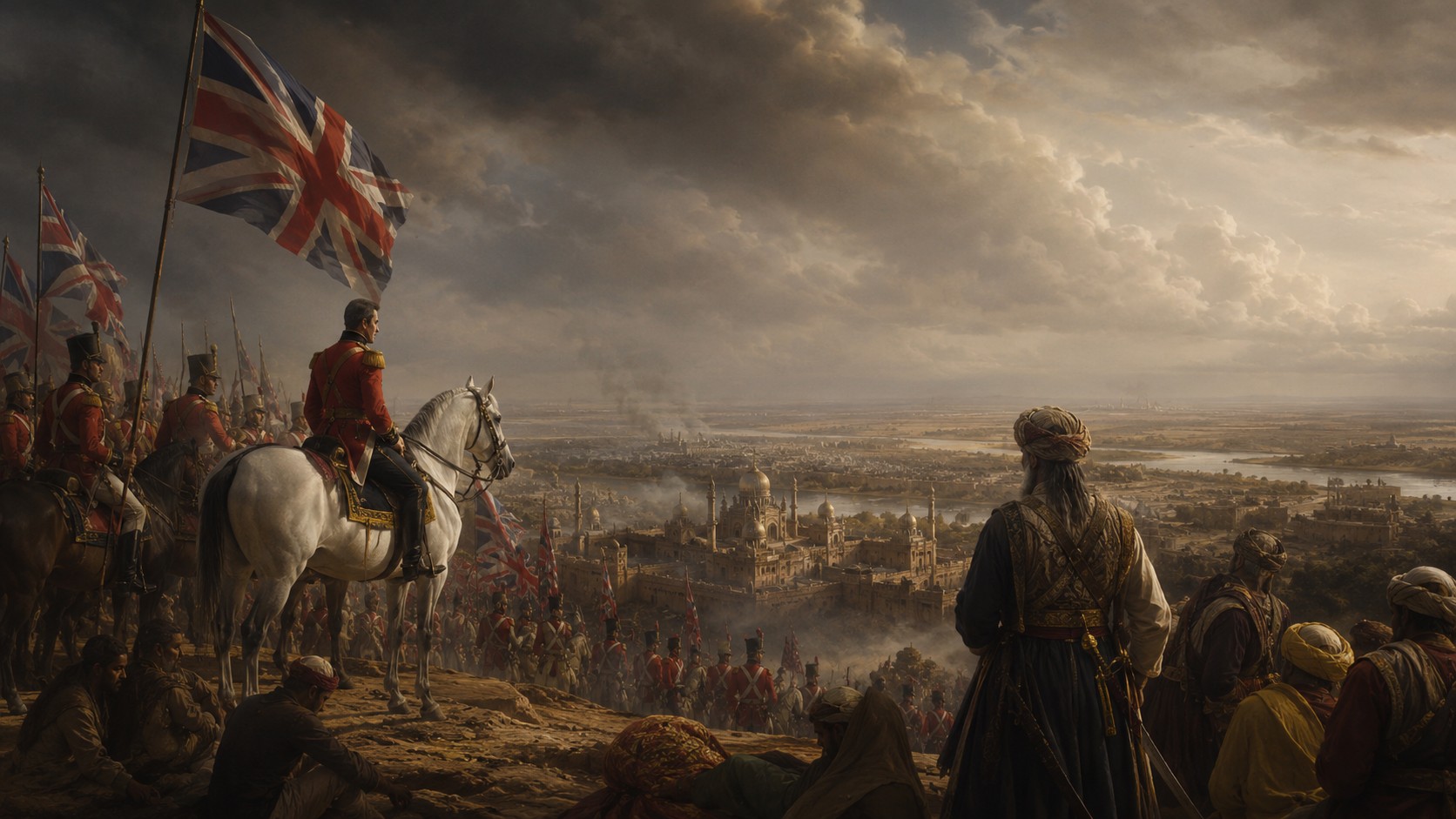
29 March 1849: The Annexation of Punjab, the Deposition of Maharaja Duleep Singh, and the Loss of the Koh-i-Noor
Among the most significant and sorrowful dates in Sikh history is 29 March 1849. On that day, Governor-General Lord Dalhousie formally annexed the Kingdom of Punjab into the British Empire, bringing an end to the sovereign Sikh state established by Maharaja Ranjit Singh. The annexation was the culmination of a decade of political instability, foreign interference, military conflict, and imperial ambition. It marked the final collapse of the Sikh Empire, the last major independent power in northern India capable of resisting British expansion. The event not only transformed the political landscape of the Indian subcontinent but also left a profound emotional and cultural impact upon generations of Sikhs. The deposition of the eleven-year-old Maharaja Duleep Singh, the extinction of the sovereign line of the Khalsa Empire, and the confiscation of the legendary Koh-i-Noor diamond became enduring symbols of loss, conquest, and the end of an era.
For Sikhs, the annexation was not simply the transfer of territory from one ruler to another. It represented the destruction of a political order that had been built through extraordinary sacrifice and vision. The Sikh Empire was the product of decades of struggle, beginning with the resistance of the Sikh Gurus and the Khalsa against Mughal oppression, continuing through the rise of the Sikh misls, and culminating in the unification achieved by Maharaja Ranjit Singh. In less than fifty years, Ranjit Singh had transformed Punjab into one of the most powerful and prosperous states in Asia. His kingdom commanded respect from neighboring powers, maintained a modern army, and preserved independence at a time when much of India had fallen under British control. The annexation of Punjab in 1849 therefore represented not merely a military defeat but the collapse of a remarkable historical achievement.
The Rise and Glory of the Sikh Empire
To understand the significance of 29 March 1849, one must first appreciate what was lost. The Sikh Empire emerged from centuries of struggle and resilience. The teachings of Guru Nanak laid the spiritual foundation for a community dedicated to justice, equality, and devotion to the Divine. The later Gurus developed institutions that strengthened Sikh identity and collective organization. The creation of the Khalsa by Guru Gobind Singh in 1699 transformed the Sikh community into a disciplined and martial brotherhood committed to defending righteousness and resisting tyranny.
Throughout the eighteenth century, Sikhs faced severe persecution but gradually expanded their influence across Punjab. Various Sikh misls established control over different territories, and despite internal rivalries, they preserved a shared sense of identity and purpose. Maharaja Ranjit Singh's greatest achievement was the unification of these scattered powers into a centralized and effective state. Under his leadership, Lahore became the capital of a thriving empire that stretched from the Khyber Pass to the Sutlej River and from Kashmir to Multan.
The Sikh Empire under Maharaja Ranjit Singh was renowned for its military strength, administrative efficiency, and religious tolerance. Sikhs, Hindus, and Muslims served together in government and the army. European military advisors helped modernize the Khalsa Army, while trade and agriculture flourished. The empire stood as a symbol of indigenous strength and self-rule in an era increasingly dominated by European colonial powers.
The Death of Maharaja Ranjit Singh and the Beginning of Decline
The death of Maharaja Ranjit Singh in 1839 marked the beginning of a period of instability that would ultimately destroy the empire he had created. Unlike the founder of the kingdom, his successors lacked the authority, political skill, and prestige necessary to maintain unity. A succession of rulers rose and fell amid assassinations, court intrigues, and factional struggles. Powerful nobles competed for influence, while the Khalsa Army increasingly became involved in political affairs.
The resulting instability weakened the foundations of the state. Although the military remained powerful, political cohesion deteriorated. British officials observed these developments with great interest. For decades, the Sikh Empire had served as a barrier to British expansion into the northwest. The internal divisions that emerged after Ranjit Singh's death created opportunities for intervention that had previously been unavailable.
The First Anglo-Sikh War of 1845–1846 and the Second Anglo-Sikh War of 1848–1849 further undermined Sikh sovereignty. Despite the extraordinary courage displayed by the Khalsa Army, the outcome of these conflicts favored the British East India Company. By the conclusion of the Second Anglo-Sikh War, the British leadership had decided that Punjab should no longer exist as an independent kingdom.
Lord Dalhousie and the Decision to Annex Punjab
At the center of the annexation stood Lord Dalhousie, the Governor-General of India. Ambitious, confident, and committed to the expansion of British authority, Dalhousie believed that annexation was both justified and desirable. Following the British victory at the Battle of Gujrat in February 1849, resistance within Punjab effectively collapsed. The Khalsa Army was defeated, major leaders surrendered, and the political structure of the Sikh Kingdom lay in ruins.
Dalhousie viewed the moment as an opportunity to eliminate the last significant obstacle to British dominance in northern India. Rather than preserving Punjab as a dependent state under British supervision, he advocated complete annexation. His decision reflected broader imperial goals. British policymakers sought secure frontiers, increased revenue, and direct control over strategically important territories. Punjab offered all three.
On 29 March 1849, the formal proclamation of annexation was issued. The Kingdom of Punjab ceased to exist as a sovereign entity. Its territories became part of the British Empire, and authority passed from the Lahore Darbar to colonial administrators. For the British, this was a triumph of imperial expansion. For Sikhs, it marked the end of their independent state.
The Deposition of Maharaja Duleep Singh
One of the most poignant aspects of the annexation was the fate of Maharaja Duleep Singh. Born in 1838, Duleep Singh was the youngest son of Maharaja Ranjit Singh. He ascended the throne as a child during a period of political turmoil and spent much of his reign under the influence of British officials. By the time of annexation, he was only eleven years old.
The young Maharaja possessed little real power. Decisions affecting the kingdom were increasingly made by British authorities rather than the Lahore Darbar. Nevertheless, Duleep Singh remained the symbolic embodiment of Sikh sovereignty. His presence on the throne represented continuity with the empire founded by his father.
The annexation ended even this symbolic role. Duleep Singh was formally deposed, and his authority was extinguished. The sovereign line of the Sikh Empire effectively came to an end. The child who should have inherited one of the most powerful kingdoms in Asia instead became a dependent of the British Empire. Removed from the political center of Punjab, he would eventually be taken to Britain, converted to Christianity, and integrated into British aristocratic society.
For many Sikhs, the image of the young Maharaja signing away his kingdom under foreign supervision became one of the most heartbreaking moments in their history. It symbolized not only political defeat but also the vulnerability of a nation deprived of its independence.
The End of the Sovereign Line of the Khalsa Empire
The deposition of Duleep Singh carried significance far beyond the fate of one individual. It marked the end of the sovereign line established by Maharaja Ranjit Singh and the collapse of the political structure that had governed Punjab for half a century. The Khalsa Empire had represented the highest expression of Sikh political authority since the creation of the Khalsa by Guru Gobind Singh.
The disappearance of the Sikh monarchy did not erase Sikh identity, faith, or culture. However, it did end the existence of a sovereign state governed by Sikh rulers. For generations, Sikhs would remember 1849 as the year in which their kingdom was lost. The event became deeply embedded in collective memory, shaping later political movements and influencing Sikh understandings of sovereignty, leadership, and self-determination.
The end of the sovereign line also underscored the broader transformation occurring across the Indian subcontinent. Independent kingdoms were increasingly absorbed into the expanding British Empire. Punjab's annexation completed the conquest of one of the last major indigenous powers capable of challenging British authority.
The Confiscation of the Koh-i-Noor Diamond
Among the most famous consequences of the annexation was the confiscation of the Koh-i-Noor diamond. The legendary gem possessed a history stretching back centuries and had passed through the hands of numerous rulers and dynasties. By the nineteenth century, it had become one of the most celebrated symbols of royal power in Asia.
Under Maharaja Ranjit Singh, the Koh-i-Noor occupied a place of immense prestige within the Sikh Empire. It symbolized not only wealth but also sovereignty and legitimacy. The diamond was associated with the authority of the Maharaja and the grandeur of the Lahore Court.
As part of the annexation settlement, the Koh-i-Noor was surrendered to the British. Officially, the transfer was presented as a condition of the treaty imposed upon the defeated kingdom. In practice, many Sikhs viewed the act as the seizure of a treasured symbol of their nation. The removal of the diamond represented far more than the loss of a valuable object. It became a visible reminder of conquest and subjugation.
The diamond was eventually transported to Britain and presented to Queen Victoria. Its journey from the treasury of Lahore to the British Crown became one of the most famous episodes in the history of imperial acquisitions. Debates regarding its ownership and symbolism continue to this day, reflecting the enduring emotional significance attached to the gem.
British Rule in Punjab
Following annexation, British administrators moved quickly to establish their authority. A new administrative system was introduced, and Punjab became one of the most important provinces of British India. Roads, canals, and communication networks were expanded, while new legal and bureaucratic structures were imposed.
Many British officials regarded Punjab as a model province. They praised its agricultural potential, strategic location, and military traditions. Sikh soldiers, who had once fought fiercely against British forces, would later become an important component of the British Indian Army.
Yet beneath these developments remained the memory of lost sovereignty. The transition to colonial rule brought profound changes to society, politics, and economics. While some benefited from new opportunities, others viewed British rule as a constant reminder of the kingdom that had been destroyed.
The Emotional Impact on the Sikh Nation
The annexation of Punjab left a deep emotional scar upon the Sikh community. The generation that witnessed the fall of the empire remembered a time when Punjab had been independent and powerful. Stories of Maharaja Ranjit Singh, the Khalsa Army, and the battles against the British became central elements of historical memory.
The loss of sovereignty fostered a sense of collective mourning but also inspired resilience. Sikh institutions adapted to changing circumstances, preserving religious traditions and communal identity despite the absence of political independence. Gurdwaras, historical narratives, and family memories helped ensure that the legacy of the Sikh Empire would not be forgotten.
The annexation also influenced later political movements. The memory of 1849 informed Sikh participation in reform movements, anti-colonial struggles, and debates regarding self-governance. The story of the empire's rise and fall became an enduring source of reflection on leadership, unity, and national destiny.
The Historical Legacy of 29 March 1849
The events of 29 March 1849 continue to resonate because they marked the conclusion of one of the most remarkable chapters in Sikh history. The annexation of Punjab ended the last major independent state in northern India, deposed a child Maharaja, extinguished the sovereign line of the Khalsa Empire, and transferred the Koh-i-Noor to British possession. Each of these developments carried immense symbolic and practical significance.
Yet history remembers not only the fall of the Sikh Empire but also the achievements that preceded it. The kingdom established by Maharaja Ranjit Singh demonstrated that indigenous leadership could create a prosperous, tolerant, and militarily powerful state. Its existence challenged assumptions about colonial inevitability and left an enduring legacy within South Asian history.
For Sikhs, the memory of 1849 is therefore both tragic and inspiring. It is tragic because it marks the loss of sovereignty and the end of a great empire. It is inspiring because it reminds future generations of the extraordinary accomplishments, sacrifices, and resilience that defined the Sikh experience. The empire may have fallen, but the spirit that created it survived, ensuring that the legacy of the Khalsa would endure long after the flags of empire had changed.
Frequently Asked Questions (FAQ)
1. What happened on 29 March 1849?
On 29 March 1849, Governor-General Lord Dalhousie formally annexed Punjab into the British Empire following the British victory in the Second Anglo-Sikh War.
2. Why was Punjab annexed by the British?
Punjab was annexed after the defeat of Sikh forces in the Second Anglo-Sikh War and the British decision to abolish the remaining independence of the Sikh Kingdom.
3. Who was Maharaja Duleep Singh?
Maharaja Duleep Singh was the youngest son of Maharaja Ranjit Singh and the last ruler of the Sikh Empire.
4. How old was Duleep Singh when he was deposed?
Duleep Singh was only eleven years old when he was removed from the throne following the annexation of Punjab.
5. Who was Lord Dalhousie?
Lord Dalhousie was the Governor-General of India who oversaw the annexation of Punjab and the expansion of British territorial control.
6. What was the Koh-i-Noor diamond?
The Koh-i-Noor was a famous historic diamond associated with royal authority and one of the most valuable and celebrated gems in the world.
7. Why was the Koh-i-Noor taken by the British?
The diamond was surrendered as part of the settlement imposed after the annexation of Punjab and was subsequently transferred to the British Crown.
8. Did the annexation end the Sikh Empire?
Yes. The annexation formally ended the Sikh Empire as an independent sovereign state.
9. What happened to Duleep Singh after annexation?
He was removed from power, taken under British supervision, later moved to Britain, and spent much of his life away from Punjab.
10. Why is 29 March 1849 important in Sikh history?
It marks the end of Sikh political sovereignty, the fall of the Khalsa Empire, the deposition of Maharaja Duleep Singh, and the transfer of the Koh-i-Noor to British possession.