Panthic Personalities · Origins & Gurus · Guru Amar Das Ji · Guru Ram Das Ji
Bibi Bhani Ji
The embodiment of Seva. Her legendary devotion to her father led to the Guruship remaining within the Sodhi family thereafter.
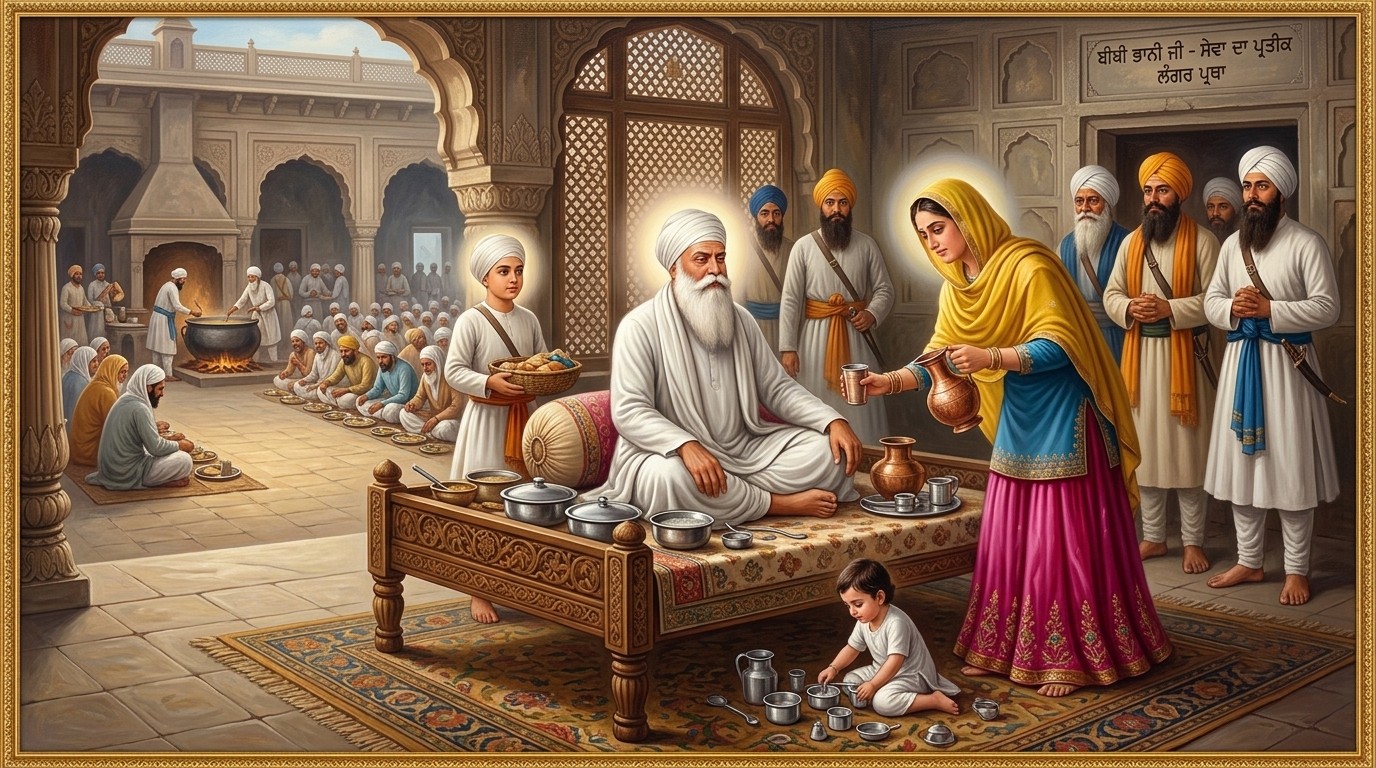
The Matrix of Sovereignty: Bibi Bhani Ji's Spiritual Agency
To study the formative years of the Sikh movement in sixteenth-century Punjab is to witness a profound spiritual and socio-political revolution. While conventional historical narratives of this era frequently center on the physical succession of the male Gurus, a deeper, more critical historiographical lens reveals that the structural and spiritual integrity of the early Sikh Panth was anchored by extraordinary women. Chief among these foundational figures is Bibi Bhani Ji (1535–1598). Her life was not a passive accompaniment to the Guruship; rather, she was an active, conscious, and highly influential historical agent who bridged three major Guruships—as the daughter of the third Master, Guru Amar Das Ji; the consort of the fourth Master, Guru Ram Das Ji; and the mother of the fifth Master, Guru Arjan Dev Ji. By examining her life, a historian is forced to dismantle the patriarchal frameworks of medieval India and recognize how Bibi Bhani Ji embodied the revolutionary, egalitarian ethos of Guru Nanak Dev Ji’s philosophy, transforming it into lived, institutional reality.
The Spiritual Crucible of Goindval: Early Life and the Piri System
Born in 1535 in Basarke Gillan near Amritsar to Guru Amar Das Ji and Mata Mansa Devi, Bibi Bhani Ji was raised during a critical juncture of institutional consolidation within the young Sikh community. When her father ascended to the spiritual throne of Guru Nanak as the third Guru in 1552, the center of the Sikh world shifted to the newly established town of Goindval. It was here, on the banks of the Beas River, that Bibi Bhani Ji immersed herself in the dual disciplines of Sewa (selfless, voluntary service) and Simran (constant meditative remembrance of the Divine). From an early age, she rejected the superficial ornaments and societal expectations of medieval Punjabi womanhood, preferring a life of radical simplicity and deep contemplation. This inclination toward solitude and spiritual study did not, however, translate into monastic withdrawal. Instead, she became a vital leader in the daily operations of the Guru's court, particularly within the Langar (the community kitchen), which served as the ultimate socio-cultural leveler of the age, defying rigid caste barriers and Brahmanical notions of purity and pollution.
A crucial, yet frequently overlooked, dimension of her leadership was her active role in the Piri system. Established by Guru Amar Das Ji to handle the rapid expansion of the Sikh community, this administrative and missionary framework consisted of twenty-two Manjis (dioceses led primarily by men) and fifty-two Piris (spiritual leadership seats reserved exclusively for women). Bibi Bhani Ji was appointed as one of the prominent heads of this missionary network, tasked with the spiritual education, moral upliftment, and theological training of women across the region. At a time when medieval society systematically denied women access to sacred texts, education, and public leadership, her position as a spiritual preceptor was a radical subversion of contemporary societal norms. Through the Piri system, she fostered a lineage of female scholars and organizers, establishing women not as mere domestic facilitators of faith, but as independent, primary participants in the spiritual and organizational sovereignty of the Panth.
The Architecture of Devotion: The Litmus Test of Sewa
In the collective memory of the Sikh tradition, the character of Bibi Bhani Ji is indelibly linked to an extraordinary act of physical endurance and spiritual devotion. Hagiographical accounts (Janamsakhis) record that one morning, while her aging father Guru Amar Das Ji was deeply absorbed in meditative absorption (Samadhi) on a heavy wooden seat, Bibi Bhani Ji noticed that one of the structural legs of the platform was beginning to split and collapse. Recognizing that any sudden movement or fall would disrupt her father's communion with the Divine, she immediately rushed forward and placed her own hand beneath the fracturing wooden leg to bear the immense weight. As the hours passed and the heavy wood pressed down, splinters and rusted iron nails pierced her flesh, causing her hand to bleed profusely. Yet, she remained completely still, refusing to utter a sound or move a muscle. When Guru Amar Das Ji finally emerged from his deep meditation and observed his daughter's blood-soaked hand holding up his seat, he was deeply moved by her unparalleled capacity for quiet, painless endurance—an embodiment of the Sikh concept of accepting the Divine Will (Bhana).
From a historian's analytical perspective, this event is far more than a simple anecdote of filial piety; it represents a profound theological turning point in the trajectory of the Sikh Guruship. Recognizing her absolute selflessness, Guru Amar Das Ji offered her a boon, prompting her to express her deepest spiritual wish. Bibi Bhani Ji, with immense humility, requested that the lineage of the Guruship remain within her family, anchored in the spirit of devotion and service. This moment marked the transition of the Guruship into the Sodhi dynasty, establishing a lineage of spiritual sovereigns that would guide the Panth through its most turbulent centuries. Historians note that Guru Amar Das Ji granted this boon but also forewarned her of the heavy cost of this inheritance—revealing that her descendants would have to bear the crown of martyrdom (Shaheedi) to protect the rights of humanity. By accepting this destiny, Bibi Bhani Ji consciously stepped into her role as the matriarch of a dynasty of martyrs, willingly aligning her family’s fate with the ultimate sacrifice required for the preservation of truth and justice.
The Sacred Alliance: Marriage to Bhai Jetha
The marriage of Bibi Bhani Ji to Bhai Jetha Ji—who would eventually become the fourth spiritual preceptor, Guru Ram Das Ji—stands as a beautiful historical narrative of spiritual compatibility. Bhai Jetha, an orphan who migrated from Lahore to Goindval, lived a life of extreme poverty, earning a meager living by selling boiled grains (ghungnian) while dedicating every spare moment to selfless service in the construction of the sacred step-well (Baoli Sahib). When Mata Mansa Devi suggested finding a husband of humble character and deep spiritual devotion for their youngest daughter, she gestured toward Bhai Jetha as the ideal standard. Guru Amar Das Ji, recognizing Jetha's peerless humility, famously remarked that "only Jetha is like Jetha," and immediately approved the union. The marriage, which took place in 1554, was a union of two souls completely dedicated to the service of the Creator and the creation, rejecting the material transactions of wealth and status that typically defined medieval matrimonial alliances.
A striking example of Bibi Bhani Ji’s commitment to spiritual simplicity occurred during her wedding preparations. When a wealthy devotee of the Guru brought exquisite jewelry and silk gowns as a wedding gift, she politely but firmly declined to wear them. She requested that the donor sell the precious ornaments and instead use the proceeds to purchase grain and supplies for the community kitchen (Langar) to feed the impoverished travelers and local laborers. This decision was a powerful socio-political statement that rejected class privilege and outward vanity, reinforcing the core Sikh principle that the true adornment of a soul is humility and service. Following their marriage, the couple chose to remain in Goindval rather than moving to Bhai Jetha's ancestral home, allowing them to continue their joint service to Guru Amar Das Ji and the rapidly expanding Sikh congregation, effectively operating as a collaborative team of spiritual guides.
The Co-Creation of Ramdaspur and the Birth of Guru Arjan Dev Ji
As the Sikh community continued to grow, the need for a central, sovereign space for the Panth became increasingly evident. Under the direction of Guru Amar Das Ji, Bhai Jetha and Bibi Bhani Ji were tasked with establishing a new town, initially known as Chak Ramdas or Ramdaspur, which would later evolve into the holy city of Amritsar. Historical records suggest that during his visit to Goindval, the Mughal Emperor Akbar, deeply impressed by the egalitarian nature of the Langar, presented a revenue-free land grant (jagir) consisting of several villages. Because Guru Amar Das Ji consistently rejected state patronage for himself or the religious institution, the grant was registered directly in the name of Bibi Bhani Ji. This historical detail is highly significant; it positions her as the legal and economic custodian of the land upon which the Harmandir Sahib (the Golden Temple) and the sacred pool of nectar (Amritsar Sarovar) were eventually constructed, highlighting her foundational role in the physical and spatial sovereignty of the Sikh nation.
Within this emerging sacred space, Bibi Bhani Ji gave birth to three sons: Prithi Chand, Mahadev, and Arjan Dev. Her role as a mother was defined by her deep theological understanding, which she systematically instilled in her children. Her youngest son, Arjan Dev, exhibited profound spiritual sensitivity from his childhood, a quality nurtured directly by Bibi Bhani Ji's teachings. When Guru Arjan Dev Ji was selected to succeed his father as the fifth Guru in 1581, his elder brother, Prithi Chand, reacted with intense jealousy and hostility, attempting to destabilize the young Guru’s authority. In this moment of familial and institutional crisis, Bibi Bhani Ji stood as an unyielding pillar of truth. She publicly rebuked Prithi Chand, reminding him that the Guruship was not a material inheritance to be claimed by birthright, but a divine trust that could only be earned through absolute humility and selfless service. Her decisive action prevented a major schism and preserved the integrity of the succession process at a crucial historical juncture.
A Mother's Blessing: The Theological Legacy of Ang 496
The profound spiritual influence of Bibi Bhani Ji on her youngest son is immortalized within the pages of the primary Sikh scripture, Sri Guru Granth Sahib Ji. On the eve of Guru Arjan Dev Ji's departure for Lahore to attend a family wedding—a journey during which he would write the famous letters of longing that cemented his spiritual readiness for the Guruship—his mother imparted a beautiful, poetic blessing. This parting prayer was later composed by Guru Arjan Dev Ji and enshrined on page (Ang) 496 of the Guru Granth Sahib Ji. Known universally as "Puta Mata Ki Asees" (A Mother's Blessing to her Child), this hymn is not merely an expression of maternal affection, but a rigorous theological manual for spiritual survival and liberation:
| Gurmukhi Verse (Ang 496) | English Translation | Theological Significance |
| ਜਿਸੁ ਸਿਮਰਤ ਸਭਿ ਕਿਲਵਿਖ ਨਾਸਹਿ ਪਿਤਰੀ ਹੋਇ ਉਧਾਰੋ ॥ ਸੋ ਹਰਿ ਹਰਿ ਤੁਮ੍ਹ੍ਹ ਸਦ ਹੀ ਜਾਪਹੁ ਜਾ ਕਾ ਅੰਤੁ ਨ ਪਾਰੋ ॥੧॥ |
Remembering Him, all sins are erased, and one's ancestors are saved. So meditate continually on the Lord, Har, Har; He has no end or limitation. ||1|| | Establishes the practice of constant remembrance (Simran) as the ultimate source of spiritual cleansing and ancestral redemption. |
| ਪੂਤਾ ਮਾਤਾ ਕੀ ਆਸੀਸ ॥ ਨਿਮਖ ਨ ਬਿਸਰਉ ਤੁਮ੍ਹ੍ਹ ਕਉ ਹਰਿ ਹਰਿ ਸਦਾ ਭਜਹੁ ਜਗਦੀਸ ॥੧॥ ਰਹਾਉ ॥ |
O son, this is your mother's hope and prayer, that you may never forget the Lord, Har, Har, even for an instant. May you ever vibrate upon the Lord of the Universe. ||1||Pause|| | The core maternal mandate: prioritizing uninterrupted divine consciousness above all worldly pursuits. |
| ਧਰਮੁ ਤੁਮ੍ਹ੍ਹਾਰਾ ਹੋਇ ਕਪੜਾ ਹਰਿ ਗੁਣ ਗੋਬਿੰਦੁ ਭੁਜਨੁ ॥ ਪੀਵਹੁ ਅੰਮ੍ਰਿਤੁ ਸਦਾ ਰਹਹੁ ਜੀਵਤੇ ਹਰਿ ਭਜਨੁ ਤੂ ਮਨੁ ॥੨॥ |
May righteousness (Dharma) be your clothing, and may the singing of the Lord's praises be your food. Drink in forever the Ambrosial Nectar; may you live long, and may the meditative remembrance of the Lord give you infinite delight. ||2|| | Defines ethical conduct (Dharma) as one's protective armor and spiritual singing (Kirtan) as primary sustenance. |
This hymn remains one of the most widely recited compositions in the Sikh world, serving as a timeless template for parenting, education, and spiritual mentorship. Through these verses, Bibi Bhani Ji’s maternal consciousness continues to radiate across generations, reminding seekers that the greatest gift a parent can bestow upon a child is not material wealth or social status, but the permanent anchor of divine love and ethical righteousness. The inclusion of this perspective in the eternal Guru of the Sikhs is a striking historical proof of the high esteem in which her spiritual voice was held by the editors of the scripture.
Conclusion: The Eternal Matriarch of the Panth
Bibi Bhani Ji’s earthly journey concluded in 1598 in Tarn Taran, where she spent her final years actively serving the most marginalized segments of society, including those suffering from leprosy. In her memory, Guru Arjan Dev Ji constructed a massive well with six Persian wheels, known to this day as the Well of Bibi Bhani (Bibi Bhani Da Khuh), symbolizing her life as a source of clean, life-giving water to a thirsty world. Her legacy, however, extends far beyond physical monuments. As a pioneer of the Piri system, a co-founder of Amritsar, the defender of the integrity of the Guruship, and the primary educator of the first Sikh martyr, Guru Arjan Dev Ji, Bibi Bhani Ji redefined the parameters of female leadership in South Asia. She demonstrated that true power lies not in political domination, but in the sovereign command of one's own ego, the fearless defense of truth, and the complete surrender to the Divine Will. For the modern world, her life stands as a brilliant testament to the fact that women have always been at the vanguard of spiritual, social, and political revolutions, shaping the destiny of communities from the very forefront of history.
Guru Amar Das Ji (1479–1574)
The embodiment of Seva. Her legendary devotion to her father led to the Guruship remaining within the Sodhi family thereafter.
- Role
- Daughter
- Group
- Family & Successors
- Period
- Guru Amar Das Ji (1479–1574)
Guru Ram Das Ji (1534–1581)
Her lifelong dedication to the Guru's house and her father's service bridged the lineage between the third and fourth Gurus.
- Role
- Wife
- Group
- Family & Succession
- Period
- Guru Ram Das Ji (1534–1581)