Gurus and Bhagats, Bani Contributors · Origins & Gurus · Guru Amar Das Ji
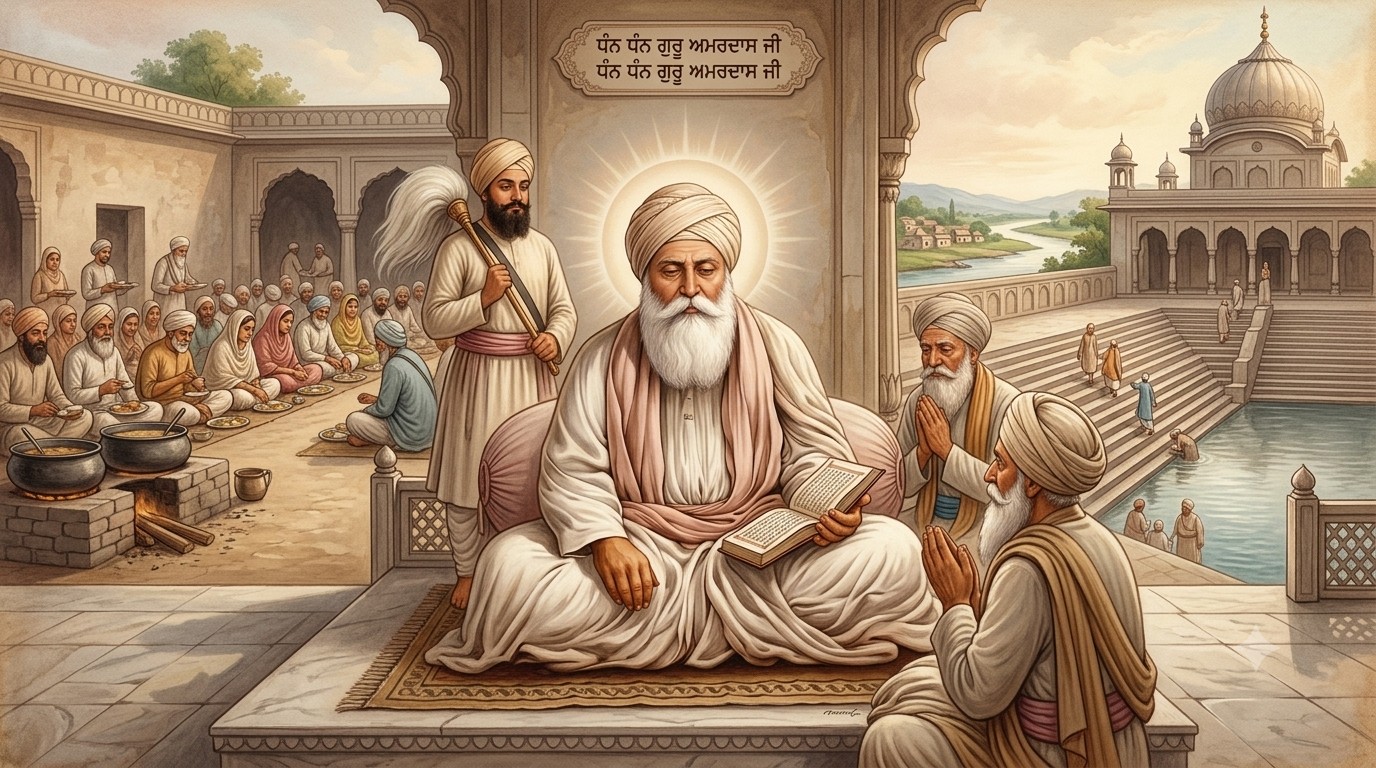
Guru Amar Das Ji
Established Manji system; institutionalized Langar and Anand Karaj.
Hymns in Guru Granth Sahib: 907
The Saint of Service: The Immense Life and Revolutionary Legacy of Guru Amar Das JiIn the landscape of human history, we are often told that the fires of revolution belong to the young. But Guru Amar Das Ji shattered these myths forever.
His story is one of humility, service, equality, and spiritual transformation.
1. The Longing of a Silvered Soul: Early Life and the Restless Search
Guru Amar Das Ji was born on May 5, 1479, in the village of Basarke Gillan near present-day Amritsar. He was born into the Bhalla Khatri family to Baba Tej Bhan and Mata Lakhmi.
He followed the Vaishnavite tradition and devoted much of his early life to religious pilgrimages and rituals.
He married Mata Mansa Devi and had four children: Mohan, Mohri, Dani, and Bhani.
Despite his dedication to religious practices, he continued to feel spiritually incomplete.
The Encounter with the Monk
During one pilgrimage journey, a monk questioned Amar Das Ji about his Guru. When he admitted he had none, the monk declared him spiritually incomplete.
This encounter deeply disturbed Amar Das Ji and intensified his search for spiritual truth.
2. The Melody of the Morning: The Meeting at Khadur Sahib
One morning, Guru Amar Das Ji heard Bibi Amro Ji singing Gurbani composed by Guru Nanak Dev Ji.
“Actions are the paper, and the mind is the ink.”
The words transformed his heart and inspired him to visit Guru Angad Dev Ji at Khadur Sahib.
The Surrender at the Feet of the Master
Upon meeting Guru Angad Dev Ji, Amar Das Ji immediately surrendered himself in complete humility and devotion.
Though much older in age, he became a humble servant of the Guru and dedicated his life to Seva.
3. The Twelve-Year Crucible: A Masterclass in Humility
For twelve years, Bhai Amar Das Ji served Guru Angad Dev Ji with complete selflessness.
Every morning before dawn, he carried water from the River Beas for the Guru’s bath.
During the day, he cleaned utensils, gathered firewood, and served in the Langar.
The Incident in the Weaver’s Pit
One stormy night, Amar Das Ji slipped into a weaver’s pit while carrying water for the Guru. Despite the fall, he protected the water pitcher so not a single drop would spill.
“Amar Das shall be the home of the homeless.”
Guru Angad Dev Ji recognized his unmatched devotion and spiritual greatness.
In 1552, Guru Angad Dev Ji appointed Guru Amar Das Ji as the third Sikh Guru.
4. The Sovereign of Equality: Moving to Goindwal Sahib
Guru Amar Das Ji established Goindwal Sahib as an important Sikh spiritual center.
Guru Angad’s son Datu opposed the succession and publicly insulted Guru Amar Das Ji.
Instead of reacting with anger, Guru Amar Das Ji responded with humility and compassion.
“I fear my old bones may have hurt your tender foot.”
Later, the Sikh community respectfully brought Guru Amar Das Ji back to lead them at Goindwal Sahib.
5. Significant People and Their Emotional Bonds
- Guru Angad Dev Ji: His spiritual master and guide.
- Bibi Amro Ji: The daughter of Guru Angad who introduced him to Gurbani.
- Mata Mansa Devi: His supportive wife and companion.
- Bhai Jetha (Guru Ram Das Ji): His devoted disciple and future successor.
- Emperor Akbar: The Mughal emperor who respected the Guru’s teachings of equality.
6. Significant Places of Light
- Basarke: Birthplace of Guru Amar Das Ji.
- Khadur Sahib: Place where he served Guru Angad Dev Ji.
- Goindwal Sahib: Sikh spiritual center established by the Guru.
- Baoli Sahib: The famous stepwell built at Goindwal Sahib.
7. The Revolutionary Reforms: Shaping a New Society
Pehle Pangat, Phir Sangat
Guru Amar Das Ji made it mandatory for everyone, regardless of social status, to sit together in Langar before meeting the Guru.
Women’s Empowerment and the Piri System
Guru Amar Das Ji strongly supported women’s rights and dignity.
- Abolished the practice of Sati.
- Opposed the Purdah system.
- Encouraged widow remarriage.
- Established the Piri system, appointing women as religious leaders.
The Manji System
He established 22 Manji centers to organize and spread Sikh teachings across India.
8. Significant Teachings in Daily Action
- Equality of Humanity: All human beings are equal before God.
- Anand (Divine Bliss): Guru Amar Das Ji composed Anand Sahib, a hymn of spiritual joy.
- Spiritual Living: One can live spiritually while remaining a householder.
- Seva: Selfless service is the path to removing ego.
9. The Final Lesson: The Platform of Devotion
As Guru Amar Das Ji aged, he searched for a worthy successor.
His daughter Bibi Bhani demonstrated extraordinary devotion by supporting a broken platform with her bleeding hand while the Guru meditated.
Deeply moved, Guru Amar Das Ji blessed her and later appointed Bhai Jetha as Guru Ram Das Ji, the fourth Sikh Guru.
Guru Amar Das Ji departed from the physical world on September 1, 1574.
Timeline of the Life of Guru Amar Das Ji
- 1479 – Birth in Basarke.
- 1521–1541 – Pilgrimages to Haridwar.
- 1541 – Meeting Guru Angad Dev Ji.
- 1541–1552 – Twelve years of Seva.
- 1552 – Became the Third Sikh Guru.
- 1552–1559 – Construction of Baoli Sahib.
- 1567 – Emperor Akbar visited Goindwal Sahib.
- 1574 – Appointed Guru Ram Das Ji as successor and departed from the physical world.
Why Guru Amar Das Ji Still Matters Today
Guru Amar Das Ji remains a timeless inspiration for humility, equality, and service.
His reforms for women’s rights, social equality, and spiritual discipline were centuries ahead of their time.
He demonstrated that age is never a barrier to transformation or leadership.
Frequently Asked Questions (FAQ)
Why is Guru Amar Das Ji called the “Oldest Guru”?
He became Guru at the age of 73 and served until he was 95 years old.
What is the significance of the 84 steps at Baoli Sahib?
The steps symbolize liberation from the cycle of reincarnation through devotion and remembrance of God.
What did Guru Amar Das Ji contribute to Sikh scripture?
He composed 907 hymns, including the famous Anand Sahib.
How did Guru Amar Das Ji improve the status of women?
He opposed Sati and Purdah and appointed women as spiritual leaders through the Piri system.