Gurus and Bhagats, Bani Contributors · Origins & Gurus · Guru Angad Dev Ji
Guru Angad Dev Ji
Standardized Gurmukhi script; established Mall Akhara for physical/spiritual fitness.
Hymns in Guru Granth Sahib: 62
The Limb of the Beloved: The Transcendent Journey of Guru Angad Dev JiThe story of the second Sikh Guru is not merely a chronicle of leadership; it is a profound testament to the power of total surrender. It is the story of how a man named Lehna found the Eternal Light in the humble fields of Guru Nanak Dev Ji.
1. The Seeker of the External Flame: Birth and Early Life
Guru Angad Dev Ji was born as Bhai Lehna on March 31, 1504, in Matte di Sarai near Muktsar in Punjab. He was born to Bhai Pheru Mal and Mata Ramo.
From an early age, Bhai Lehna was deeply religious and devoted to Goddess Durga. He regularly led groups of pilgrims to the Jwala Mukhi temple.
The Shadow of War
During Babur’s invasions, Bhai Lehna’s family was displaced and later settled in Khadur Sahib. The death of his father placed major responsibilities upon him.
2. The Sound of the Infinite: The Meeting at Kartarpur
One morning, Bhai Lehna heard Bhai Jodha reciting Asa di Var composed by Guru Nanak Dev Ji. The words deeply transformed his heart.
“There is but one God. His name is Truth.”
Drawn by spiritual longing, Bhai Lehna traveled to Kartarpur to meet Guru Nanak Dev Ji.
The Unexpected Guide
Upon arriving at Kartarpur, Bhai Lehna encountered an old man leading his horse. Later, he realized that the humble man was Guru Nanak Dev Ji himself.
Overcome with emotion, Bhai Lehna bowed before the Guru.
“If you have come to take, then come as a seeker.”
3. The Seven-Year Crucible: Trials of Humility
For seven years, Bhai Lehna served Guru Nanak Dev Ji with unmatched devotion and humility.
The Muddy Bundles
Guru Nanak once asked for muddy bundles of grass to be carried from the fields. While others refused, Bhai Lehna carried them gladly despite ruining his expensive clothes.
The Wall in the Rain
During a stormy night, Guru Nanak instructed Bhai Lehna to rebuild a damaged wall repeatedly. Bhai Lehna obeyed without complaint.
The Final Test
Guru Nanak once placed what appeared to be a corpse before his followers and asked who would eat it. Only Bhai Lehna stepped forward with complete surrender.
When he lifted the cloth, he found sacred Karah Prashad instead.
4. Succession: “Thou Art Angad”
Guru Nanak Dev Ji embraced Bhai Lehna and declared him to be Angad, meaning “a limb of my own body.”
In 1539, Guru Angad Dev Ji became the second Sikh Guru.
Following Guru Nanak’s departure, Guru Angad spent time in deep sorrow and meditation before accepting leadership responsibilities.
5. Building the Soul of a Nation
The Script of the People: Gurmukhi
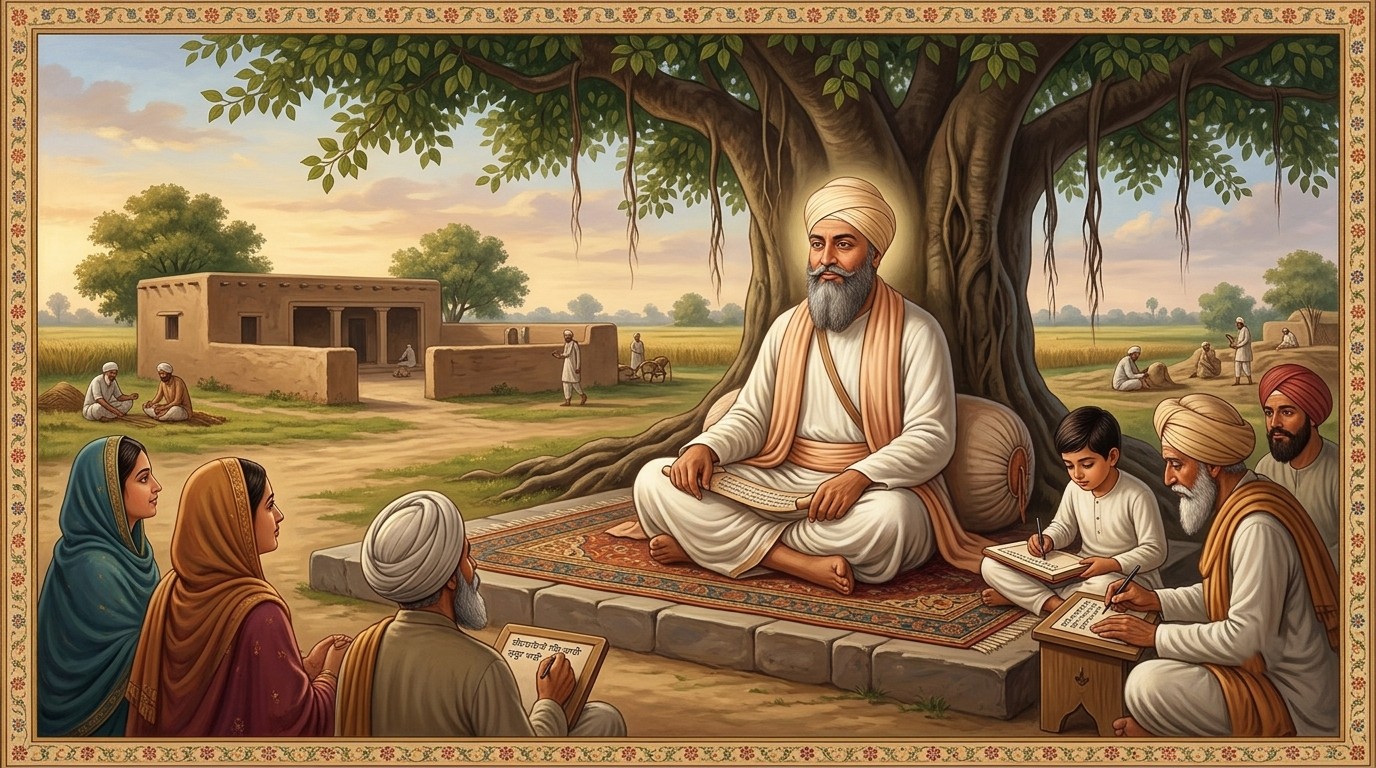
Guru Angad Dev Ji standardized the Gurmukhi script so ordinary people could read and understand spiritual teachings.
He established schools to teach literacy and preserve Guru Nanak’s hymns.
The Kitchen of Compassion: Mata Khivi Ji
Mata Khivi Ji managed the Langar with extraordinary care and compassion. Under her guidance, people from all backgrounds sat together and shared meals equally.
The Mall Akhara
Guru Angad Dev Ji promoted physical fitness and discipline through wrestling arenas called Mall Akharas.
He believed spiritual growth required a healthy body and mind.
6. The Humbling of an Emperor
In 1540, the Mughal Emperor Humayun visited Guru Angad Dev Ji after losing his kingdom.
When the Guru did not immediately acknowledge him, Humayun angrily drew his sword.
“Why did you not use your sword on the battlefield instead of against a peaceful man?”
Humbled by the Guru’s wisdom, Humayun apologized and sought forgiveness.
7. The Final Transition: Guru Amar Das Ji
Guru Angad Dev Ji later recognized Bhai Amar Das Ji as his successor because of his humility and dedication.
Bhai Amar Das Ji performed selfless service for many years, carrying water daily for the Guru.
In March 1552, Guru Angad Dev Ji appointed Guru Amar Das Ji as the third Sikh Guru.
Guru Angad Dev Ji departed from the physical world on March 29, 1552.
Timeline of Guru Angad Dev Ji’s Life
- 1504 – Birth of Bhai Lehna.
- 1520 – Marriage to Mata Khivi Ji.
- 1526 – Settlement at Khadur Sahib.
- 1532 – First meeting with Guru Nanak Dev Ji.
- 1539 – Becomes Guru Angad Dev Ji.
- 1540 – Meeting with Emperor Humayun.
- 1552 – Appoints Guru Amar Das Ji as successor and departs from the physical world.
Major Contributions to Sikhism
- Standardization of the Gurmukhi script.
- Expansion of Langar traditions.
- Establishment of schools and literacy programs.
- Promotion of physical fitness through Mall Akharas.
- Preservation of Guru Nanak Dev Ji’s teachings.
Life Lessons for the Modern Reader
- The Ego is the Greatest Barrier: True spiritual growth begins with humility.
- Surrender is Strength: Complete devotion transforms the soul.
- It Is Never Too Late: Spiritual awakening can happen at any stage of life.
- Balance in Life: Feed the soul, educate the mind, and strengthen the body.
Frequently Asked Questions (FAQ)
Why was Bhai Lehna renamed Guru Angad?
Guru Nanak Dev Ji saw Bhai Lehna as an inseparable part of himself and renamed him “Angad,” meaning “limb.”
Why is the Gurmukhi script important?
It allowed ordinary people to access spiritual teachings without dependence on elite priestly classes.
Who was Mata Khivi Ji?
Mata Khivi Ji was the wife of Guru Angad Dev Ji and played a central role in organizing the Langar.
What lesson did Humayun learn from Guru Angad Dev Ji?
He learned that true leadership requires justice, courage, and humility.
What were Guru Angad Dev Ji’s major contributions to Sikhism?
- Standardization of Gurmukhi Script: Guru Angad Dev Ji refined and standardized the Gurmukhi script, making it easier for people to read and write Punjabi. This helped preserve Sikh teachings in a clear and accessible form.
- Promotion of Langar: He continued and strengthened the tradition of Langar (free community kitchen), ensuring that all people, regardless of caste, creed, or status, could sit together and share a meal.
- Physical Fitness and Sports: Guru Angad Dev Ji encouraged wrestling and physical exercise, promoting health, discipline, and community bonding.
- Education and Literacy: He established schools to teach children in Gurmukhi, fostering literacy and moral values.