Gurus and Bhagats, Bani Contributors · Origins & Gurus · Guru Nanak Dev Ji
Guru Nanak Dev Ji
Founder of Sikhi; introduced One God (Ik Onkar) and Langar.
Hymns in Guru Granth Sahib: 974
The Eternal Wanderer: A Narrative Reconstruction of the Life, Travels, and Divine Mission of Guru Nanak Dev JiThe Fabric of a Fractured World: Fifteenth-Century India
In the mid-fifteenth century, the Indian subcontinent existed as a tapestry of profound spiritual yearning and equally profound social fragmentation. The political landscape was defined by the Lodi dynasty, an Afghan power structure that struggled to maintain administrative coherence across a land divided by caste, creed, and a burgeoning sense of religious exclusivity.
In the Punjab, the "Land of Five Rivers," the air was heavy with the weight of ritualistic orthodoxy. Spiritual life had largely been reduced to external symbols—the sacrificial thread, the ritual bath, and the rigid hierarchy of the caste system which marginalized the poor and the "low-born".
It was into this world of darkness and mist that a child was born in 1469, a child whose life would become a global odyssey of truth and whose teachings would challenge the very foundations of the medieval social order.
Historical Timeline
Dynasty Ruler Period of Reign Contemporary Status of Guru Nanak Lodi Dynasty Bahlul Khan Lodi 1450–1489 Early childhood and youth in Talwandi Lodi Dynasty Sikandar Lodi 1489–1517 Sultanpur Lodhi period and early Udasis Lodi Dynasty Ibrahim Lodi 1517–1526 Later Udasis and return to Punjab Mughal Empire Babur 1526–1530 Witnessing invasions and establishment of Kartarpur Mughal Empire Humayun 1530–1540 Final years and succession of Guru AngadThe Cradle of Revolution: Early Life in Talwandi
The story begins in the serene, forest-nestled village of Rai Bhoi di Talwandi, located approximately 75 kilometers from Lahore in present-day Pakistan. This village, now known as Nankana Sahib, was the site where Mehta Kalu and Mata Tripta welcomed their second child.
Tradition records that at the stroke of one o'clock at night under a full moon, the infant Nanak entered the world not with the typical cry of a newborn, but with a serene smile.
Pandit Hardyal, the family priest, predicted that this child would become a spiritual guide revered by both Hindus and Muslims.
The Classroom of the Infinite and the Sacred Thread
From a young age, Nanak questioned ritualistic practices and sought deeper spiritual meaning. During the Janeu ceremony, he rejected the sacred thread and instead spoke of a thread woven from mercy, truth, and self-restraint.
“Make mercy thy cotton, contentment thy thread, continence its knot, and truth its twist.”
ਸਾਖੀ – ਗੁਰੂ ਨਾਨਕ ਦੇਵ ਜੀ ਅਤੇ ਜਨੇਊ
ਜਦੋਂ ਗੁਰੂ ਨਾਨਕ ਦੇਵ ਜੀ ਛੋਟੇ ਸਨ, ਤਾਂ ਉਹ ਹਰ ਗੱਲ ਨੂੰ ਸਮਝਣ ਅਤੇ ਉਸ ਦਾ ਅਸਲ ਅਰਥ ਜਾਣਨ ਦੀ ਕੋਸ਼ਿਸ਼ ਕਰਦੇ ਸਨ। ਉਹ ਸਿਰਫ਼ ਰਸਮਾਂ ਨਿਭਾਉਣ ਦੀ ਬਜਾਏ ਸੱਚ ਅਤੇ ਪਰਮਾਤਮਾ ਨਾਲ ਜੁੜੇ ਜੀਵਨ ਨੂੰ ਵਧੇਰੇ ਮਹੱਤਵ ਦਿੰਦੇ ਸਨ।
ਇੱਕ ਦਿਨ ਉਨ੍ਹਾਂ ਦੇ ਜਨੇਊ ਪਾਉਣ ਦੀ ਰਸਮ ਰੱਖੀ ਗਈ। ਪੰਡਿਤ ਜੀ ਨੇ ਜਨੇਊ ਪਾਉਣ ਲਈ ਤਿਆਰੀ ਕੀਤੀ। ਉਸ ਵੇਲੇ ਗੁਰੂ ਨਾਨਕ ਦੇਵ ਜੀ ਨੇ ਨਿਮਰਤਾ ਨਾਲ ਪੁੱਛਿਆ, "ਜੇ ਇਹ ਧਾਗਾ ਟੁੱਟ ਜਾਵੇ, ਗੰਦਾ ਹੋ ਜਾਵੇ ਜਾਂ ਸਮੇਂ ਨਾਲ ਖ਼ਰਾਬ ਹੋ ਜਾਵੇ, ਤਾਂ ਇਸ ਦਾ ਕੀ ਲਾਭ?"
ਫਿਰ ਗੁਰੂ ਨਾਨਕ ਦੇਵ ਜੀ ਨੇ ਸਮਝਾਇਆ ਕਿ ਮਨੁੱਖ ਨੂੰ ਅਜਿਹਾ ਜਨੇਊ ਧਾਰਨ ਕਰਨਾ ਚਾਹੀਦਾ ਹੈ ਜੋ ਕਦੇ ਨਾ ਟੁੱਟੇ ਅਤੇ ਨਾ ਹੀ ਪੁਰਾਣਾ ਹੋਵੇ। ਉਨ੍ਹਾਂ ਨੇ ਕਿਹਾ ਕਿ ਦਇਆ ਦਾ ਕਪਾਹ, ਸੰਤੋਖ ਦਾ ਸੂਤ, ਸੰਜਮ ਦੀ ਗੰਢ ਅਤੇ ਸੱਚ ਦਾ ਵੱਟ ਹੀ ਅਸਲ ਜਨੇਊ ਹੈ। ਇਹ ਜਨੇਊ ਮਨੁੱਖ ਦੇ ਚੰਗੇ ਗੁਣਾਂ ਨਾਲ ਬਣਦਾ ਹੈ ਅਤੇ ਜੀਵਨ ਭਰ ਉਸ ਦੇ ਨਾਲ ਰਹਿੰਦਾ ਹੈ।
ਗੁਰੂ ਨਾਨਕ ਦੇਵ ਜੀ ਦਾ ਸੰਦੇਸ਼ ਸੀ ਕਿ ਪਰਮਾਤਮਾ ਨੂੰ ਬਾਹਰੀ ਰਸਮਾਂ ਨਾਲੋਂ ਵੱਧ ਪਿਆਰਾ ਸੱਚਾ ਆਚਰਨ, ਦਇਆ, ਸੰਜਮ ਅਤੇ ਸੱਚਾਈ ਨਾਲ ਭਰਿਆ ਜੀਵਨ ਹੈ।
ਸਿੱਖਿਆ:
ਸਾਨੂੰ ਸਿਰਫ਼ ਰਸਮਾਂ ਨਿਭਾਉਣ ਦੀ ਬਜਾਏ ਦਇਆ, ਸੱਚ, ਸੰਤੋਖ ਅਤੇ ਸੰਜਮ ਵਰਗੇ ਗੁਣ ਆਪਣੇ ਜੀਵਨ ਵਿੱਚ ਅਪਣਾਉਣੇ ਚਾਹੀਦੇ ਹਨ। ਇਹੀ ਅਸਲ ਆਧਿਆਤਮਿਕਤਾ ਹੈ।
The Shadow of the Cobra and the True Bargain
One famous legend tells of a cobra spreading its hood over the sleeping Nanak to shield him from the sun, convincing Rai Bular of the child’s divine nature.
Another transformative event was the “Sacha Sauda” or “True Bargain,” where Nanak used money given for business to feed hungry ascetics instead.
The Sultanpur Lodhi Period: The Modikhana and the Call
Guru Nanak later moved to Sultanpur Lodhi, where he worked in the granaries of Nawab Daulat Khan Lodi. Despite his responsibilities, his soul remained immersed in devotion.
While weighing grain, he often repeated “Tera, Tera” meaning “Yours, Yours,” symbolizing surrender to the Divine.
The Enlightenment at the Kali Bein River
In 1499, Guru Nanak disappeared into the waters of the Kali Bein River for three days. During this mystical experience, he is believed to have communed directly with the Divine.
“There is no Hindu, there is no Muslim.”
This declaration marked the beginning of his spiritual mission to unite humanity beyond labels and divisions.
The Udasis: A Global Odyssey of the Soul
The First Udasi
Guru Nanak traveled across northern and eastern India, challenging ritualism and emphasizing inner devotion.
Haridwar Incident
At Haridwar, he famously threw water toward the west while others offered water toward the east for their ancestors, exposing the mechanical nature of ritual without understanding.
The Story of Bhai Lalo and Malik Bhago
Guru Nanak chose the humble home of Bhai Lalo over the luxurious feast of Malik Bhago, demonstrating that honest labor is spiritually superior to wealth built through exploitation.
The Southern and Himalayan Journeys
Guru Nanak traveled through Sri Lanka, the Himalayas, Tibet, and Nepal, engaging saints, yogis, and rulers in spiritual dialogue.
The Mecca Journey
During his travels to Mecca, Guru Nanak rested with his feet toward the Kaaba. When challenged, he replied:
“Turn my feet in a direction where God is not.”
This encounter emphasized the omnipresence of the Divine.
The Babur Invasions
Guru Nanak witnessed the brutal invasions of Babur and composed powerful hymns condemning oppression and injustice.
Important Places in Guru Nanak’s Journey
Place Significance Talwandi (Nankana Sahib) Birthplace of Guru Nanak Sultanpur Lodhi Site of enlightenment Haridwar Challenge to ritualism Mecca Teaching about God’s omnipresence Baghdad Spiritual discussions with Sufi saints Kartarpur Sahib Foundation of the Sikh communitySignificant People in Guru Nanak’s Life
- Bebe Nanaki – His elder sister and first follower.
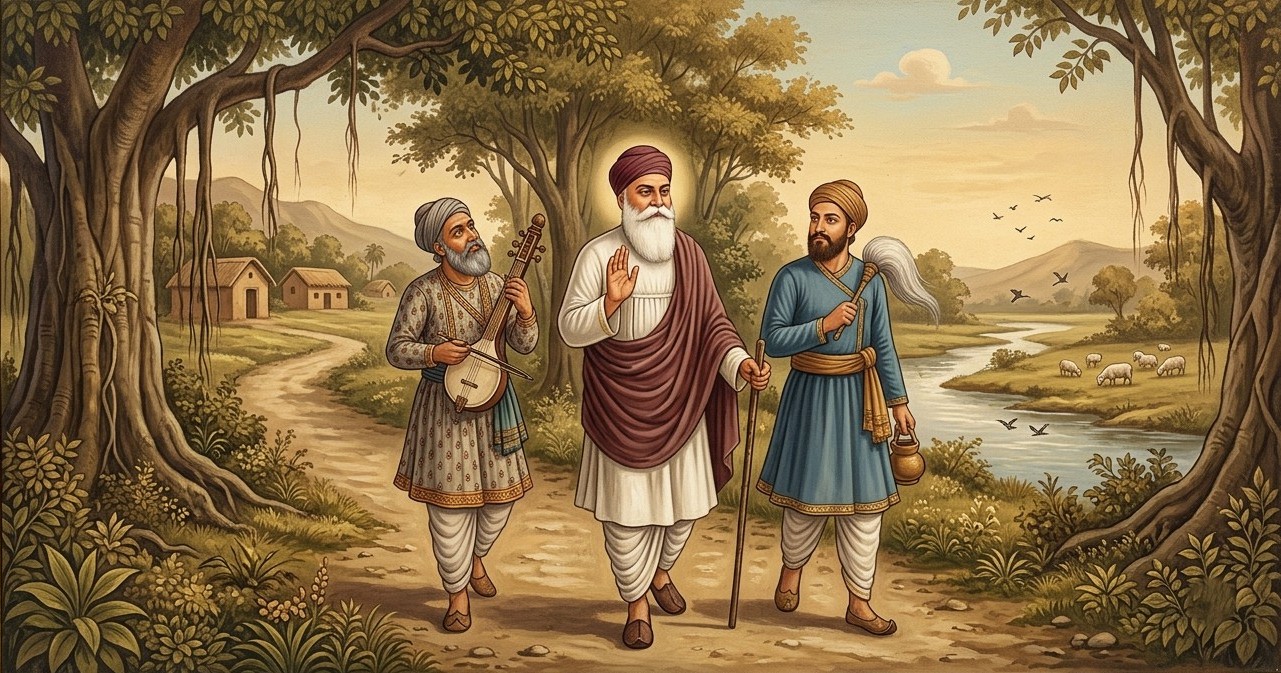
- Bhai Mardana – His lifelong Muslim companion and Rabab musician.
- Rai Bular – The local ruler who recognized Nanak’s divinity.
- Mata Sulakhni – Guru Nanak’s wife.
- Guru Angad Dev Ji (Bhai Lehna) – His chosen successor.
The Kartarpur Chapter
Guru Nanak eventually settled in Kartarpur Sahib, where he established a spiritual community centered on equality, honest labor, devotion, and service.
Core Principles Established at Kartarpur
- Kirat Karni – Honest labor.
- Langar – Community kitchen for all.
- Sangat – Spiritual congregation.
- Naam Simran – Remembrance of God.
The Final Days and Succession
Guru Nanak chose Bhai Lehna as his spiritual successor, renaming him Guru Angad Dev Ji.
In 1539, Guru Nanak departed from the physical world, leaving behind a timeless spiritual legacy.
Core Teachings of Guru Nanak Dev Ji
Principle Meaning Ik Onkar There is One Universal Creator. Naam Japna Remember and meditate on God. Kirat Karni Earn honestly. Vand Chhakna Share with others. Equality All humans are equal. Seva Selfless service to humanity.Timeline of Guru Nanak Dev Ji
- 1469 – Birth at Talwandi.
- 1478 – Refusal of Janeu ceremony.
- 1485 – Move to Sultanpur Lodhi.
- 1499 – Enlightenment at Kali Bein.
- 1500–1524 – The Udasis.
- 1522 – Establishment of Kartarpur Sahib.
- 1532 – Meeting with Bhai Lehna.
- 1539 – Departure from the physical world.
Frequently Asked Questions (FAQ)
Why is Guru Nanak’s birthday celebrated on different dates?
Sikh tradition celebrates Guru Nanak Gurpurab on the full moon of Kattak (November), though some historical accounts suggest a Vaisakh birth.
What is a Janamsakhi?
A Janamsakhi is a traditional narrative biography describing the life and travels of Guru Nanak Dev Ji.
Who traveled with Guru Nanak?
Bhai Mardana was his most well-known travel companion.
Conclusion
Guru Nanak Dev Ji’s life was a journey of truth, compassion, equality, and fearless spiritual awakening. His teachings continue to inspire humanity across cultures, religions, and nations.
His message remains timeless: truthful living, remembrance of the Divine, and service to humanity are the true paths to spiritual fulfillment.