Sikh Legends · Origins & Gurus
Pir Budhu Shah
A Muslim saint who fought alongside the Guru in the Battle of Bhangani with his sons and 700 followers; he sacrificed his family for the Guru's cause.
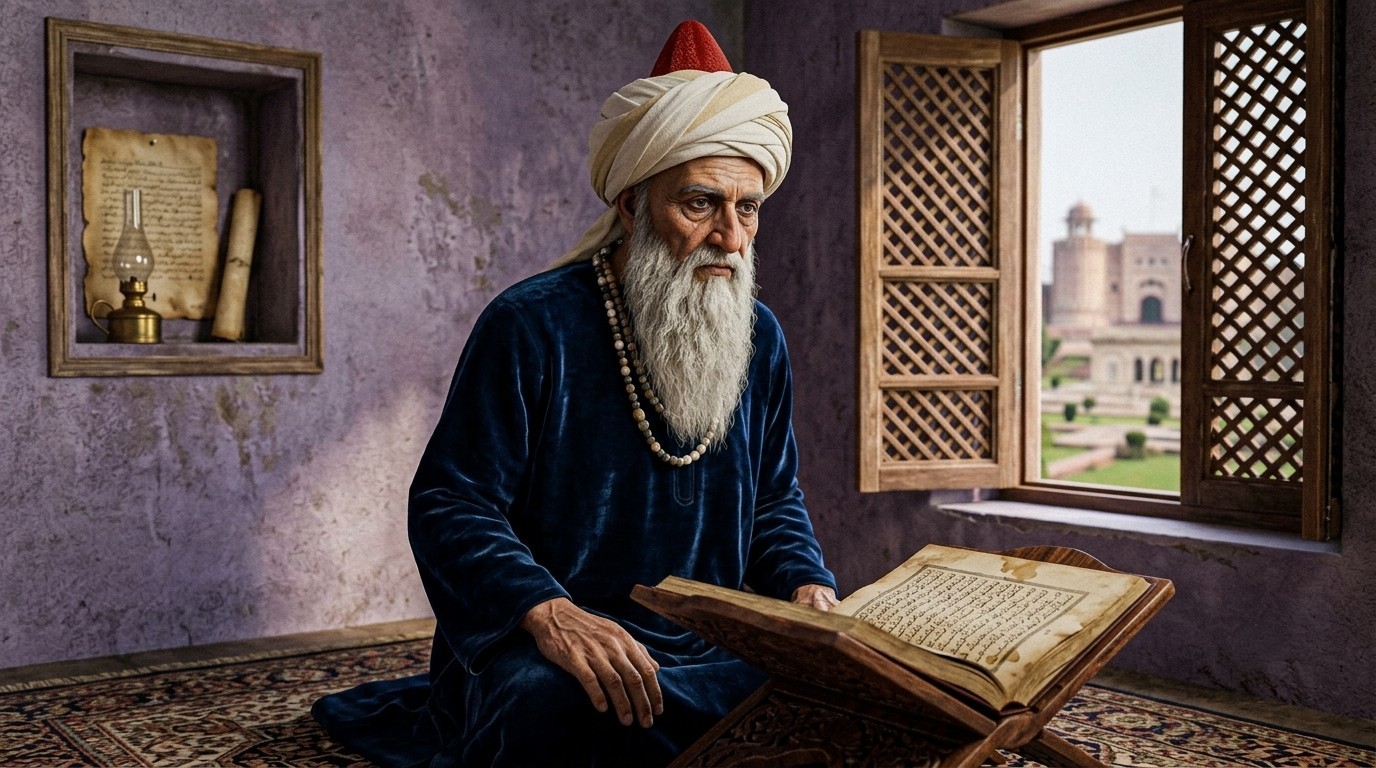
Pir Budhu Shah: The Muslim Saint Who Sacrificed His Family for Guru Gobind Singh and the Cause of Justice
Among the most inspiring figures in Sikh history are not only the Gurus, warriors, and martyrs born within the Sikh community, but also the remarkable individuals from other faith traditions who recognized the spiritual greatness of the Sikh Gurus and willingly stood beside them during moments of immense danger. Few examples shine more brightly than Pir Budhu Shah of Sadhaura. Revered by Sikhs and respected by many Muslims, Pir Budhu Shah occupies a unique place in the history of the Indian subcontinent. He was a Muslim saint, a spiritual guide, and a man of profound conviction who chose principle over safety, righteousness over political convenience, and loyalty over self-preservation. His decision to support Guru Gobind Singh Ji during the turbulent years of the late seventeenth century culminated in one of the most extraordinary demonstrations of interfaith solidarity ever recorded in South Asian history. Alongside his sons and hundreds of devoted followers, he fought in the Battle of Bhangani and paid a devastating personal price for standing with the Guru.
For historians, the story of Pir Budhu Shah represents far more than a military alliance. It is a powerful testament to the universal appeal of Guru Gobind Singh Ji's vision and an enduring reminder that the Sikh struggle was never directed against any religion. Rather, it was a struggle against oppression, injustice, tyranny, and exploitation. The life of Pir Budhu Shah demonstrates how deeply these principles resonated across religious boundaries. His story dismantles simplistic narratives that attempt to portray historical conflicts as purely sectarian. Instead, it reveals a far richer reality in which spiritual truth attracted allies from diverse backgrounds who recognized moral greatness regardless of religious affiliation.
The Historical Landscape of Seventeenth-Century North India
To appreciate the significance of Pir Budhu Shah's choices, one must first understand the volatile political environment of late seventeenth-century northern India. The Mughal Empire under Emperor Aurangzeb had reached immense territorial expansion, yet this apparent strength masked growing internal tensions. Policies that increasingly emphasized religious conformity generated resistance across multiple regions and communities. The hill states of the Shivalik region navigated a complex web of alliances, rivalries, and shifting loyalties. Meanwhile, the Sikh community under Guru Gobind Singh Ji was undergoing a profound transformation.
The Gurus had long advocated justice, equality, and spiritual freedom. However, the martyrdom of Guru Tegh Bahadur Ji in 1675 fundamentally altered the political context in which the Sikh community operated. The execution of the Ninth Guru for defending religious liberty demonstrated that the struggle against oppression had entered a new phase. Guru Gobind Singh Ji inherited not only a spiritual mission but also the responsibility of protecting vulnerable populations from tyranny. As a result, his court at Paonta Sahib attracted an extraordinary range of individuals, including scholars, poets, warriors, mystics, and seekers from different religious traditions.
It was within this dynamic environment that Pir Budhu Shah emerged as one of the Guru's most devoted allies. His support was neither accidental nor motivated by political gain. Instead, it arose from a deep spiritual recognition that transcended conventional boundaries of religious identity.
The Early Life of Pir Budhu Shah
Pir Budhu Shah was born into a respected Muslim family and became a renowned Sufi saint associated with Sadhaura, a town located in present-day Haryana. As a spiritual leader, he attracted followers who sought guidance, wisdom, and moral direction. The Sufi tradition to which he belonged emphasized love of God, compassion toward humanity, and the cultivation of inner spirituality. These values often created natural points of connection with the teachings of the Sikh Gurus.
Historical accounts describe Pir Budhu Shah as a man of integrity, humility, and profound religious devotion. He enjoyed considerable respect among local populations and possessed the influence that accompanies genuine spiritual authority. Yet unlike many religious figures who remained distant from political realities, he demonstrated a willingness to act when confronted with injustice. This commitment would ultimately define his legacy.
His encounter with Guru Gobind Singh Ji appears to have had a transformative effect. The Guru's combination of spiritual depth, intellectual brilliance, and moral courage resonated deeply with the Pir. He recognized in Guru Gobind Singh Ji not merely a community leader but a defender of universal principles that transcended religious labels. This recognition laid the foundation for a remarkable friendship rooted in mutual respect and shared values.
The Arrival of the Pathans and a Defining Test of Character
One of the most significant episodes connecting Pir Budhu Shah and Guru Gobind Singh Ji involved a group of Pathan mercenaries. Historical traditions recount that several Pathan soldiers entered the service of the Guru. Their recruitment was facilitated through connections associated with Pir Budhu Shah. However, when conflict loomed and the possibility of battle became imminent, many of these soldiers abandoned their commitments and deserted.
The desertion created a difficult situation. Not only did it weaken the Guru's military resources, but it also raised questions about loyalty and trust. For Pir Budhu Shah, the incident became a matter of personal honor. He felt a profound responsibility because he had helped establish the connection between these men and the Guru. Rather than distancing himself from the controversy, he chose to act decisively.
This response reveals much about his character. He understood that integrity requires accountability. Although he was not personally responsible for the actions of the deserters, he refused to ignore the consequences. Instead, he determined to support the Guru directly, even at enormous personal risk. In doing so, he demonstrated the qualities that define true spiritual leadership: courage, responsibility, and unwavering commitment to truth.
The Battle of Bhangani: A Defining Moment
The Battle of Bhangani, fought in 1688 near Paonta Sahib, stands among the most significant military engagements of Guru Gobind Singh Ji's early career. A coalition of hill chiefs and their allies opposed the Guru's growing influence and sought to challenge his position. The conflict brought together diverse forces whose motivations ranged from political rivalry to concerns about shifting regional power dynamics.
When news of the impending battle reached Pir Budhu Shah, he made a decision that would forever secure his place in Sikh history. Rather than remaining neutral, he assembled hundreds of followers and marched to support the Guru. Historical traditions commonly state that approximately seven hundred of his disciples accompanied him. More significantly, he brought his own sons into the struggle, fully aware of the dangers they would face.
The decision carried immense consequences. As a respected Muslim saint, Pir Budhu Shah could have chosen safety and neutrality. Instead, he aligned himself publicly with Guru Gobind Singh Ji at a time when doing so invited hostility from powerful interests. His participation transformed the battle into more than a military confrontation. It became a visible demonstration that the principles represented by the Guru attracted support across religious boundaries.
During the fierce fighting that followed, Pir Budhu Shah and his followers displayed extraordinary courage. His sons fought alongside the Sikh forces, and several members of his family paid the ultimate sacrifice. The losses he suffered were devastating. Yet despite the personal tragedy, he never expressed regret for his decision. His actions revealed a profound conviction that defending righteousness was more important than preserving comfort or security.
The Sacrifice of His Sons
Among the most moving aspects of Pir Budhu Shah's story is the sacrifice of his sons. Historical traditions record that two of his sons were martyred during the Battle of Bhangani. For any parent, the loss of a child represents one of life's deepest sorrows. To lose multiple children in a single conflict is almost unimaginable. Yet Pir Budhu Shah accepted this suffering as part of a larger commitment to justice and truth.
In Sikh historical memory, the sacrifice of his sons occupies a place of profound honor. Their martyrdom symbolizes the universal appeal of the values for which Guru Gobind Singh Ji stood. These young men were not Sikhs by birth, yet they willingly risked and ultimately gave their lives in support of a cause they believed to be righteous. Their example illustrates how moral principles can unite people across differences of faith, ethnicity, and social background.
The grief experienced by Pir Budhu Shah did not diminish his devotion. Instead, it deepened the bond between him and the Guru. His willingness to endure such loss demonstrated the sincerity of his commitment and elevated him to a place of lasting reverence within Sikh tradition.
Recognition from Guru Gobind Singh Ji
Guru Gobind Singh Ji deeply appreciated the extraordinary sacrifices made by Pir Budhu Shah and his family. Historical accounts describe how the Guru honored him and expressed profound gratitude for his loyalty. The relationship between the two men exemplified the mutual respect that can exist between spiritual leaders from different traditions when united by shared principles.
One of the most cherished traditions associated with this relationship concerns gifts and relics bestowed by the Guru upon Pir Budhu Shah. These items became treasured symbols of the spiritual connection between the saint and the Guru. For generations, they served as reminders of a friendship rooted not in political expediency but in genuine respect and shared commitment to justice.
The Guru's recognition of Pir Budhu Shah carried broader significance as well. It reinforced the Sikh principle that virtue, courage, and devotion are not confined to any single religious community. Throughout Sikh history, individuals have been honored based upon their actions and character rather than their formal religious affiliation. Pir Budhu Shah remains one of the clearest examples of this inclusive vision.
Martyrdom and Legacy
The story of Pir Budhu Shah did not conclude with the Battle of Bhangani. His continued association with Guru Gobind Singh Ji eventually attracted the hostility of local authorities and opponents who viewed his support for the Guru with suspicion and resentment. Historical records indicate that he later suffered martyrdom as a consequence of these tensions. His death further cemented his status as a man who remained steadfast in his convictions regardless of personal cost.
For historians, his martyrdom underscores the broader significance of his life. He was not merely an ally during a single battle but a consistent advocate of principles that transcended sectarian interests. His willingness to face persecution rather than abandon his beliefs reflects the same spirit of moral courage that characterizes many of the greatest figures in Sikh history.
Today, his memory continues to be honored by Sikhs and many others who recognize the enduring value of interfaith solidarity. His life serves as a reminder that genuine spirituality often manifests through action, sacrifice, and commitment to justice rather than mere theological agreement.
Key Contributions of Pir Budhu Shah
| Contribution | Historical Significance |
| Support for Guru Gobind Singh Ji | Demonstrated interfaith solidarity based on shared moral principles. |
| Participation in Battle of Bhangani | Provided crucial military support during a defining conflict. |
| Sacrifice of Sons | Symbolized extraordinary personal commitment to righteousness. |
| Leadership of Followers | Brought hundreds of disciples to support the Guru's cause. |
| Promotion of Justice | Showed that moral courage transcends religious boundaries. |
| Martyrdom | Became a lasting symbol of faithfulness and sacrifice. |
The Enduring Message of Pir Budhu Shah
In an age often characterized by division and misunderstanding, the story of Pir Budhu Shah offers a powerful lesson. His life demonstrates that shared values can unite people across religious differences. He recognized greatness in Guru Gobind Singh Ji not because they belonged to the same religious tradition but because they shared a commitment to justice, compassion, and truth.
His example also challenges modern assumptions about identity. Too often, historical narratives reduce individuals to rigid categories of religion, ethnicity, or nationality. Pir Budhu Shah transcends such simplifications. He was simultaneously a devoted Muslim saint and one of the most celebrated allies of the Sikh Gurus. Rather than viewing these identities as contradictory, he embodied their harmonious coexistence.
Ultimately, his legacy endures because it speaks to universal human aspirations. Courage, loyalty, sacrifice, and integrity remain qualities admired across cultures and generations. Through his actions, Pir Budhu Shah demonstrated that true spirituality demands not only faith but also the willingness to stand beside what is right, even when doing so carries tremendous personal cost.
Frequently Asked Questions (FAQ)
1. Who was Pir Budhu Shah?
Pir Budhu Shah was a respected Muslim Sufi saint from Sadhaura who became a devoted ally of Guru Gobind Singh Ji.
2. Why is Pir Budhu Shah important in Sikh history?
He supported Guru Gobind Singh Ji during critical moments, fought at the Battle of Bhangani, and sacrificed members of his family for the Guru's cause.
3. Where did Pir Budhu Shah live?
He lived in Sadhaura, a historically significant town in present-day Haryana.
4. What was his relationship with Guru Gobind Singh Ji?
He shared a relationship of deep respect, friendship, and spiritual admiration with the Guru.
5. What role did he play in the Battle of Bhangani?
He brought hundreds of followers and fought alongside Guru Gobind Singh Ji against opposing forces.
6. Did Pir Budhu Shah's family participate in the battle?
Yes. His sons fought alongside the Guru's forces, and two of them were martyred during the conflict.
7. Why did he support Guru Gobind Singh Ji?
He admired the Guru's commitment to justice, truth, and the defense of religious freedom.
8. Was Pir Budhu Shah a Sikh?
No. He remained a Muslim Sufi saint, demonstrating that support for the Guru's mission transcended religious boundaries.
9. How did Guru Gobind Singh Ji honor him?
The Guru expressed deep gratitude for his sacrifices and bestowed gifts and relics as symbols of respect and appreciation.
10. What is Pir Budhu Shah's enduring legacy?
He remains a powerful symbol of interfaith harmony, moral courage, sacrifice, and unwavering commitment to justice.
Guru Gobind Singh Ji (1666–1708)
A Muslim saint who fought alongside the Guru in the Battle of Bhangani with his sons and 700 followers; he sacrificed his family for the Guru's cause.
- Role
- Sufi Saint
- Group
- Allies & Devotees
- Period
- Guru Gobind Singh Ji (1666–1708)