Sikh Legends · Origins & Gurus · Guru Nanak Dev Ji
Sheikh Brahm (Farid II)
The 11th successor of Baba Farid at Pakpattan; shared a deep spiritual bond with the Guru.
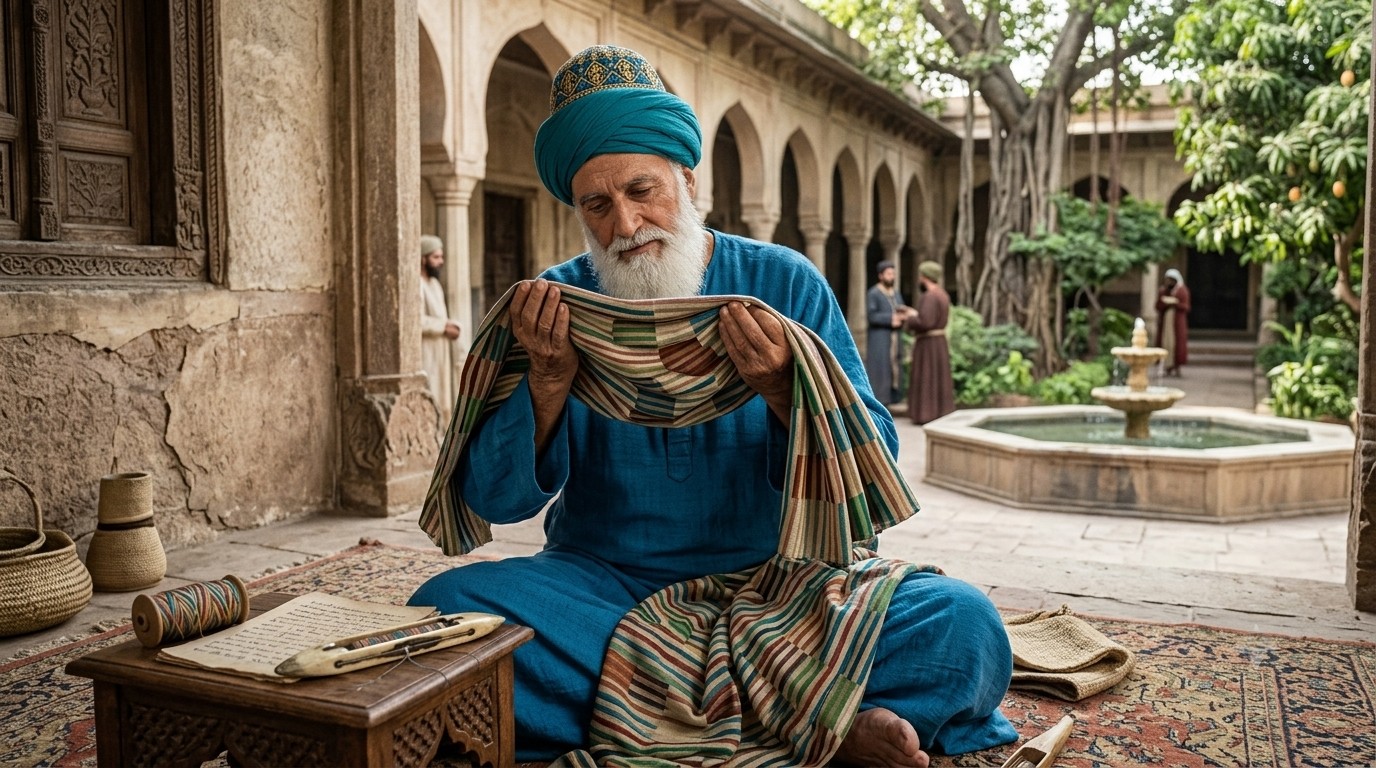
Sheikh Brahm (Farid II): The Sufi Successor Who Shared a Spiritual Bond with Guru Nanak
Among the many remarkable encounters that illuminate the early history of Sikhism, few are as intellectually rich and spiritually profound as the meeting between Guru Nanak Dev Ji and Sheikh Brahm, also known as Farid II, the eleventh spiritual successor of the revered Sufi saint Baba Farid of Pakpattan. This meeting was not merely a conversation between two holy men; it was a moment of extraordinary dialogue between two influential spiritual traditions of the Indian subcontinent. At a time when political authority was often enforced through military power and religious identity was frequently defined through rigid institutional boundaries, Guru Nanak and Sheikh Brahm demonstrated an alternative vision. Their encounter revealed that genuine spirituality transcends sectarian divisions and flourishes through humility, wisdom, and the shared pursuit of divine truth. The historical memory of Sheikh Brahm occupies a unique place within Sikh tradition because his dialogue with Guru Nanak was preserved in the sacred Sikh scriptural tradition, providing future generations with a rare window into an authentic exchange between two towering spiritual personalities of the sixteenth century.
To understand the significance of Sheikh Brahm, one must first appreciate the immense prestige of the spiritual institution he inherited. Pakpattan, located in present-day Pakistan, was one of the most important centers of the Chishti Sufi order in South Asia. The shrine of Baba Farid, whose verses would later be included in the Guru Granth Sahib, attracted pilgrims, scholars, mystics, rulers, and common people from across the region. By the time Sheikh Brahm became the custodian of this spiritual legacy, the khanqah of Pakpattan had already established itself as a major center of Islamic mysticism. The position of sajjada-nashin, or spiritual successor, carried enormous responsibility. It involved not only overseeing religious affairs but also preserving the teachings, traditions, and ethical ideals associated with Baba Farid. Sheikh Brahm inherited this sacred trust and emerged as one of the most respected spiritual figures of his era. Yet despite his elevated status, historical traditions consistently portray him as a seeker willing to engage openly with other perspectives, a quality that made his encounter with Guru Nanak particularly meaningful.
The Spiritual Landscape of Sixteenth-Century Punjab
The Punjab into which Guru Nanak and Sheikh Brahm were born was a region of remarkable diversity and equally significant tensions. The late fifteenth and early sixteenth centuries witnessed the coexistence of multiple religious traditions, including various schools of Hindu thought, Islamic scholarship, Sufi mysticism, Nath yogic practices, and numerous local devotional movements. While this diversity enriched the cultural fabric of the region, it also created competing claims regarding spiritual authority and the path to liberation. Many seekers struggled to navigate these competing voices. It was in this environment that Guru Nanak embarked upon his extensive journeys, challenging ritualism, caste hierarchy, empty formalism, and sectarian arrogance wherever he encountered them.
Pakpattan represented one of the most important intellectual and spiritual centers encountered during these journeys. For centuries, Baba Farid's teachings had emphasized humility, remembrance of God, compassion toward humanity, and detachment from worldly pride. These themes resonated deeply with many aspects of Guru Nanak's message. Yet there were also significant differences in emphasis and interpretation. Rather than avoiding these differences, Guru Nanak engaged them directly through respectful dialogue. The resulting conversation with Sheikh Brahm stands as a powerful example of how meaningful theological exchange can occur without hostility or triumphalism. Each participant approached the discussion not as an adversary seeking victory but as a sincere seeker pursuing deeper understanding.
The Historic Encounter at Pakpattan
The meeting between Guru Nanak and Sheikh Brahm occupies a distinguished place in Sikh historical memory because portions of their dialogue were preserved in scriptural form. During their exchange, Sheikh Brahm raised questions concerning asceticism, renunciation, spiritual discipline, and the nature of divine realization. These were not superficial inquiries. They reflected centuries of accumulated mystical reflection within the Chishti Sufi tradition. Guru Nanak responded with profound clarity, articulating a vision of spirituality that rejected both worldly attachment and extreme withdrawal from society. He argued that true enlightenment was not achieved by fleeing the world but by living within it while remaining inwardly connected to the Divine.
One of the most significant aspects of this dialogue concerns the concept of renunciation. Many spiritual traditions of the period associated holiness with physical withdrawal from ordinary life. Guru Nanak challenged this assumption. He taught that one could live as a householder, engage in honest labor, support one's family, and still attain the highest spiritual realization through remembrance of God and selfless service. Sheikh Brahm's questions provided Guru Nanak with an opportunity to articulate this revolutionary vision. The resulting conversation became one of the foundational expressions of Sikh spirituality, emphasizing the integration of devotion and daily life rather than their separation.
Sheikh Brahm as Custodian of the Faridi Tradition
To appreciate the depth of Sheikh Brahm's role, it is important to examine his position within the lineage of Baba Farid. The Chishti order emphasized love, humility, hospitality, and remembrance of God through constant devotion. Unlike more rigid legalistic approaches, Chishti spirituality often appealed to ordinary people because of its emphasis on compassion and accessibility. Sheikh Brahm inherited not merely a physical shrine but a living spiritual tradition that shaped the religious landscape of Punjab for generations.
As the eleventh successor of Baba Farid, Sheikh Brahm was responsible for preserving the teachings that had transformed Pakpattan into a center of pilgrimage. He supervised disciples, guided seekers, and maintained the ethical values associated with the Chishti path. Historical accounts portray him as a deeply respected figure whose influence extended far beyond his immediate community. His willingness to engage Guru Nanak in sincere dialogue reflects a confidence rooted in genuine spirituality rather than institutional insecurity. This openness enabled a conversation whose significance continues to resonate across centuries.
The Shared Legacy of Baba Farid
Perhaps the most remarkable bridge connecting Sikhism and the Faridi tradition is the inclusion of Baba Farid's compositions within the Guru Granth Sahib. The Sikh scripture contains numerous verses attributed to Baba Farid, making him one of the most prominent non-Sikh contributors to the sacred text. This inclusion demonstrates the universal vision embraced by the Sikh Gurus. Truth was not confined to a single community or institution. Wherever genuine spiritual insight appeared, it was recognized and honored.
Sheikh Brahm, as the custodian of Baba Farid's legacy, occupied a unique position in relation to this shared heritage. While Guru Nanak and Sheikh Brahm differed in certain theological perspectives, both drew inspiration from the same deeper currents of devotion, humility, and God-consciousness. Their meeting illustrates how spiritual traditions can maintain distinct identities while still recognizing common ethical and mystical foundations. In an age increasingly marked by polarization, this example remains profoundly relevant.
The Philosophical Themes of the Dialogue
The recorded exchanges between Guru Nanak and Sheikh Brahm explore several enduring philosophical questions. What is the nature of true renunciation? How should a seeker balance worldly responsibilities with spiritual aspirations? Can divine realization be achieved without abandoning ordinary life? What is the role of ego in obstructing spiritual growth? These questions remain as relevant today as they were five centuries ago.
Guru Nanak consistently emphasized that external appearances alone do not determine spiritual attainment. A person may wear the robes of an ascetic while remaining inwardly attached to pride and desire. Conversely, a householder engaged in honest work may cultivate deep spiritual awareness. Sheikh Brahm's questions allowed these teachings to emerge in a particularly clear form. Their dialogue reveals not only intellectual sophistication but also mutual respect. Neither participant reduced complex issues to simplistic slogans. Instead, both demonstrated a commitment to thoughtful inquiry and spiritual authenticity.
The Historical Importance of Pakpattan
Pakpattan itself occupies a central place in the religious history of South Asia. For centuries, it served as a crossroads where merchants, pilgrims, scholars, and mystics converged. The shrine of Baba Farid attracted visitors from diverse backgrounds, creating a dynamic environment for intellectual and spiritual exchange. Sheikh Brahm's leadership ensured the continued vitality of this institution during a transformative period in regional history.
For Sikh historians, Pakpattan represents more than a geographical location. It symbolizes the openness with which Guru Nanak engaged the religious traditions of his time. Rather than isolating himself within a single community, he traveled widely, conversed with scholars and mystics, and participated in meaningful dialogue across cultural and theological boundaries. The encounter with Sheikh Brahm exemplifies this broader pattern. It demonstrates that Sikhism emerged not through isolation but through active engagement with the spiritual currents of its age.
The Legacy of Mutual Respect
One of the most enduring lessons arising from the relationship between Guru Nanak and Sheikh Brahm is the importance of respectful engagement. Their conversation was not characterized by hostility, coercion, or attempts at domination. Instead, it reflected confidence grounded in spiritual conviction. Each participant remained faithful to his own tradition while remaining open to genuine dialogue. This model offers a powerful alternative to the confrontational approaches that often dominate discussions of religious difference.
The historical memory of Sheikh Brahm within Sikh tradition reflects this spirit of respect. He is remembered not as an opponent but as a sincere seeker who engaged Guru Nanak in meaningful theological exchange. The preservation of their dialogue within Sikh scripture further underscores its significance. By recording these conversations, the Sikh Gurus affirmed the value of honest inquiry and intellectual openness. The result is a legacy that continues to inspire scholars, believers, and interfaith practitioners alike.
Conclusion: A Bridge Between Traditions
Sheikh Brahm stands as one of the most fascinating figures in the shared religious history of Punjab. As the eleventh successor of Baba Farid, he inherited a revered spiritual lineage that had shaped the moral and mystical imagination of countless seekers. His encounter with Guru Nanak created a moment of extraordinary significance, demonstrating how profound theological dialogue can transcend institutional boundaries without erasing meaningful differences.
For Sikh historians, Sheikh Brahm represents more than a historical personality. He embodies a tradition of respectful engagement, intellectual curiosity, and spiritual sincerity. His dialogue with Guru Nanak continues to illuminate foundational Sikh teachings regarding humility, householder spirituality, and the rejection of empty ritualism. At the same time, it reminds us that truth often emerges most clearly when sincere seekers meet one another with openness and respect. In a world frequently divided by religious and ideological conflicts, the example of Sheikh Brahm and Guru Nanak remains a timeless testament to the transformative power of authentic spiritual conversation.
Frequently Asked Questions (FAQ)
1. Who was Sheikh Brahm?
Sheikh Brahm, often called Farid II, was the eleventh spiritual successor of Baba Farid and the custodian of the famous Chishti Sufi center at Pakpattan.
2. Why is Sheikh Brahm important in Sikh history?
He is remembered for his profound theological dialogue with Guru Nanak Dev Ji, portions of which were preserved in Sikh scripture.
3. Where was Pakpattan located?
Pakpattan is located in present-day Pakistan and has long been one of the most important centers of Chishti Sufism.
4. What spiritual tradition did Sheikh Brahm represent?
He belonged to the Chishti Sufi order, a tradition emphasizing love, humility, devotion, and service.
5. Did Guru Nanak and Sheikh Brahm agree on all issues?
No. While they shared many ethical and spiritual concerns, their dialogue explored significant differences regarding renunciation and spiritual practice.
6. Why is Baba Farid important in Sikhism?
Many of Baba Farid's hymns were included in the Guru Granth Sahib, making him one of the most prominent non-Sikh contributors to Sikh scripture.
7. What was the main theme of the dialogue between Guru Nanak and Sheikh Brahm?
A central theme was whether spiritual realization requires withdrawal from society or can be achieved while living as a householder.
8. How did Guru Nanak respond to ideas of asceticism?
Guru Nanak taught that true spirituality lies in remembering God while actively participating in family and community life.
9. What does the encounter teach about interfaith relations?
It demonstrates the value of respectful dialogue, intellectual openness, and mutual recognition of sincere spiritual seeking.
10. Why does Sheikh Brahm remain relevant today?
His example highlights the possibility of meaningful engagement between different religious traditions while maintaining one's own faith and identity.
Guru Nanak Dev Ji (1469–1539)
The 11th successor of Baba Farid at Pakpattan; shared a deep spiritual bond with the Guru.
- Role
- Sufi Leader
- Group
- Spiritual & Philosophical Dialogues
- Period
- Guru Nanak Dev Ji (1469–1539)