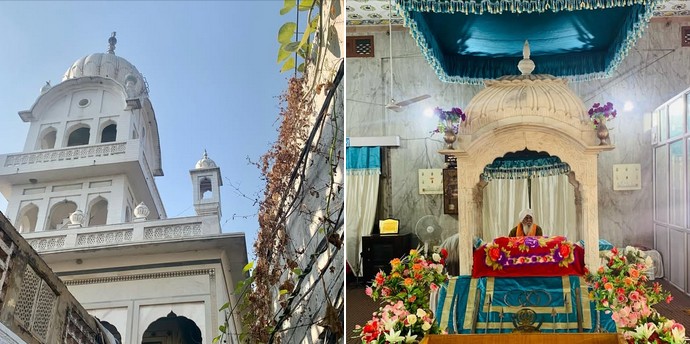
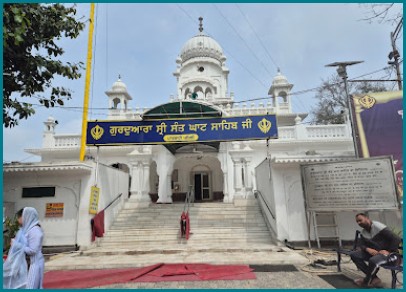
Gurdwara Sri Guru Hargobind Sahib Ji Patshahi Chhevin (Plahi Sahib)
Shadows of the Palah Trees: A Historian’s Account of the Battle of Phagwara and the Sacred Grounds of Palahi Sahib
The landscape of the Doaba region in Punjab is a history written in rich soil, ancient migration patterns, and the heavy steps of empires.
To the conventional traveler, the village of Palahi—situated just a few kilometers north of Phagwara within the administrative boundaries of the Kapurthala district—might appear as a typical, prosperous agrarian settlement deeply connected to its transnational diaspora.
Yet, to an administrative and military historian of seventeenth-century India, this specific geographic pocket represents a monumental tectonic shift in subcontinental history.
It is the site where the transformation of the Sikh community from a quietist spiritual fellowship into a formidable, sovereign martial force reached its definitive mid-seventeenth-century crescendo.
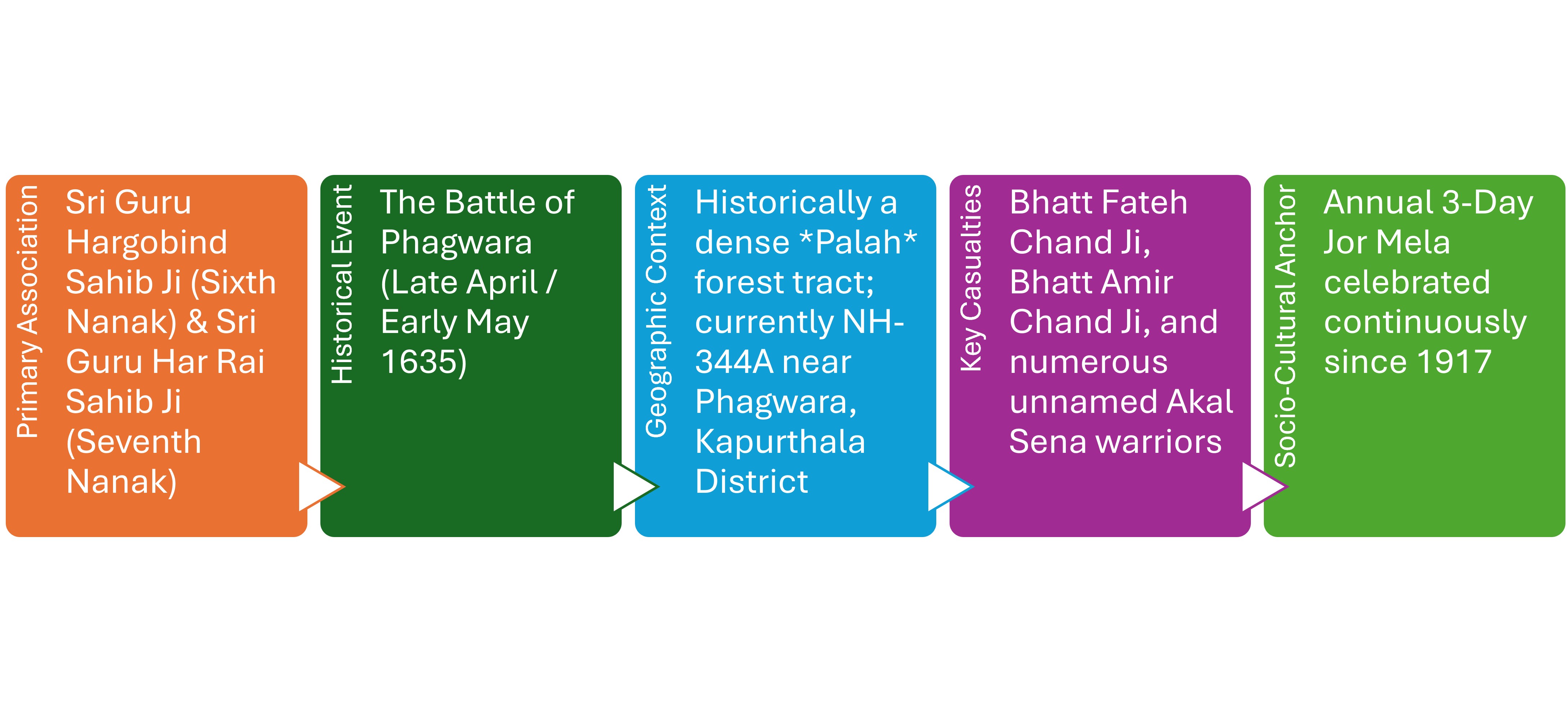
At the heart of this memory stands Gurudwara Sri Guru Hargobind Sahib Palahi, a sacred monument that is not merely a house of worship but a physical archive of the Battle of Phagwara (1635), fought under the tactical leadership of the Sixth Nanak, Guru Hargobind Sahib Ji.
The Strategic Geopolitics of 1635: The Prelude to Palahi
To understand the historical weight of Palahi Sahib, one must look closely at the volatile geopolitical situation of the Punjab plains in the spring of 1635.
The relationship between the emerging Sikh state-within-a-state and the Mughal imperial center under Emperor Shah Jahan had deteriorated into open warfare.
Guru Hargobind Ji had systematically introduced the concept of Miri and Piri—the dual sovereignty of temporal, military authority and eternal, spiritual power.
By donning two swords, establishing the Sri Akal Takht Sahib in Amritsar, and constructing the fort of Lohgarh, the Guru had fundamentally challenged the absolute administrative monopoly of the Mughal authorities.
The Sikhs had already proved their defensive capabilities in fierce engagements at Amritsar and Lahira.
However, it was the catastrophic siege of Kartarpur in April 1635 that set the wheels in motion for the bloody encounter under the palah (dhak) trees of Palahi.
At Kartarpur, the Guru’s forces had faced a massive imperial army spearheaded by the Mughal Governor of Jalandhar, Kale Khan, and fueled by the betrayal of Painda Khan—a former Pathan general in the Guru’s own forces who had defected to the empire over a personal dispute.
The Battle of Kartarpur ended in a decisive, stunning victory for the Akal Sena (the Sikh army).
Painda Khan, Kale Khan, and Qutub Khan, the faujdar (garrison commander) of Jalandhar, were all slain in close combat.
It was during this brutal siege that the Guru’s youngest son, Tyag Mal, displayed such precise, devastating swordsmanship that his father dynamically renamed him Tegh Bahadur—the "Wielder of the Divine Sword."
Despite this tactical triumph, Guru Hargobind Ji was an astute military realist.
He recognized that the wide, exposed plains of the Doaba left the growing Sikh community highly vulnerable to continuous, resource-heavy Mughal sieges.
He made the strategic, long-term decision to permanently relocate the centralized Sikh headquarters away from the plains, moving toward the natural, highly defensible foothills of the Shivalik range at Kiratpur Sahib.
The long, hazardous march from Kartarpur toward the hills had to cut directly through the dense, forested tracts of the Jalandhar-Doab.
It was during this complex tactical retreat that the imperial forces, desperate to salvage their honor after the disaster at Kartarpur, intercepted the Guru’s column at the historical village of Palahi.
The Battle of Phagwara: Blood in the Dhak Forests
The clash that erupted at Palahi, structurally remembered in military records as the Battle of Phagwara, was characterized by its intense, chaotic ambush dynamics.
The Mughal state, utilizing fresh garrisons and remnants of the Jalandhar division under the command of regional imperial officers including Ahmad Khan, sought to cut off the Guru's retreat before his forces could reach the safety of the highlands.
The terrain of Palahi at the time was vastly different from the manicured, flat fields seen today.
Local historical tradition and topymic records indicate that the village derived its very name from the Palah trees (Butea monosperma, commonly known as the Flame of the Forest) that grew in wild, thick abundance across the region.
This dense woodland provided excellent tactical cover for an ambush but offered little room for classic, sweeping cavalry maneuvers, forcing the engagement into a series of brutal, close-quarter hand-to-hand skirmishes.
The historical texts, including the accounts preserved by contemporary chroniclers and later Sikh historians like Bhai Santokh Singh, describe the battle as exceptionally costly for both sides.
The Sikhs, exhausted from the recent heavy fighting at Kartarpur and burdened with supplies, non-combatants, and wounded warriors, had to rapidly form defensive squares within the tree lines.
The Bhatt Vahis (scrolls maintained by traditional bardic family chroniclers) record that the fighting was fierce and unyielding.
The Guru himself moved dynamically across the line of fire, directing his veteran warriors—including legendary figures like Bhai Bidhi Chand—to hold the perimeter against waves of imperial assault.
The Mughal forces suffered heavy casualties, and their offensive momentum broke completely when their front-line commanders were systematically neutralized by the elite vanguard of the Sikh army.
The imperial forces eventually broke ranks and abandoned the field, completely failing in their core strategic objective to capture or eliminate the Guru.
However, for the Sikhs, the victory was deeply somber.
A significant number of devoted horsemen and infantrymen achieved martyrdom (shaheedi) while holding the line to secure the passage of the Guru’s entourage.
Among the prominent casualties recorded in the genealogical logs were Bhatt Fateh Chand and Bhatt Amir Chand, two brilliant young minds from the historic family of Bhoja Bhatt.
They fell in the thick of the forest, their blood spilling onto the roots of the very trees that defined the landscape.
Architectural Memory and the Footsteps of the Seventh Nanak
The modern structural manifestation of Gurudwara Sri Guru Hargobind Sahib Palahi is a fascinating study in how sacred architecture acts as a visual anchor for historical memory.
When the immediate threat of Mughal retaliation subsided in later centuries, the local community and the Khalsa panth transformed the raw battlefield into a monumental space of remembrance.
The Gurudwara complex stands as a physical testament to the blood shed in 1635, intentionally preserving the spiritual energy of the site where Guru Hargobind Ji halted his horse, tended to his wounded warriors, and performed the final rites for the fallen martyrs.
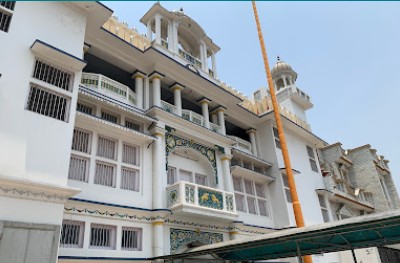
The architectural grammar of the main shrine features a grand, imposing structure dominated by traditional domes and wide arched halls, capturing the characteristic aesthetic of historical Gurudwaras built across the Punjab during the late nineteenth and early twentieth centuries.
As an architectural space, the complex is designed to handle thousands of pilgrims while maintaining distinct zones of historical reflection.
The construction of the massive Miri Piri Hall within the complex is a deliberate nod to the ideological framework championed by the Sixth Guru, bridging the gap between spiritual devotion and physical, political freedom.
Furthermore, the historical continuity of the site is deeply enriched by the documented visits of the Seventh Sovereign, Guru Har Rai Sahib Ji.
Following in the footsteps of his grandfather, the young Guru Har Rai visited Palahi to honor the memory of the martyrs, consolidating the spiritual administration of the Doaba region and ensuring that the sacrifices made during the Battle of Phagwara were systematically integrated into the collective consciousness of the growing community.
The Social and Cultural Legacy: The Jor Mela of Palahi
From a sociological and cultural perspective, historical sites like Palahi Sahib do not exist as static museums; they are dynamic centers of community life that continue to shape regional identity.
Since the year 1917, the village of Palahi has hosted an annual three-day Jor Mela (historical commemorative festival) specifically dedicated to the Aagman Purb—the historic arrival and battle of Guru Hargobind Sahib Ji in their locality.
For over a century, this three-day gathering has served as an incredibly powerful engine for social cohesion, historical education, and cultural preservation, drawing together rural populations, theologians, traditional musicians (dhadis), and members of the global Punjabi diaspora.
For the modern historian, Gurudwara Sri Guru Hargobind Sahib Palahi offers an invaluable window into the process of community identity formation.
It illustrates beautifully how a traumatic military crisis—an imperial ambush in a dense forest—was successfully transformed through faith and collective memory into an enduring legacy of resilience.
The site challenges the Eurocentric view that history is found only in state archives or written treaties.
Here, in the heart of Kapurthala, history lives in the architecture of the Gurudwara, in the echoes of the Kirtan sung inside its walls, and in the very name of the village itself.
The stones of Palahi stand as timeless witnesses to the day when the Saint-Soldiers of the Khalsa stood firm beneath the shadows of the palah trees, forever changing the political and spiritual destiny of the Indian subcontinent.
Location & contact
- Map: Open in Google Maps
- Associated Gurus: Guru Hargobind Sahib Ji · Guru Tegh Bahadur Ji