Akal Takht
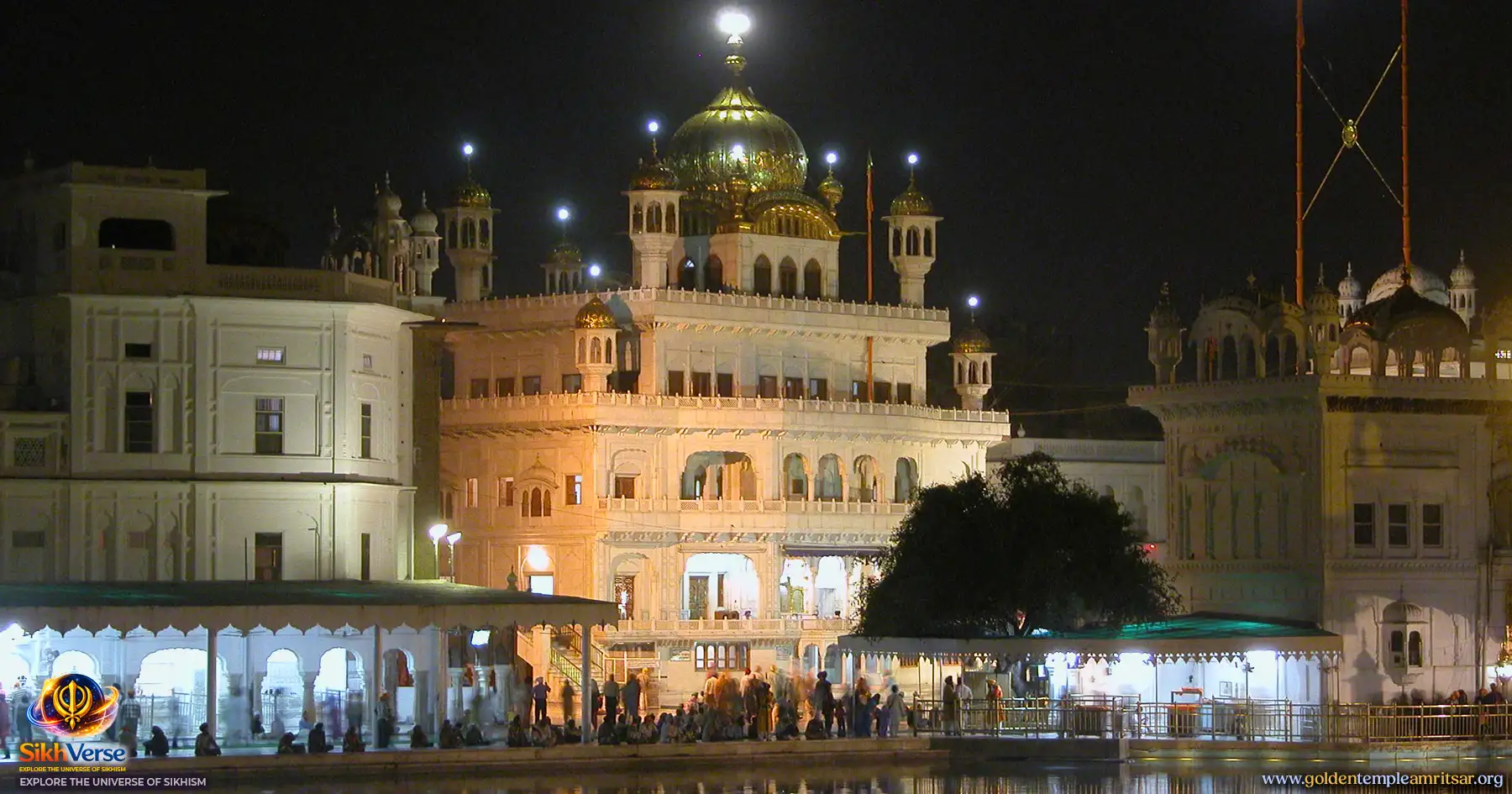
Akal Takht — The Throne of the Timeless One
To understand the Akal Takht is to understand the soul of Sikhism itself. Sri Darbar Sahib teaches the human spirit how to bow in humility before the Divine. The Akal Takht teaches that the same spirit must also rise with courage in the face of injustice. Together, the two stand opposite one another in profound symbolic harmony — devotion facing responsibility, prayer facing action, compassion facing resistance against tyranny. They are not opposites. They are two halves of the same spiritual truth.
The story of the Akal Takht begins during one of the most painful and transformative periods in Sikh history. The Mughal Empire ruled much of India with immense power, and across Punjab, fear had become part of ordinary life. Religious persecution, political oppression, and social inequality pressed heavily upon the people. Then came the martyrdom of Guru Arjan Dev Ji, the fifth Sikh Guru — an event that shook the Sikh world to its core. The Guru was tortured and executed in Lahore under the orders of Emperor Jahangir, not because he sought power, but because he refused to compromise truth, compassion, and spiritual freedom.
The grief that spread through the Sikh community after the Guru’s martyrdom was unlike anything they had known before. The air of Punjab itself seemed heavy with sorrow. Families wept. Sangats sat in stunned silence. Yet from that darkness emerged a new vision — one that would forever reshape Sikh identity.
Guru Hargobind Sahib Ji, the young son of Guru Arjan Dev Ji, inherited not only the spiritual mantle of the Guruship but also the unbearable pain of witnessing his father’s sacrifice. But rather than allowing the Sikh community to sink into helplessness, he transformed grief into strength. He understood that spirituality alone was no longer enough in an age ruled by oppression. The faithful would also need courage. They would need sovereignty. They would need the ability to defend righteousness and protect the weak.
And so, in 1606, directly across from Sri Darbar Sahib, Guru Hargobind Sahib Ji established the Akal Takht.
Unlike royal thrones built by kings to display worldly dominance, the Akal Takht was created as a throne belonging only to the Timeless One — Akal Purakh. Here, authority would not belong to emperors or bloodlines, but to truth, justice, and the collective spirit of the Khalsa Panth.
Guru Hargobind Sahib Ji introduced the revolutionary concept of Miri-Piri — the union of temporal responsibility and spiritual authority. To symbolize this vision, he wore two swords at his waist. One represented Piri, the spiritual path of devotion, humility, and connection to the Divine. The other represented Miri, the duty to confront injustice and protect human dignity in the material world. These were not conflicting ideals. In Sikh philosophy, they were inseparable.
The Akal Takht became the physical embodiment of this balance.
Here, the Guru would sit not only as a spiritual teacher but as a sovereign voice of justice. Political discussions, military strategies, community disputes, and matters affecting society were addressed before the Sangat. Warriors gathered here before battles. Poets sang heroic ballads beneath its presence. Drums echoed through the complex announcing decisions that affected the Sikh nation. The atmosphere surrounding the Akal Takht was alive with discipline, courage, and spiritual purpose.
Yet despite its association with power and resistance, there remained something deeply spiritual about the space. The Akal Takht was never meant to glorify violence or conquest. Its purpose was to remind humanity that silence in the face of tyranny is not holiness. True spirituality demands moral courage. A Sikh was expected not only to meditate upon God’s Name, but also to stand fearlessly beside the oppressed, regardless of personal cost.
As centuries passed, the Akal Takht witnessed some of the most turbulent chapters in Sikh history. Empires rose and fell around it. Invaders attacked Amritsar repeatedly. Afghan armies desecrated the sacred complex. The sound of prayers was often interrupted by the roar of cannons and the cries of battle. Yet every time the Akal Takht was damaged or destroyed, the Sikhs rebuilt it — not merely with bricks and marble, but with sacrifice, memory, and unwavering devotion.
There is something profoundly moving about this resilience. The Akal Takht is not simply a building preserved by history; it is a living symbol of a people who refused to surrender their spirit even in the darkest moments of persecution. Its scars are part of its sacredness.
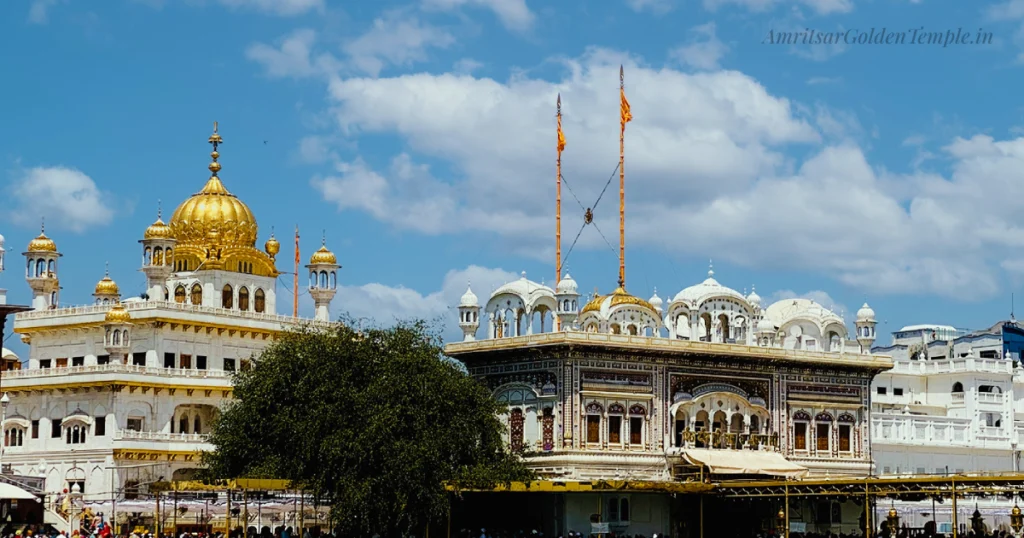
Even today, when visitors stand before the Akal Takht, they often feel something different from the serenity experienced inside Sri Darbar Sahib. The feeling here is one of dignity, strength, and quiet authority. The Nishan Sahib waves high above the complex against the Punjab sky while the echoes of Gurbani continue to flow through the marble courtyards. Pilgrims pause in silence, gazing at the structure that has witnessed centuries of sacrifice and spiritual leadership.
Daily traditions continue much as they have for generations. Ceremonial practices are performed with deep reverence. Readings of Gurbani fill the air. Important Panthic decisions affecting Sikhs around the world are announced from this sacred seat. In moments of crisis, celebration, or uncertainty, the global Sikh community still turns toward the Akal Takht as a source of guidance and unity.
And perhaps that is what makes the Akal Takht so extraordinary. It is not frozen in the past like a relic trapped behind glass. It lives. It breathes with the collective memory of the Sikh people. It reminds every visitor that faith is not passive. Prayer must lead to compassion. Compassion must lead to courage. Courage must lead to justice.
As the sun sets over Amritsar and the golden reflection of Sri Darbar Sahib begins to shimmer against the darkening water, the Akal Takht stands nearby in solemn silence — not overshadowing the temple, but completing it. Together, they tell the eternal Sikh story: a path where one kneels before the Divine with humility, then rises again to defend truth without fear.
Location & contact
- Associated Gurus: Guru Arjan Dev Ji · Guru Hargobind Sahib Ji