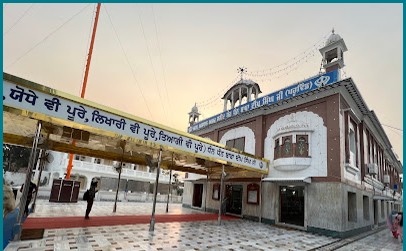
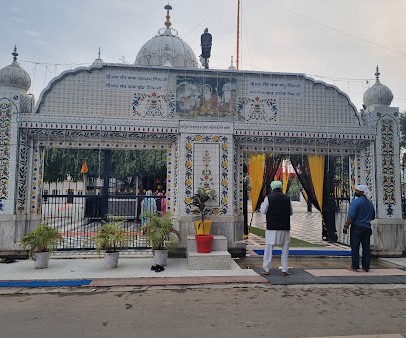
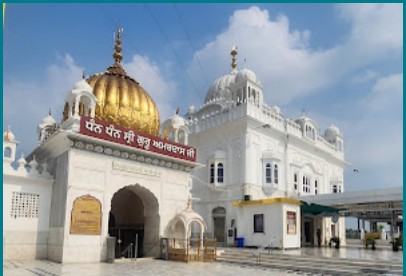
Ath Sath Tirath

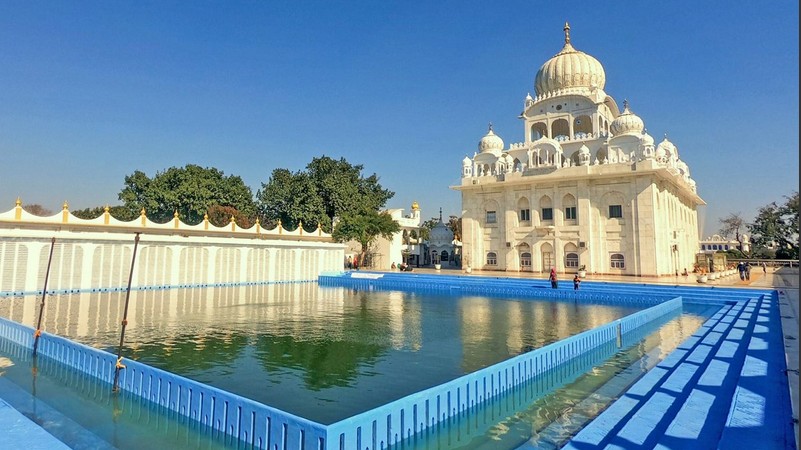
“Ath Sath Tirath” literally means “Sixty-Eight Holy Pilgrimage Sites.” One who bathes here with sincere devotion and remembrance of the Divine receives the spiritual merit of visiting all sixty-eight holy places. Not because the water itself possesses magical power, but because the true pilgrimage is the awakening of the soul.
Ath Sath Tirath: The Sacred Waters Beside Dukh Bhanjani Beri
There are places in the world that one visits with the eyes. And then there are places that must be felt with the soul. Beside the deeply revered Dukh Bhanjani Beri, rests a place known as Ath Sath Tirath.
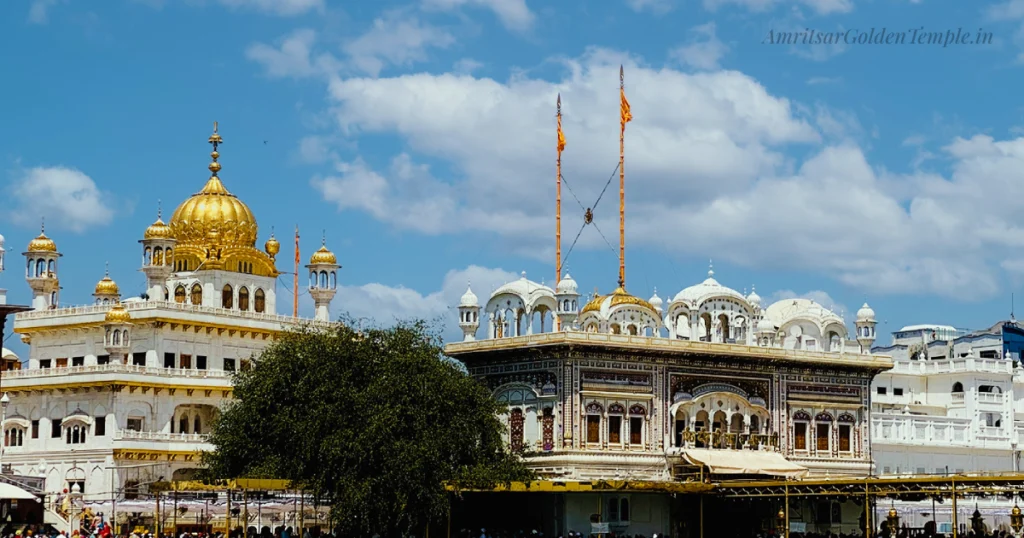
At first glance, it appears simple — almost understated amidst the grandeur of the Harmandir Sahib complex. Yet beneath its calm surface lies a spiritual memory woven into the very origins of Sikh scripture and sacred history. To stand here is to stand where faith, humility, and divine revelation once converged in silence.
The name “Ath Sath Tirath” literally means “Sixty-Eight Holy Pilgrimage Sites.” In the spiritual imagination of medieval India, the number sixty-eight represented the totality of sacred Hindu pilgrimage destinations spread across the subcontinent. Kings, ascetics, householders, and wandering seekers spent lifetimes traveling from river to river and shrine to shrine in pursuit of purification and liberation.
But Sikh philosophy brought forth a radically different understanding.
The Gurus taught that spiritual transformation was not hidden in distant mountains or locked within ritual journeys across the earth. The Divine was already present — immediate, accessible, and alive within remembrance of Naam, truthful living, humility, and devotion. Pilgrimage was no longer merely geographical. It became inward.
And so this sacred site beside the sarovar came to symbolize a profound spiritual truth: that one who bathes here with sincere devotion and remembrance of the Divine receives the spiritual merit of visiting all sixty-eight holy places. Not because the water itself possesses magical power, but because the true pilgrimage is the awakening of the soul.
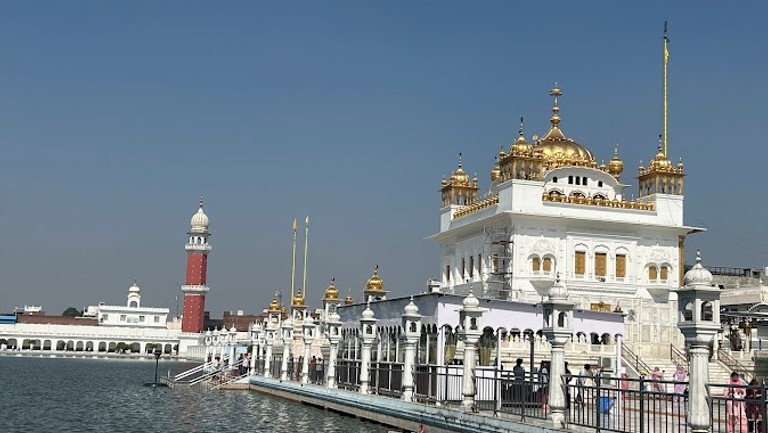
In the early hours of Amrit Vela, the atmosphere around Ath Sath Tirath feels almost suspended outside time. Before sunrise fully touches the golden domes of Harmandir Sahib, elderly pilgrims descend slowly toward the sacred waters, whispering Waheguru beneath their breath.
Nearby stands the ancient Dukh Bhanjani Beri — the “tree that relieves suffering.” Its branches stretch outward like silent witnesses to centuries of prayer. According to Sikh tradition, countless devotees found healing and spiritual solace near this sacred spot. Mothers prayed for children. The sick sought strength. Travelers paused in gratitude after surviving difficult journeys. Over generations, stories accumulated here like layers of whispered devotion.
But Ath Sath Tirath carries another extraordinary significance — one deeply connected to the creation of the Sikh world’s greatest spiritual treasure: the Adi Granth.
In the late sixteenth and early seventeenth centuries, the Sikh Panth was growing rapidly. The teachings of the Gurus had spread far beyond Punjab, carried through villages, cities, caravans, and human hearts. Yet with this growth came danger. Spurious hymns and altered versions of Gurbani began circulating among the people, threatening the purity of the Guru’s message.
Guru Arjan Dev Ji, the fifth Sikh Guru, understood the immense responsibility before him.
He envisioned something unprecedented — the compilation of an authentic scripture that would preserve forever the revealed hymns of the Sikh Gurus alongside the divine utterances of Hindu bhagats and Muslim saints. It would become not merely a holy book, but the eternal spiritual voice of truth itself.
And so began one of the most sacred literary undertakings in human history.
Across Punjab and beyond, original pothis — handwritten manuscripts containing the hymns of the Gurus — were carefully gathered from different families and custodians connected to the Sikh lineage. These manuscripts traveled across dusty roads and uncertain terrain toward Amritsar, carried with immense reverence by devoted Sikhs who understood that they were transporting spiritual light itself.
Near Ath Sath Tirath, upon a raised marble platform, these precious pothis were respectfully placed after arriving at Harmandir Sahib. Upon this platform were sacred manuscripts wrapped in cloth, containing the revealed words of Guru Nanak Dev Ji, Guru Angad Dev Ji, Guru Amar Das Ji, and Guru Ram Das Ji — words already transforming countless lives across the subcontinent.
There were no printing presses. No digital archives. Every page was handwritten with devotion. Every syllable carried immense sanctity.
Scholars, scribes, musicians, saints, and disciples gathered under Guru Arjan Dev Ji’s guidance as the monumental task of compiling the Adi Granth unfolded. Bhai Gurdas Ji served as the principal scribe, carefully inscribing the hymns exactly as dictated by the Guru. The process was not simply literary; it was profoundly spiritual. Accuracy mattered because Gurbani was not considered poetry born from intellectual imagination alone. It was divine revelation experienced through spiritual union.
And through it all, Ath Sath Tirath remains what it has always been — not merely a physical location, but a spiritual reminder. A reminder that sacredness is born through devotion.
In a world obsessed with noise, speed, and spectacle, Ath Sath Tirath whispers something eternal: that healing often arrives quietly. That wisdom survives through remembrance. And that the sacred words once gathered here beside the shimmering waters of Amritsar would one day become the living Guru of millions.
Location & contact
Golden Temple Rd, Atta Mandi
Katra Ahluwalia
- Email: info@sgpc.net
- Map: Open in Google Maps
- Website: Visit website
- Associated Gurus: Guru Arjan Dev Ji