Gurudwara Sri Ramsar Sahib
Seeking a space removed from the distractions of the central town and the bustling construction of Ramdaspur, the Guru selected this specific low-lying area. He ordered the excavation of a small, tranquil sarovar (sacred pool), which he named Ramsar in honor of his father and predecessor, Guru Ram Das Ji. It was upon the banks of this very pool, under the thick canopy of trees, that Guru Arjan Dev Ji pitched his tent and embarked on one of the most remarkable textual undertakings in world religious history: the compilation of the Adi Granth.
Echoes of the Holy City: Journey Through Ramsar Sahib, Shaheedan, and the Historic Katras of Amritsar
To understand Amritsar is to understand how the spiritual and the temporal have intersected across centuries of blood, devotion, and spatial evolution.
Walking through the tranquil banks of Gurudwara Sri Ramsar Sahib near Chatiwind Gate, across to the monumental site of Gurudwara Shaheed Ganj Baba Deep Singh (Shaheeda Sahib), and deeply into the bustling markets of Katra Ahluwalia and Karori Chowk reveals an architectural and social palimpsest.
This is not just a collection of locations; it is an epic narrative written in stone, water, and commerce, tracing the evolution of early seventeenth-century scriptural compilation to the ferocious geopolitical shifts of the eighteenth-century Misl era, and finally to the nineteenth-century merchant boom.
Part I: The Crucible of the Word – Gurudwara Sri Ramsar Sahib
Our journey begins at the dawn of the seventeenth century at Gurudwara Sri Ramsar Sahib.
Tucked away near the Chatiwind Gate on the southeastern edge of the old historic walls, this site represents the literary and institutional crystallization of Sikhism.
By 1603, the fifth Sikh spiritual leader, Guru Arjan Dev Ji, recognized that the rapidly growing community required a standardized, unassailable scriptural canon to protect the integrity of the message from schismatic groups and political interference from the Mughal court.
Seeking a space removed from the distractions of the central town and the bustling construction of Ramdaspur, the Guru selected this specific low-lying area.
It was surrounded by a dense grove of wild Ber (jujube) trees, offering a quiet, shaded sanctuary.
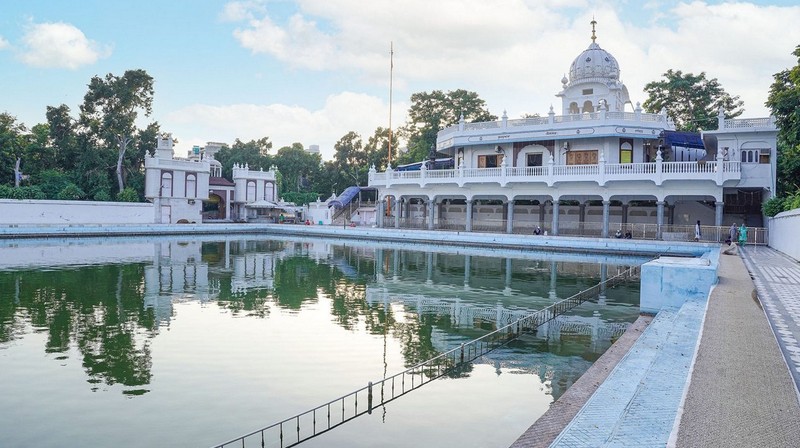
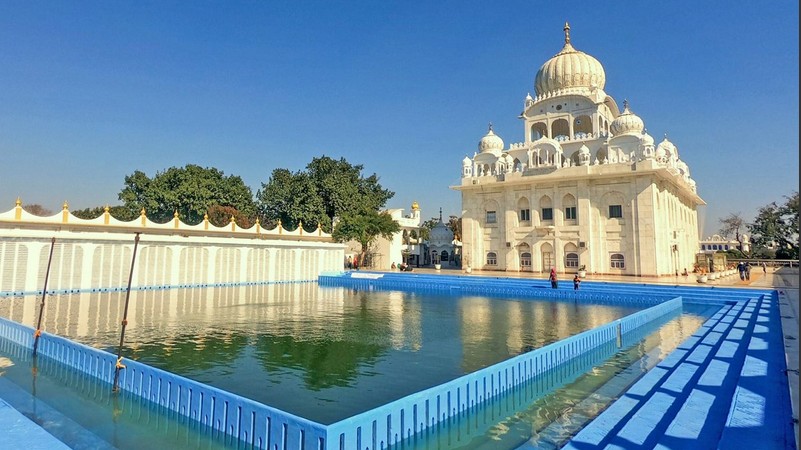
He ordered the excavation of a small, tranquil sarovar (sacred pool), which he named Ramsar in honor of his father and predecessor, Guru Ram Das Ji.
It was upon the banks of this very pool, under the thick canopy of trees, that Guru Arjan Dev Ji pitched his tent and embarked on one of the most remarkable textual undertakings in world religious history: the compilation of the Adi Granth.
For over a year, the Guru sat in deep seclusion alongside the venerable scholar and scribe Bhai Gurdas Ji.
Day after day, the Guru dictated the sublime poetic verses, while Bhai Gurdas Ji meticulously transcribed them into the newly standardized Gurmukhi script.
The process was not merely an exercise in recording the hymns of the first four Sikh Gurus and Guru Arjan Dev Ji himself; it was an incredibly ecumenical enterprise.
The Guru explicitly incorporated the theological insights and devotional poetry of non-Sikh saints, Hindu bhagats, and Muslim sufis—including Kabir, Baba Farid, Ravidas, and Namdev—thereby structurally embedding a radical egalitarianism into the core of the sacred text.
When the monumental manuscript was finally completed in the late summer of 1604, it was ceremonially processed from the banks of Ramsar Sahib to be permanently installed within the newly built Harmandir Sahib, with Baba Buddha Ji appointed as its first high priest.
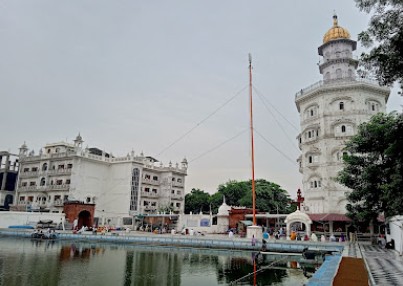
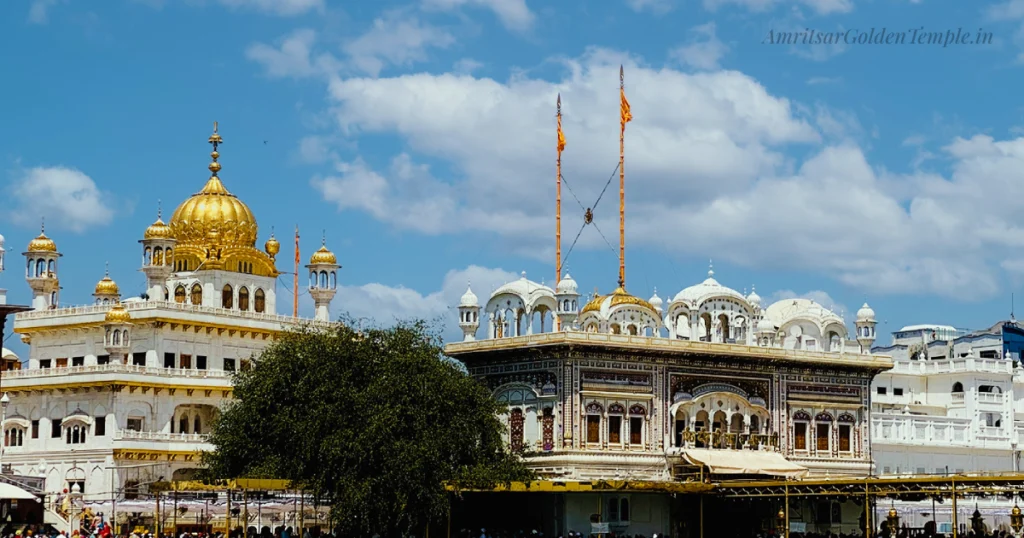
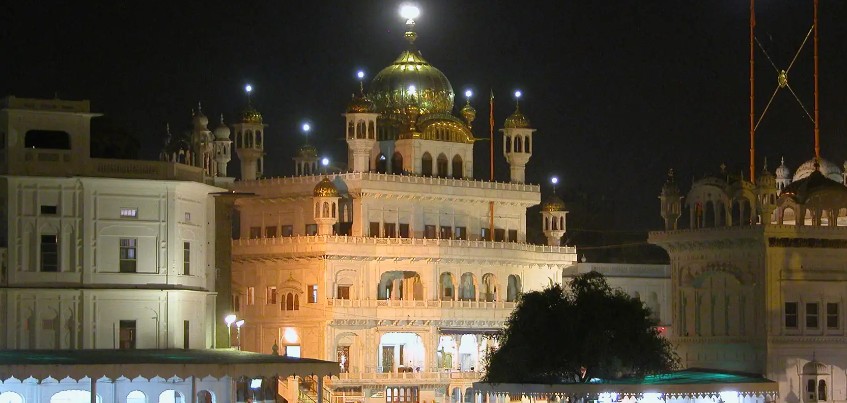
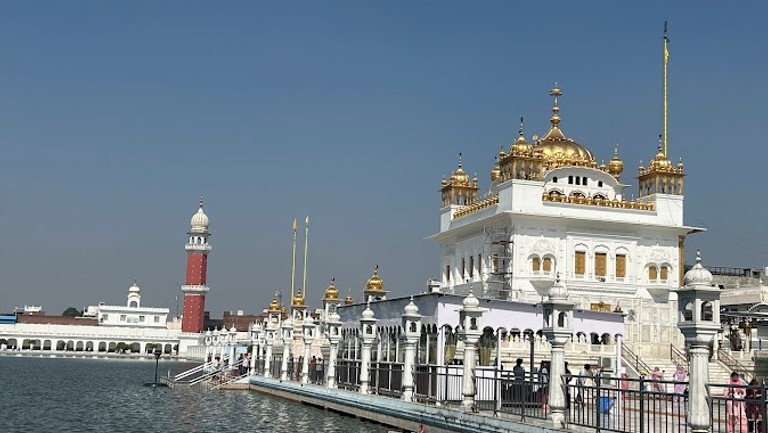
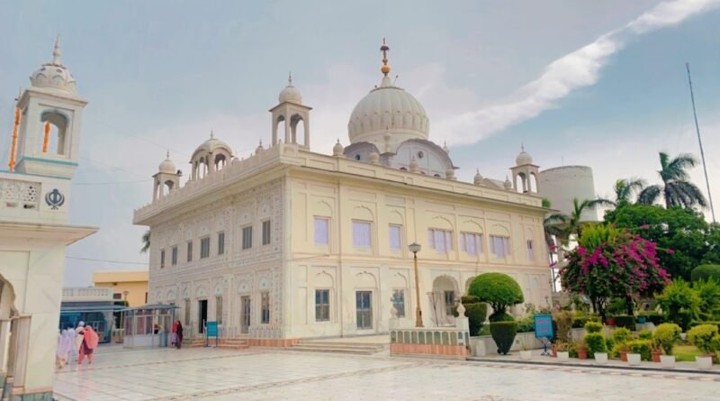
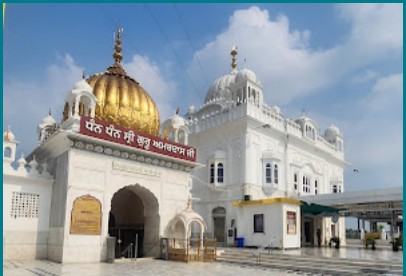
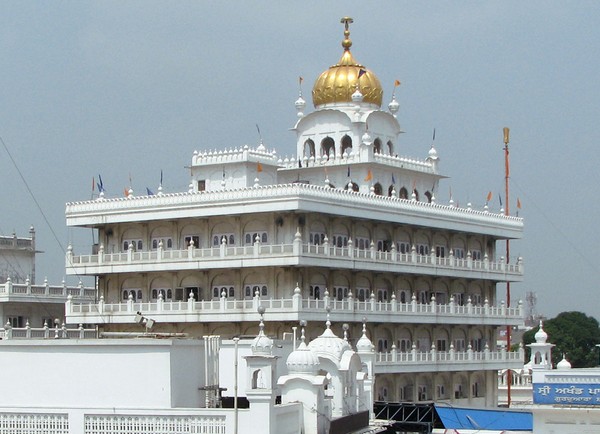
The modern structure of Ramsar Sahib—characterized by its pristine white marble walls, quiet arches, and its crowning golden dome reflecting off the small, serene waters—serves as a physical testament to this intellectual and spiritual labor.
Today, this legacy continues in a highly practical, material way: the modern complex houses the highly secure, formalized printing presses of the Shiromani Gurdwara Parbandhak Committee (SGPC), making it the only authorized site globally where the physical saroops (volumes) of the Guru Granth Sahib are printed under strict ritual protocols.
Part II: The Blood of the Martyrs – Gurudwara Shaheeda Sahib
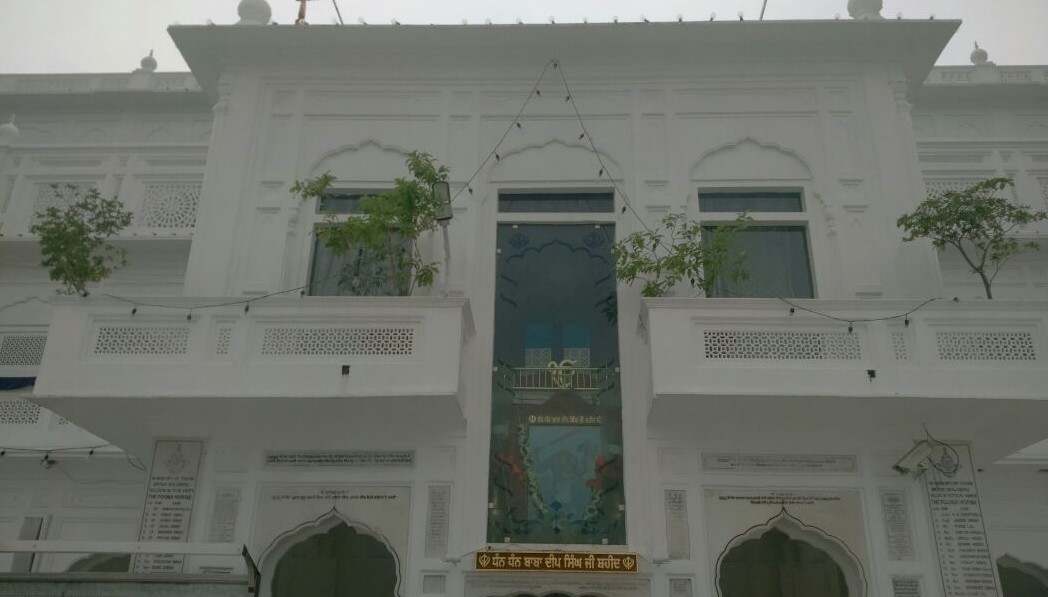
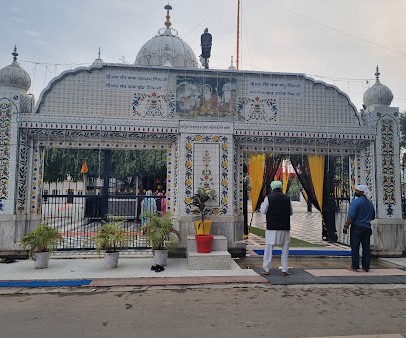
Walking less than a kilometer away along the historical axis toward the Tarn Taran Road, the atmosphere transitions from the scholarly quietude of scriptural creation to the raw, visceral landscape of military martyrdom at Gurudwara Shaheed Ganj Baba Deep Singh, universally known as Shaheeda Sahib.
To step into this sprawling, highly energetic complex is to confront the terrifying, transformative geopolitical realities of eighteenth-century Punjab.
By 1757, the Mughal empire was fracturing, and northern India had become a hunting ground for the Afghan conqueror Ahmad Shah Durrani (Ahmad Shah Abdali).
During his fourth invasion, Durrani’s forces, led by his son Timur Shah and the Afghan commander Jahan Khan, assaulted Amritsar, demolished the Harmandir Sahib, and deliberately filled the sacred pool with debris and the carcasses of slaughtered animals—a calculated attempt to break the spiritual backbone of the Khalsa.
At the outpost of Damdama Sahib in southern Punjab, the news of this horrific desecration reached Baba Deep Singh Ji, a towering 75-year-old warrior-scholar who had been personally baptized into the Khalsa by Guru Gobind Singh Ji in 1699 and had spent years copying scriptural texts with Bhai Mani Singh Ji.
Driven by a profound sense of spiritual duty, Baba Deep Singh Ji drew a line in the sand with his heavy khanda (double-edged sword), vowing to either liberate the shrine or lay down his life at its periphery.
As he marched northward, his small band swelled into an army of over five thousand fiercely dedicated Sikhs.
They clashed with the vastly superior Afghan vanguard at the village of Gohalwar, roughly ten miles outside Amritsar.
The ensuing battle was legendary in its ferocity.
During the close-quarters melee, Baba Deep Singh Ji suffered a mortal blow to the neck.
According to the deeply cherished historical and oral tradition of the Panth, as he faltered, a fellow warrior reminded him of his solemn vow to reach the holy pool.
Infused with miraculous strength, Baba Deep Singh Ji supported his severed head with his left hand while swinging his eighteen-kilogram khanda with his right, carving a bloody path through the enemy lines.
He fought his way to the very outskirts of Amritsar, finally collapsing and offering his head at the steps of the Harmandir Sahib.
The site of Shaheeda Sahib marks the exact location where the mortal remains of Baba Deep Singh Ji and the other martyrs of that fateful 1757 battle were cremated.
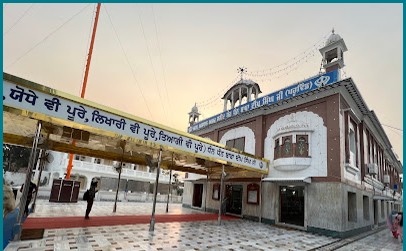
The architectural layout of Shaheeda Sahib reflects this intense devotion.
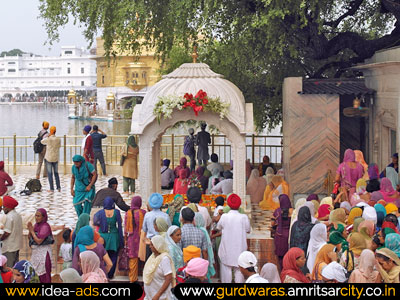
The central shrine houses a sacred stone marking the traditional boundary of the antim sanskar (last rites), and the air is thick with the constant chanting of Gurbani and the rhythmic clanging of weapons.
It is a site of immense emotional and psychological weight, illustrating how the community preserved its sacred geography through a willingness to undergo absolute self-sacrifice.
Part III: The Architecture of Sovereignty – Katra Ahluwalia and Karori Chowk
To fully understand how Amritsar transformed from a network of scattered sacred shrines into a dominant, wealthy metropolis, one must leave the immediate vicinity of the outer gates and plunge into the dense historic core of Katra Ahluwalia and Karori Chowk.
Following the decline of Mughal authority and the successful repulsion of the Afghan invaders in the late eighteenth century, Punjab was organized into twelve sovereign Sikh military fraternities, or Misls.
Amritsar was not ruled by a single centralized king; rather, it was divided fractionally among these different Misls.
Each clan built its own heavily fortified, self-contained residential and commercial district known as a katra.
The most economically and architecturally significant of these enclaves was Katra Ahluwalia, established around 1760 by the supreme commander of the Dal Khalsa, Sardar Jassa Singh Ahluwalia.
Designed to be both a highly secure residential zone for his warriors and a commercial magnet, Katra Ahluwalia was strategically placed just a stone's throw from the Golden Temple complex.
Jassa Singh Ahluwalia consciously invited wealthy merchants, textile weavers, bankers, and craftsmen from across Delhi, Rajasthan, and Kashmir to settle within its protective walls, offering them tax incentives and security guarantees.
As you navigate the narrow alleys of Katra Ahluwalia today, the spatial layout reveals this defensive, mercantile design.
The entrances were originally protected by massive wooden gates that could be barred at night or during an invasion.
The buildings themselves feature classic Nanakshahi brickwork, characterized by slim, durable kiln-baked bricks bound by lime mortar.
They display elegant, multi-storied jharokhas (overhanging enclosed balconies) and intricately carved wooden doorways that reflect a blend of late Mughal and indigenous Punjabi architectural styles.
At the intersection of these ancient trade routes lies Karori Chowk.
The name Karori itself hints at immense wealth, historically referring to revenue collectors or elite merchants managing transactions worth millions.
This junction served as the financial engine of the old city.
It was the space where Marwari financiers, Kashmiri shawl traders, and Persian rug merchants bartered, traded wholesale textiles, and exchanged currencies under the watchful eyes of Misl authorities.
The dense, vertical layout of the shops—where the ground floors served as active merchant storefronts and the upper stories housed family living quarters or workshops—illustrates a sophisticated utilization of urban space.
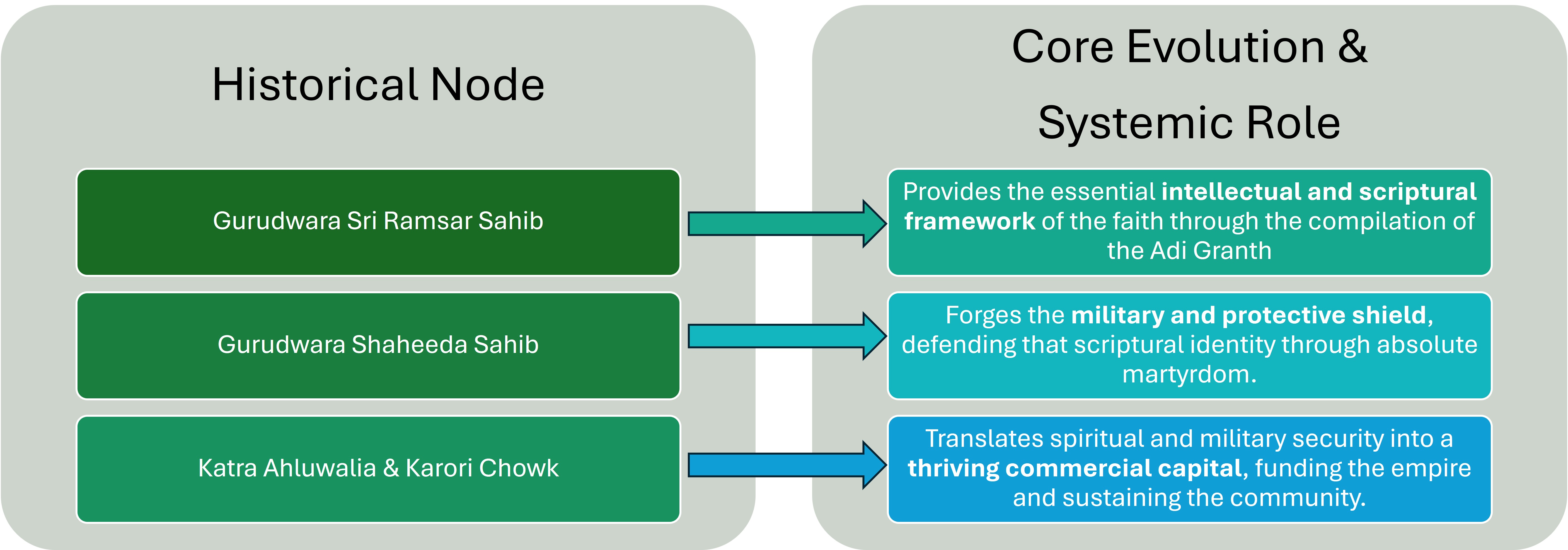
Conclusion: The Integrated Tapestry of 143006
When we look at the modern postal code of 143006 as a cohesive historical landscape, we see the complete evolutionary arc of the Sikh experience in Punjab.
It is an urban ecosystem where every single site depends on the history of the others.
Walking these crowded streets today, navigating past the whirring e-rickshaws, the fragrant steam of large community kitchens (langar), and the rich bolts of embroidered textiles draped in the open markets, one realizes that Amritsar's true heritage is not confined to the display cases of modern museums.
Instead, it lives and breathes within this brilliant, chaotic, and deeply sacred urban landscape.
The prayers composed at the edge of the Ramsar pool still echo clearly within the stone courtyards of Shaheeda Sahib, while the descendants of the very merchants invited by Jassa Singh Ahluwalia continue to trade at Karori Chowk.
This continuity preserves the enduring, unbreakable spirit of a city built on absolute faith, resilient sovereignty, and a deep love for its heritage.
Location & contact
Near Chativind Gate
- Email: info@sgpc.net
- Map: Open in Google Maps
- Website: Visit website
- Associated Gurus: Guru Arjan Dev Ji