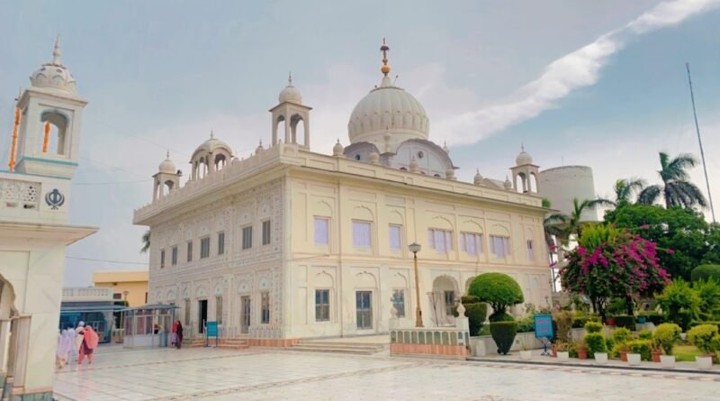
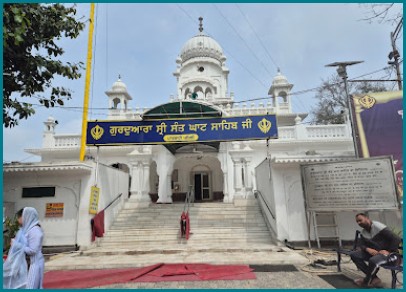
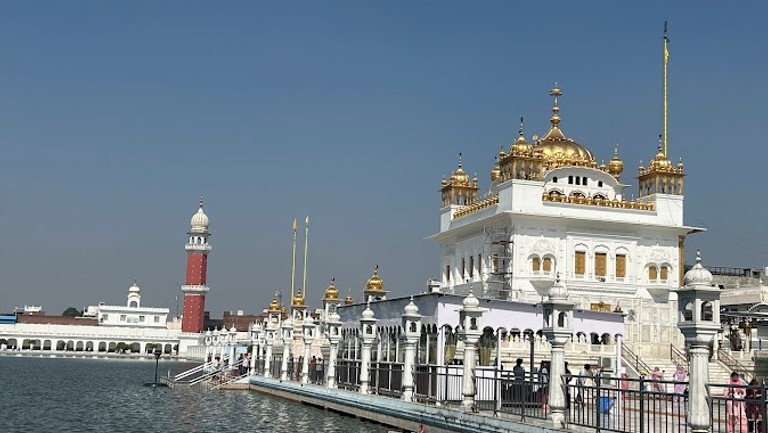
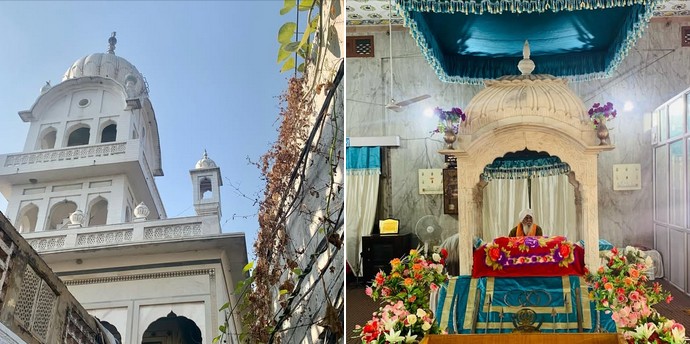
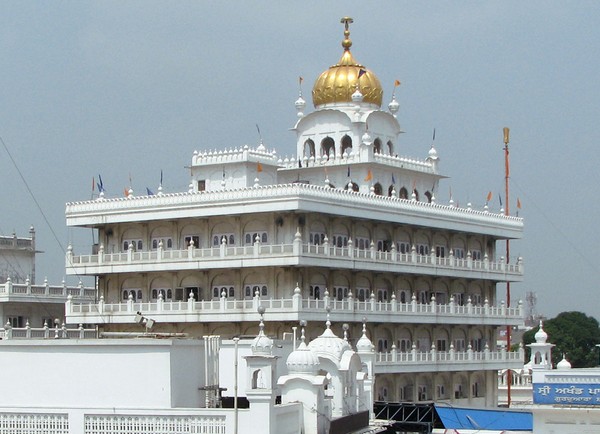
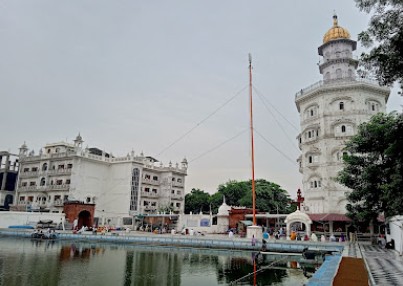
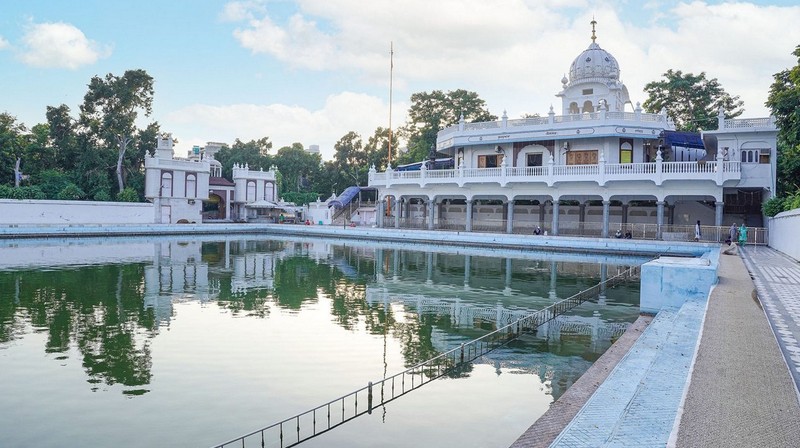
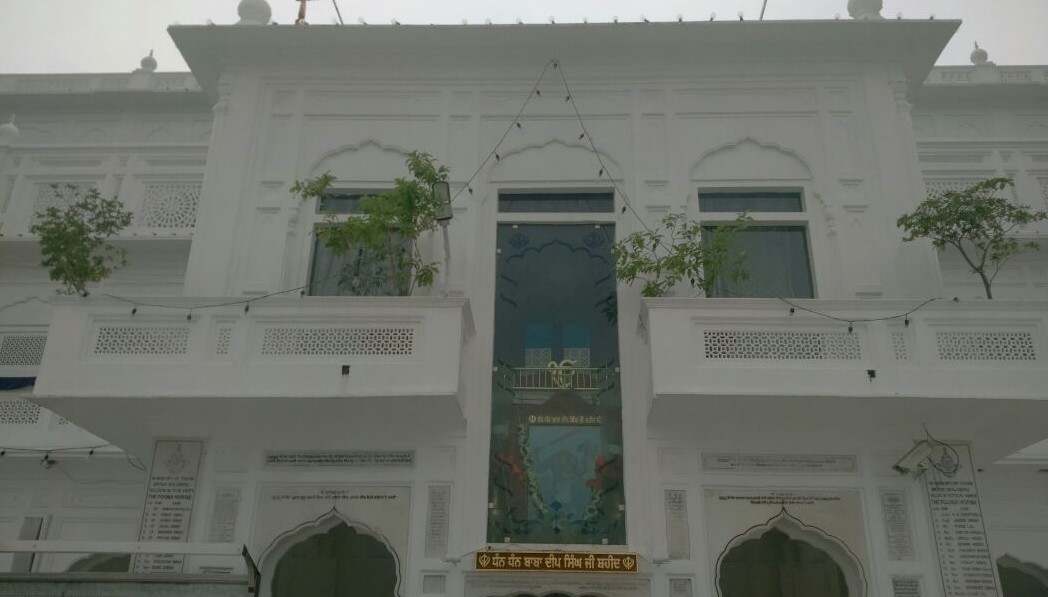
Gurdwara Sri Baoli Sahib (Goindwal Sahib)
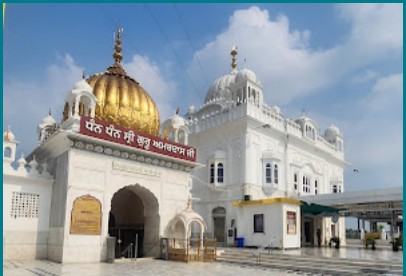
Goindwal Sahib was the first organized corporate headquarters and spiritual center of the Sikh faith; established by the Third Guru; Guru Amar Das Ji. This shrine features the iconic Baoli Sahib—a large step-well with exactly 84 covered steps. According to long-standing theological tradition; reciting the Japji Sahib on each individual step with absolute devotion liberates the human soul from the cyclic pattern of 8.4 million trans migrations.
The Axis of Early Sikhism: A Historical and Spiritual Exploration of Gurdwara Sri Baoli Sahib, Goindwal Sahib
To step into the sacred precinct of Goindwal Sahib is to traverse a temporal bridge back to the mid-sixteenth century, an era when the young Sikh movement was crystallizing its institutional identity, defining its theological boundaries, and actively dismantling the deeply entrenched social hierarchies of the Indian subcontinent. Located on the banks of the mighty Beas River in the Tarn Taran district of Punjab, Goindwal Sahib stands as the first planned township and administrative headquarters of the Sikh faith. At the spiritual and physical heart of this historic town lies Gurdwara Sri Baoli Sahib, an architectural marvel and a monument of profound metaphysical significance. Founded under the guidance of Guru Angad Dev Ji and meticulously developed by Guru Amar Das Ji, the third Sikh preceptor, this site represents a revolutionary leap in the socio-religious history of South Asia. As historians, we must examine Goindwal not merely as a place of pilgrimage, but as a deliberate space of radical social engineering and spiritual emancipation.
The Founding of Goindwal and the Vision of Guru Amar Das Ji
The story of Goindwal begins in the early 1540s. Following the instructions of Guru Angad Dev Ji, his devoted disciple Baba Amar Das (who would later become the third Guru) was tasked with establishing a new settlement along the busy trade route that crossed the Beas River. This was a strategic decision; the location was highly accessible, yet far enough from the traditional centers of orthodox power to allow the nascent Sikh community to flourish without immediate interference. The land was purchased from a local trader named Goinda, who had struggled to establish a village due to superstitious fears of malevolent spirits. Baba Amar Das Ji oversaw the construction, laying the foundations of a town that would soon become the "Axis of Sikhism." When Baba Amar Das Ji ascended to the Guruship in 1552 at the age of seventy-three, Goindwal became the central seat of the Sikh Gurus, a bustling capital of spiritual renewal where seekers from all walks of life converged.
Prior to the establishment of Goindwal, the Sikh path was largely a dispersed network of congregations. Guru Amar Das Ji recognized that for the faith to endure and grow, it required a centralized headquarters that physically embodied the egalitarian philosophy of Guru Nanak Dev Ji. The construction of the Baoli Sahib—a deep, subterranean stepwell—commenced in 1552 and was completed in 1559. In sixteenth-century India, water was not merely a physical necessity; it was a potent symbol of ritual purity, social status, and systemic oppression. Wells were strictly segregated, and marginalized communities were violently barred from accessing the water sources of the ruling classes. By excavating a massive, shared water reservoir open to all human beings without distinction of caste, gender, creed, or economic status, Guru Amar Das Ji staged a profound, non-violent rebellion against the prevailing orthodox social order. The Baoli was designed to be a leveling ground where the monarch and the menial laborer would bend their knees together to drink from the same source.
The Architecture of Liberation: Analyzing the Eighty-Four Steps
The physical structure of the Baoli Sahib is both an engineering triumph and a physical map of Sikh cosmology. Descending deep into the earth to reach the natural water table, the Baoli features exactly eighty-four steps. These steps are not an arbitrary architectural choice; they are deeply rooted in Indic and Sikh metaphysics. According to traditional Indian cosmology, a soul must undergo Chaurasi Lakh Junis—or eight and a half million cycles of transmigration through various life forms, ranging from microscopic organisms to plants, insects, animals, and birds—before finally achieving the rare gift of a human birth. The eighty-four steps of the Baoli symbolize these eighty-four hundred thousand stages of cosmic evolution. The descent into the cool, dark sanctuary of the earth mirrors the soul's journey through the depths of creation, culminating in a return to the pristine, life-giving source of divine grace.
The spiritual discipline associated with the Baoli Sahib is unique and demanding. A devotee is instructed to descend to the first step, recite the entirety of the Japji Sahib—the foundational morning prayer composed by Guru Nanak Dev Ji—and then descend to the bottom to perform an ablution (immersion) in the holy water. The seeker then ascends to the second step, repeats the entire recitation of the Japji Sahib, and bathes once more. This arduous process is repeated on each of the eighty-four steps. It is believed that whosoever completes this intensive meditative discipline with absolute devotion, purity of mind, and single-minded focus on the Divine will break the repetitive cycle of transmigration, achieving ultimate liberation (Mukti) from the wheel of birth and death. As historians, we view this ritual not as a superstitious shortcut, but as an experiential, somatic exercise in extreme mindfulness, endurance, and absolute surrender to the sacred Word (Shabad).
Goindwal as the Cradle of Sikh Institutions
The significance of Gurdwara Sri Baoli Sahib extends far beyond the stepwell itself; it served as the physical anchor for several revolutionary institutions established by Guru Amar Das Ji. Chief among these was the formalization of the Langar, the free community kitchen. While Langar existed under Guru Nanak Dev Ji and Guru Angad Dev Ji, it was at Goindwal that Guru Amar Das Ji made it a strict, mandatory prerequisite for spiritual audience. He coined the famous dictum: "Pehle Pangat, Peeche Sangat" (First, sit in the communal row; then, enter the congregation). This meant that any visitor, regardless of their social standing, had to sit on the floor alongside commoners and eat the same food before they could meet the Guru. This rule was applied universally. Historical records, including Sikh chronicles and contemporary accounts, note that when the Mughal Emperor Akbar came to visit Guru Amar Das Ji at Goindwal, the great monarch had to sit on the coarse ground among peasants and outcasts to consume coarse grain before being granted an audience.
Furthermore, Goindwal Sahib was the administrative heart from which the Manji System was operated. As the Sikh community grew too vast for the Guru to instruct personally, Guru Amar Das Ji divided the Indian subcontinent into twenty-two preaching districts, known as Manjis (literally meaning "wooden cots," upon which the local leaders sat to preach). This was a highly organized missionary network that disseminated the teachings of Guru Nanak far and wide. Remarkably, several of these Manjis were entrusted to women, demonstrating the early Sikh commitment to gender equality in spiritual and administrative leadership. The town was also the birthplace of Guru Arjan Dev Ji, the fifth Sikh Guru, whose birth in 1563 at Goindwal brought immense joy to the household of his grandfather, Guru Amar Das Ji. It was here, in this intellectually vibrant and spiritually charged atmosphere, that the early textual compilations of Sikh hymns, known as the Goindwal Pothis, were assembled under the supervision of Baba Mohan Ji, providing the core source material that would later be compiled into the Sri Guru Granth Sahib.
Key Historical Milestones of Goindwal Sahib
| Year (CE) | Historical Event | Historical Significance |
| 1546 | Founding of Goindwal Town | Established as a safe haven and trade hub under the direction of Guru Angad Dev Ji. |
| 1552 | Commencement of Baoli Sahib | Guru Amar Das Ji initiates excavation of the stepwell to promote absolute social equality. |
| 1559 | Completion of the Baoli | The 84 steps are fully constructed, opening a universal water source for all communities. |
| 1563 | Birth of Guru Arjan Dev Ji | The future compiler of the Adi Granth and first Sikh martyr is born in Goindwal Sahib. |
| 1567 | Visit of Emperor Akbar | The Mughal Emperor accepts the "Pehle Pangat" rule, dining with commoners before meeting the Guru. |
| 1574 | Passing of Guru Amar Das Ji | The third Guru merges with the Eternal, leaving behind a highly organized, institutionalized faith. |
A Synthesis of the Gurus Associated with Goindwal
- Guru Angad Dev Ji (Second Guru): He envisioned the necessity of Goindwal as a strategic settlement along the Beas River and ordered Baba Amar Das to locate and build it.
- Guru Amar Das Ji (Third Guru): He spent his entire Guruship at Goindwal, constructing the Baoli Sahib, institutionalizing Langar, establishing the Manji system, and writing a vast corpus of hymns, including the famous "Anand Sahib."
- Guru Ram Das Ji (Fourth Guru): Known initially as Bhai Jetha, he served Guru Amar Das Ji with unmatched humility at Goindwal, assisting directly in the excavation of the Baoli while carrying baskets of earth on his head. He was later married to the Guru's daughter, Bibi Bhani Ji, at this very site.
- Guru Arjan Dev Ji (Fifth Guru): Born at Goindwal, he spent his early childhood years playing in the streets of the town and absorbing the deep spiritual traditions that would define his monumental work of compiling the Adi Granth.
The Living Legacy of Goindwal Sahib in Modern Times
Today, Gurdwara Sri Baoli Sahib remains an active, vibrant center of living Sikh history and faith. When one enters the complex, the air is thick with the sweet aroma of Deg (Karah Parshad) and the continuous, rhythmic chanting of Gurbani. The physical descent into the Baoli is an sensory experience unlike any other. Moving downward past the whitewashed walls, the air grows noticeably cooler, and the echoes of the external world fade, replaced by the resonant acoustics of the pilgrims reciting Japji Sahib. The water at the bottom, naturally filtered through the earth's deep strata, is continuously maintained and is revered by millions as Amrit—the nectar of divine life. For the modern visitor, whether a devout Sikh or a secular historian, the Baoli is a humbling reminder of the physical labor, intellectual foresight, and deep spiritual compassion that built the foundations of the Sikh path.
In analyzing Goindwal Sahib, we realize that the early Sikh Gurus were not distant, ascetic philosophers residing in remote mountain caves; they were active, engaged community builders who worked in the soil, dug wells, cooked meals, and confronted the socio-political injustices of their times. Gurdwara Sri Baoli Sahib stands as a permanent, stone-and-mortar manifestation of that active spirituality. It is a monument that tells us that true liberation is not merely an internal, psychological state, but an active, physical restructuring of society where everyone has equal access to water, dignity, food, and the divine Word. In the annals of world religions, Goindwal Sahib remains a glowing beacon of how a spiritual movement can use architecture, community planning, and daily ritual to build a more just, compassionate, and enlightened humanity.
Location & contact
Goindwal Sahib Town, Kapurthala-Tarn Taran Border, Tarn Taran District, Punjab 143422
- Email: info@sgpc.net
- Map: Open in Google Maps
- Website: Visit website
- Associated Gurus: Guru Amar Das Ji