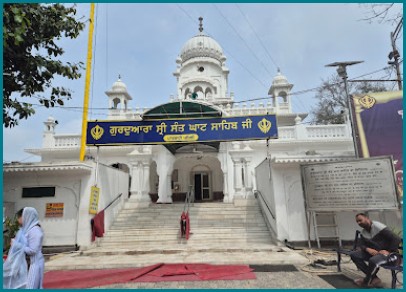
Gurdwara Sri Darbar Sahib Tarn Taran
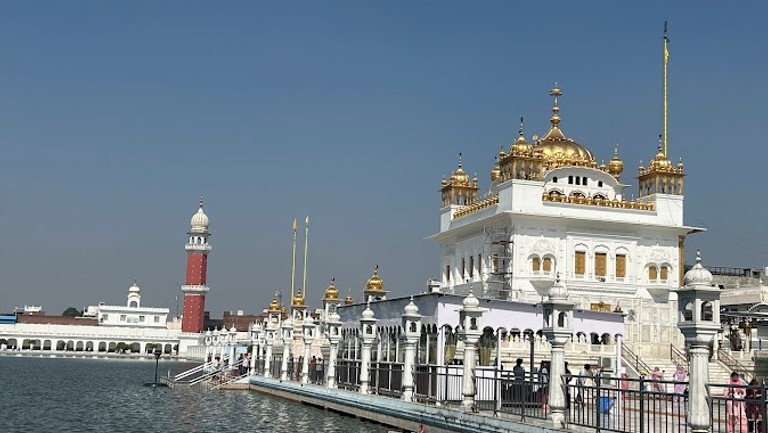
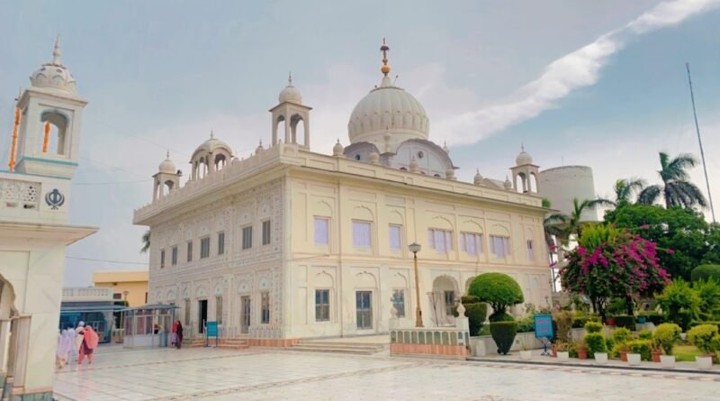
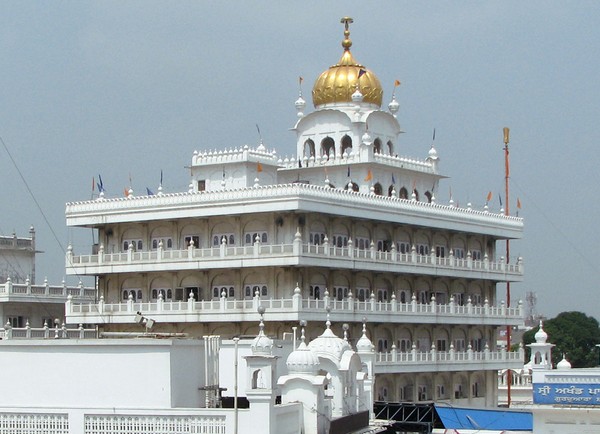
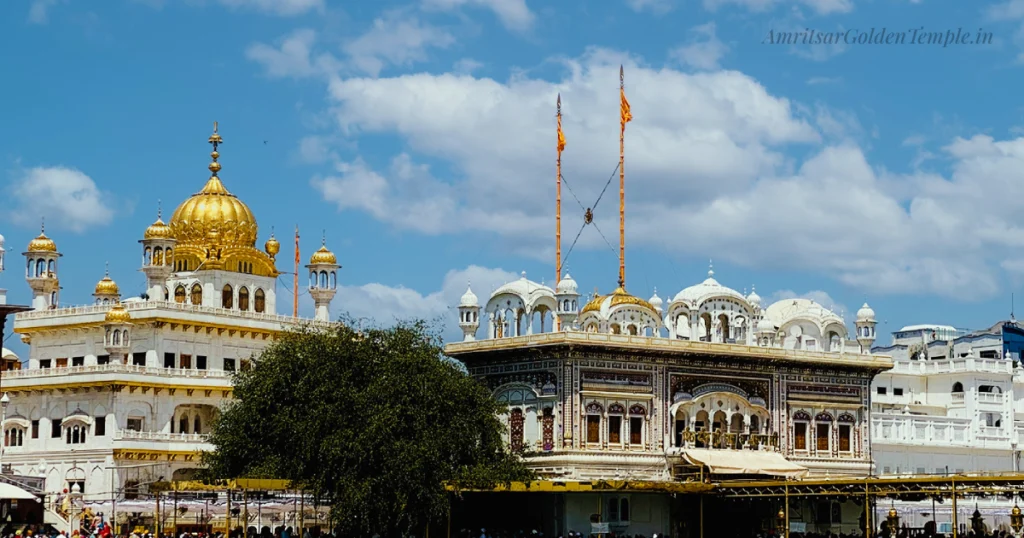
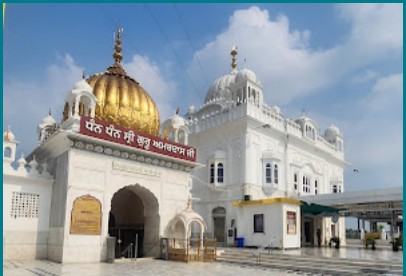
Gurdwara Sri Darbar Sahib Tarn Taran — the shrine Guru Arjan Dev built for the sick, the forgotten, and the faithful. It is the World's Largest Holy Sarovar. Founded in 1690 by the Fifth Sikh Guru; Guru Arjan Dev Ji. The Guru excavated the massive holy tank (Sarovar) here; which stands as the largest of its kind in the Sikh world. It became a crucial sanctuary during the late 16th century for treating leprosy patients; establishing an early model for compassionate public health. The gold-plated main shrine was later renovated and adorned under the empire of Maharaja Ranjit Singh and the Kanahiya Misl.
GURDWARA SRI DARBAR SAHIB • TARN TARAN SAHIB
There is a city in the Majha heartland of Punjab whose very name feels less like geography and more like a promise whispered into the soul. Tarn Taran — “the ferry of liberation,” “the one who carries humanity across” — rises from the plains not as the memory of a king, nor the monument of a battle, but as an act of compassion carved into earth and water. Long before highways and crowded bazaars surrounded it, this land was little more than open fields touched by dust storms and silence. Yet in the late sixteenth century, Guru Arjan Dev Ji, the fifth Sikh Guru, stood upon this very soil and imagined a sanctuary unlike anything the subcontinent had ever known.
He did not choose Tarn Taran to display power. He did not build it to rival imperial cities or impress rulers seated upon Mughal thrones. His vision was far deeper and infinitely more human. He looked toward the forgotten people of society — the sick, the poor, the abandoned, the untouchable, the weary travelers whose suffering had pushed them beyond the boundaries of acceptance. In an age when disease could exile a person from human dignity itself, Guru Arjan Dev Ji envisioned a place where the rejected would not merely be tolerated, but embraced as equals before the Divine.
And so, around the year 1590, the excavation of a vast sacred sarovar began.
There were no royal armies digging trenches here. No forced laborers bound by fear. Instead, the work unfolded through seva — voluntary selfless service. Farmers arrived carrying spades across their shoulders. Traders left their shops behind for days at a time. Women carried baskets of earth beneath the burning Punjab sun. Elders sat singing Gurbani while younger hands carved deeper into the soil. Every layer of earth removed from the ground seemed to reveal something greater than water. It revealed a spiritual civilization taking shape.
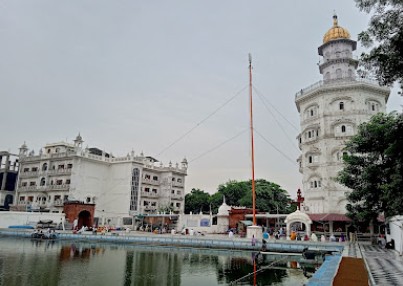
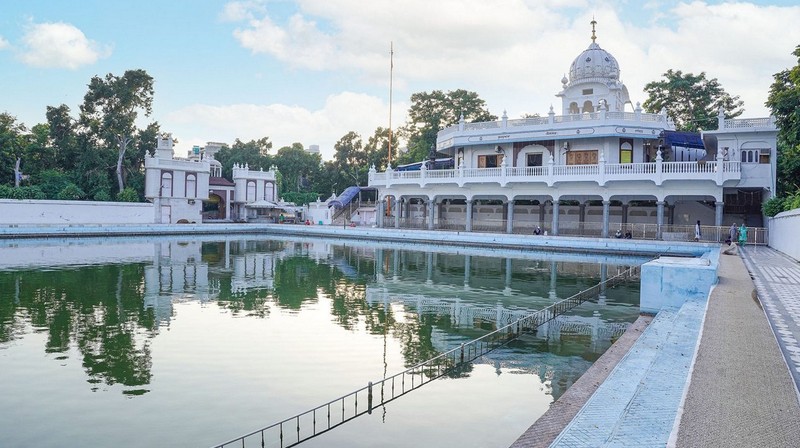
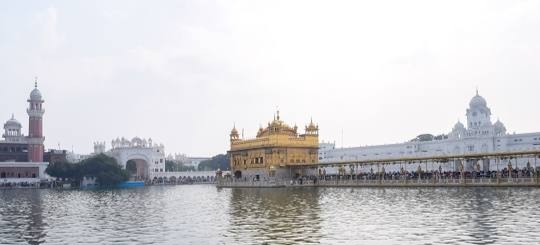
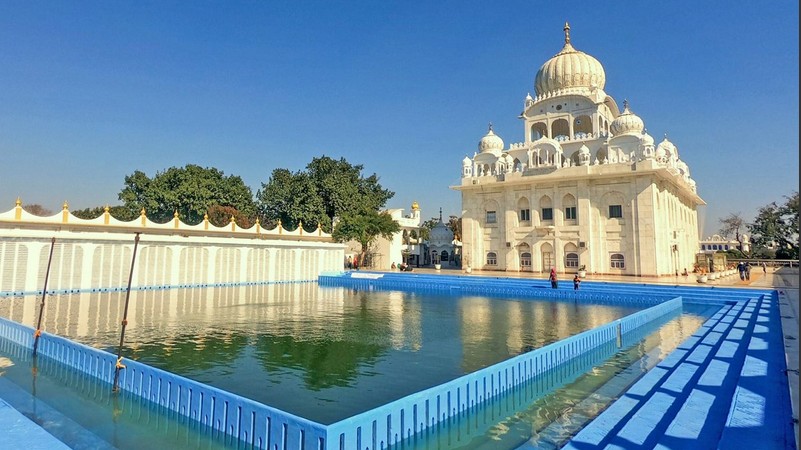
The sarovar that emerged would become one of the largest in the Sikh world — a vast shimmering pool whose waters reflected not only the sky above, but the Sikh ideal of universal equality. Around it rose the sacred complex of Gurdwara Sri Darbar Sahib Tarn Taran Sahib.
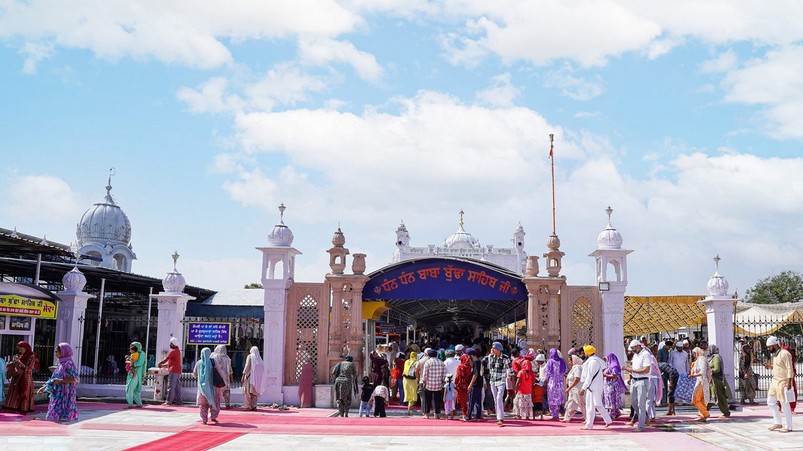
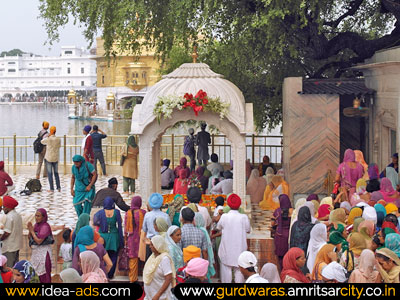
Even today, when dawn arrives over Tarn Taran, the atmosphere feels suspended between history and eternity. Before sunrise fully touches the marble pathways, pilgrims begin descending toward the water in silence. Some come carrying grief hidden deep within them. Others arrive after journeys stretching hundreds of kilometers across Punjab and beyond. Elderly men whisper Waheguru beneath their breath as they slowly enter the sarovar. Mothers pray quietly for healing. Children hold tightly to the hands of grandparents who have visited this sacred place since childhood.
The stillness of the water carries a presence difficult to describe.
For centuries, Sikhs have believed these waters possess healing grace — not merely physical healing, but spiritual restoration. During the sixteenth and seventeenth centuries, those suffering from leprosy and severe skin diseases were often cast out from ordinary society. Entire lives disappeared into isolation and humiliation. Yet Tarn Taran became a refuge where no one was untouchable. Here, illness did not erase humanity. The Guru’s house welcomed all without condition.
And perhaps that is what makes Tarn Taran so extraordinary even today. The architecture itself reflects compassion.
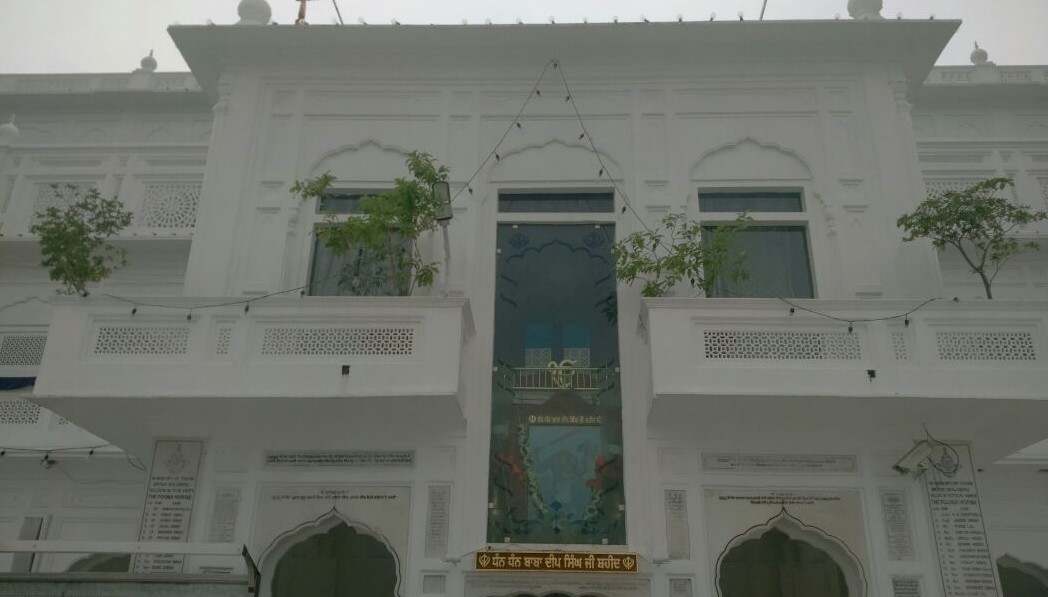
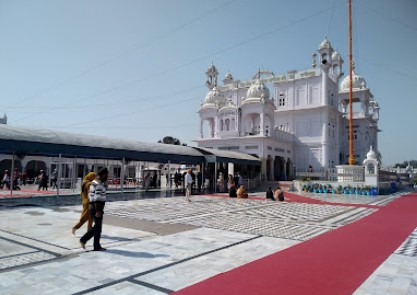
The wide marble parkarma surrounding the sarovar feels open and accessible, designed not for kings but for ordinary human beings. Broad steps descend gently into the sacred water so even the weak and elderly can enter with ease. The langar halls remain alive with movement from morning until deep into the night, feeding every visitor regardless of wealth, religion, caste, or background. Volunteers move continuously through the halls carrying steel plates, serving dal, rotis, vegetables, and water with smiling humility.
There are moments when the entire complex feels less like a monument and more like a living heartbeat.
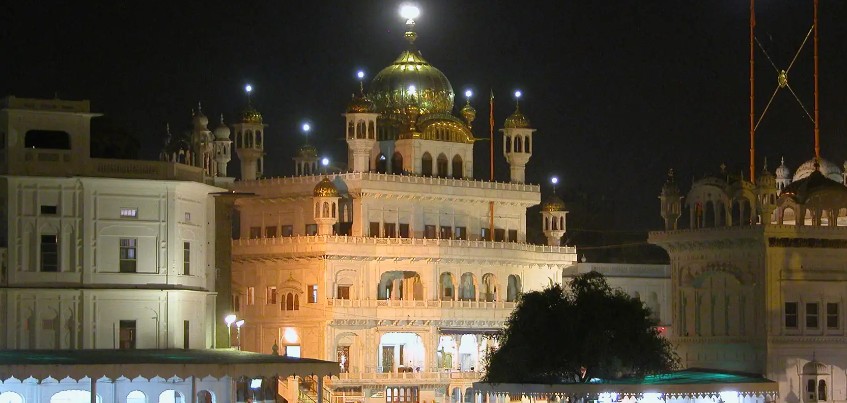
At the center of the sarovar stands the Darbar Sahib itself, connected to the marble pathways by a narrow causeway stretching across the water. As pilgrims walk slowly toward the sanctum, the sounds of Gurbani kirtan drift outward across the surface of the sarovar. The reflection of the shrine trembles gently beneath the morning light while white birds circle overhead in widening spirals.
Inside, the atmosphere softens into deep stillness.
The Guru Granth Sahib rests beneath embroidered rumalas while ragis sing shabads that have echoed through Sikh history for centuries. The marble walls glow beneath golden light. Incense drifts quietly through the sanctum. Some visitors close their eyes in meditation. Others weep silently without fully understanding why.
Yet the story of Tarn Taran is not only one of peace.
Like every great Sikh shrine, it carries the scars of persecution and resilience.
The eighteenth century descended upon Punjab like a storm of blood and fire. Afghan invasions devastated the region repeatedly. Ahmad Shah Durrani’s armies swept through Sikh territories with brutal force, targeting sacred Sikh sites in an attempt to break the spirit of the Khalsa. Tarn Taran Sahib was attacked, desecrated, and damaged during these invasions. The sacred sarovar itself was polluted and violated.
But every time destruction arrived, the Sikhs returned.
They returned carrying bricks, tools, prayers, and unshakable faith. Even while persecution continued across Punjab, the community rebuilt the shrine again and again through collective seva. Farmers became laborers. Warriors became masons. Families who had lost loved ones still arrived to clean the sarovar and restore the damaged complex.
The rebuilding of Tarn Taran was never merely construction. It was resistance through devotion.
As Sikh Misls rose across Punjab during the eighteenth century, Tarn Taran regained strength and importance. The Bhangi Misl in particular contributed heavily toward rebuilding and expanding the sacred complex. Around the sarovar emerged bungas — residential towers and resting places where pilgrims, students, warriors, and scholars gathered together. The entire complex evolved into a spiritual city within a city, where worship, education, martial preparation, and community life existed side by side.
Even during British colonial rule after the fall of the Sikh Empire in 1849, Tarn Taran remained spiritually alive. British officers documented the immense gatherings arriving for the monthly Mela Massya fairs, where tens of thousands gathered around the sarovar beneath glowing lanterns and moonlit skies. Yet beneath the colonial reports and administrative surveys, ordinary Sikh life continued uninterrupted — prayers at dawn, langar seva, kirtan through the night, and endless footsteps circling the sacred water.
The late nineteenth century brought another transformation through the Singh Sabha movement, when Sikh reformers worked tirelessly to preserve the distinct identity and traditions of Sikh institutions. Tarn Taran became one of the important centers of this awakening. Debates about religious authority, tradition, and management unfolded alongside prayers and pilgrimage, reminding history once again that Sikh spirituality has never been separated from collective responsibility.
And still today, more than four centuries after Guru Arjan Dev Ji first chose this land, the spirit of Tarn Taran remains astonishingly unchanged.
The sarovar continues to be cleaned through kar seva by volunteers arriving from villages, cities, and the Sikh diaspora across the world. Pilgrims still descend into the water before sunrise. The langar still feeds all without question. Gurbani still echoes across the marble pathways before dawn.
There is something deeply moving about this continuity.
Empires disappeared. Borders were redrawn. Kingdoms rose and collapsed into history. Yet Tarn Taran continues doing what it was created to do: receiving the suffering, feeding the hungry, comforting the forgotten, and reminding humanity that no soul stands outside the embrace of the Divine.
Perhaps that is the true miracle of Gurdwara Sri Darbar Sahib Tarn Taran Sahib.
It is not merely the vastness of its sarovar or the beauty of its architecture that leaves an impression upon the human heart. Its true sacredness lies in the spirit upon which it was founded — the belief that compassion itself is holy.
And so, when the first rays of morning sunlight begin shimmering across the waters of Tarn Taran and the sound of Gurbani rises gently into the Punjab sky, one understands why this city was given its name centuries ago.
Tarn Taran.
The ferry of liberation.
A place where the weary still come hoping to cross.
Location & contact
City Center
- Phone: +91 185 222 2560
- Email: info@sgpc.net
- Map: Open in Google Maps
- Website: Visit website
- Associated Gurus: Guru Arjan Dev Ji
Gallery