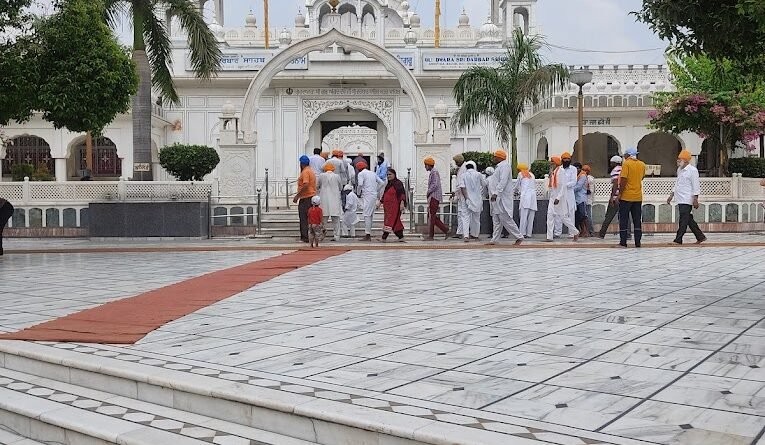
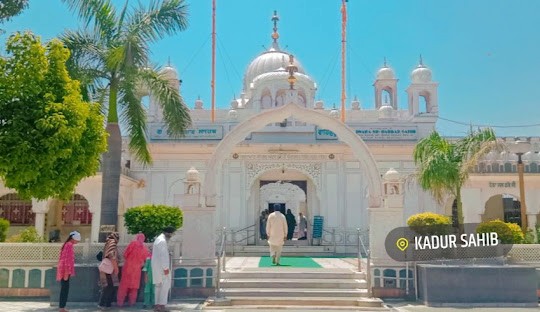
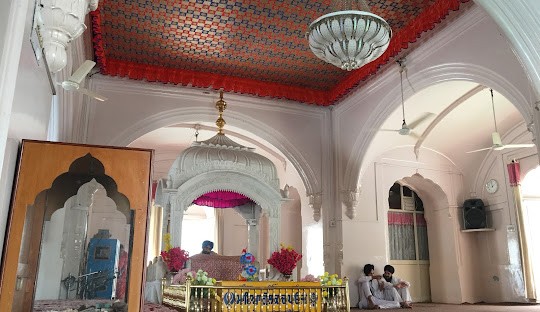
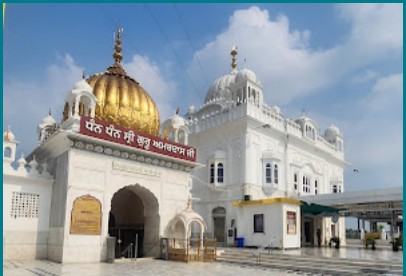
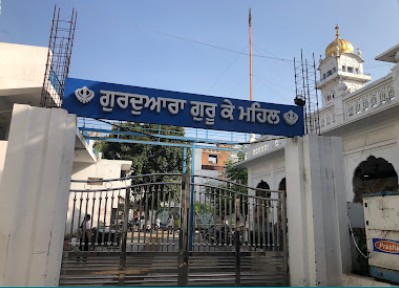
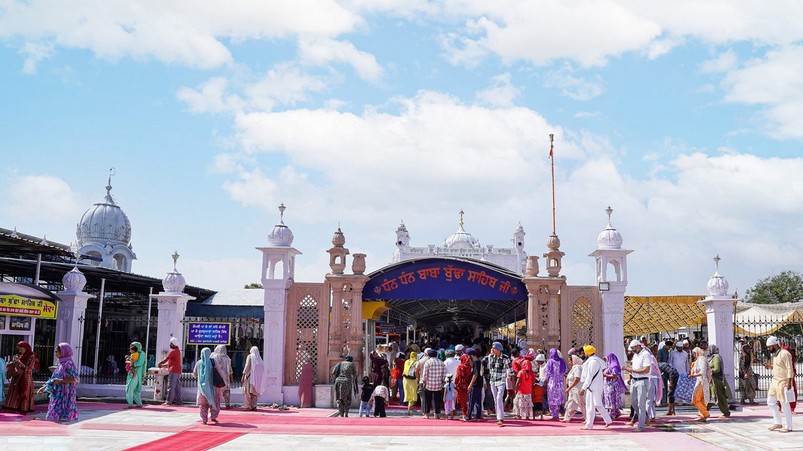
Gurudwara Sri Darbar Sahib Agitha Sahib
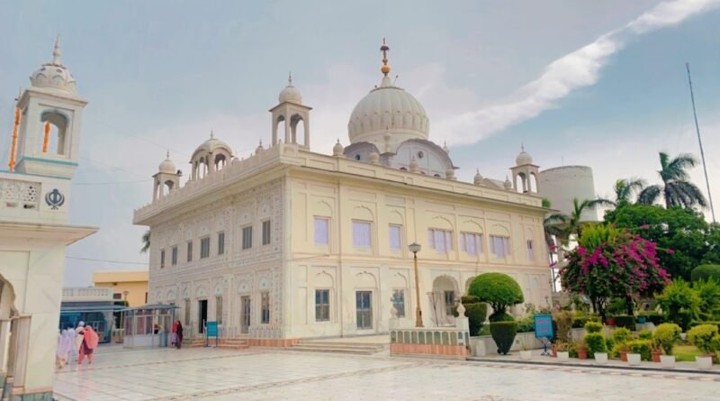
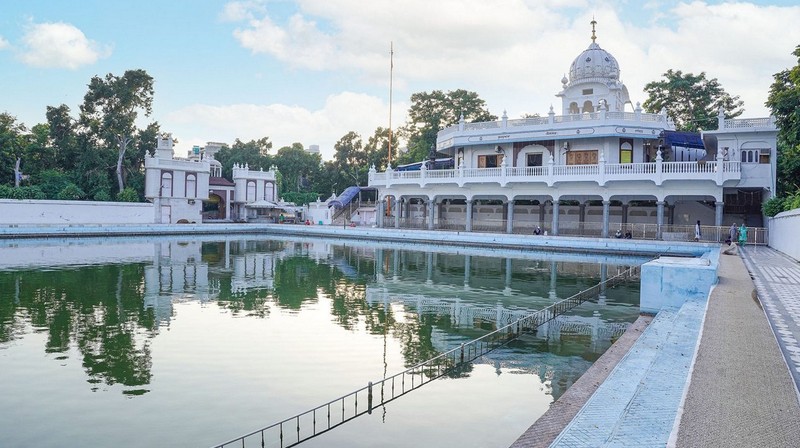
Khadoor Sahib was the primary missionary base of the Second Guru; Guru Angad Dev Ji. This specific shrine marks the precise spot where the final cremation rites of Guru Angad Dev Ji were conducted in 1552. It was on this immediate soil that the Gurmukhi script was structurally standardized; formal physical education and sports (*Mal Akhara*) were institutionalized; and the second volume of the Guru's compositions took shape.
The Crucible of Early Sikhi: Gurudwara Sri Darbar Sahib Angitha Sahib, Khadoor Sahib
The spatial landscape of Punjab is irrevocably dotted with sites of immense sacred and historical value, yet few locations capture the foundational evolution of early Sikh institutionalization quite like Khadoor Sahib. Situated in the modern district of Tarn Taran, this quiet town was once the thriving, beating heart of the young Sikh panth (community) during the critical mid-16th century. For a historian, tracing the origins of Gurudwara Sri Darbar Sahib Angitha Sahib is not merely an exercise in studying religious architecture; it is an investigation into how a nascent spiritual movement transitioned from a localized gathering of seekers into a resilient, highly structured society. It is here that the second guru, Guru Angad, chose to establish his base, consolidating the visionary framework of Guru Nanak and anchoring it into the soil of central Punjab.
To fully grasp the historical magnitude of this sacred site, one must understand the political and social volatility of the era. The 16th century in Northern India was defined by dramatic geopolitical transitions, notably the collapse of the Lodi dynasty and the chaotic rise of the Mughal Empire under Babur and his successor, Humayun. In this atmosphere of shifting crowns and structural uncertainty, the Gurus were carving out an entirely alternative societal model based on radical egalitarianism, spiritual autonomy, and communal self-reliance. Khadoor Sahib emerged as a sanctuary of sanity amidst this regional upheaval, and the complex of Angitha Sahib eventually rose on the exact geographic coordinates where Guru Angad’s earthly journeys came to a close, making it a critical repository of early Sikh historical memory.
The Sacred Footprints of the Gurus at Khadoor Sahib
Khadoor Sahib is extraordinary because it represents a rare space blessed by the physical presence of eight out of the ten living Sikh Gurus. Long before it became the administrative center under Guru Angad, the soil was sanctified by Guru Nanak himself, who visited the village five separate times during his udasis (extensive preaching tours). Historical chronicles record that Guru Nanak frequently sought out the humble dwelling of an ardent devotee, Mai Bharai, his paternal aunt. It was during these initial visits that the spiritual seeds were sown in the Majha region. By choosing this specific village as a recurring rest point, Guru Nanak subtly signaled its future role, preparing the local community for the profound transformations that would arrive under his chosen successor.
When Bhai Lehna was anointed as Guru Angad in 1539 at Kartarpur (now in Pakistan), Guru Nanak instructed him to return to Khadoor Sahib rather than remain at the previous center. This was a brilliant, strategic move that prevented familial succession disputes with Guru Nanak’s biological sons, Baba Sri Chand and Lakhmi Das, while simultaneously decentralizing the faith's geographic footprint. Upon arriving in Khadoor Sahib, Guru Angad famously spent six months and six days in deep, solitary meditation inside a small room at Mai Bharai's home before publicly assuming the leadership of the community. From 1539 until his passing in 1552, Guru Angad made this town the premier center of the Sikh universe, transforming it from a rural hamlet into a bustling ideological capital.
The Great Institutionalization: Language, Literacy, and Physical Culture
Guru Angad’s tenure at Khadoor Sahib is celebrated for an immense cultural revolution: the formalization and standardization of the Gurmukhi script. Prior to this, literacy and sacred texts were the heavily guarded monopoly of the priestly elite, utilizing complex scripts like Sanskrit or administrative variants of Persian. By refining the indigenous characters of the Lande and Mahajani scripts into the beautifully structured Gurmukhi alphabet, Guru Angad broke down centuries-old class and caste barriers. At Khadoor Sahib, he established the very first Sikh school, teaching children and adults alike how to read and write. This allowed the hymns of Guru Nanak to be recorded, duplicated, and read directly by the common folk, initiating a massive democratization of knowledge that laid the literary foundation for the eventual compilation of the Guru Granth Sahib.
Parallel to this intellectual empowerment was a unique emphasis on physical well-being and social defiance through the establishment of the Mal Akhara (the wrestling arena) at Khadoor Sahib. In an era where asceticism and bodily mortification were widely viewed as paths to holiness, Guru Angad explicitly rejected the notion that the physical body was an obstacle to spiritual salvation. He commanded his followers to participate in daily martial exercises, wrestling bouts, and physical training. This served a multi-layered historical purpose: it directly combated the crippling social passivity induced by centuries of caste oppression, systematically dismantled notions of untouchability through physical contact in sports, and quietly prepared a historically subjugated people with the physical stamina and collective discipline they would desperately need in the turbulent centuries ahead.
The Test of Devotion and the Legacy of the Sacred Angitha
It was also within the sacred periphery of Khadoor Sahib that one of the most poignant chapters of selfless service (seva) in human history unfolded, involving the elderly Baba Amar Das, who would become the third Guru. For twelve grueling years, Baba Amar Das walked roughly nine kilometers every single night to the Beas River at Goindwal Sahib, filled a heavy brass pitcher (gaagar) with water, and carried it back on his head in pitch darkness so that Guru Angad could have a fresh bath before dawn. The defining historical climax occurred on a stormy, freezing night when the elderly Baba Amar Das tripped over a wooden weaver’s peg (killa) in the dark, falling into a muddy pit but miraculously holding the water pitcher upright without spilling a single drop.
"Amar Das is not homeless, mad, or lowly. He shall be the home of the homeless, the honor of the unhonored, the strength of the strengthless, and the shelter of the shelterless."
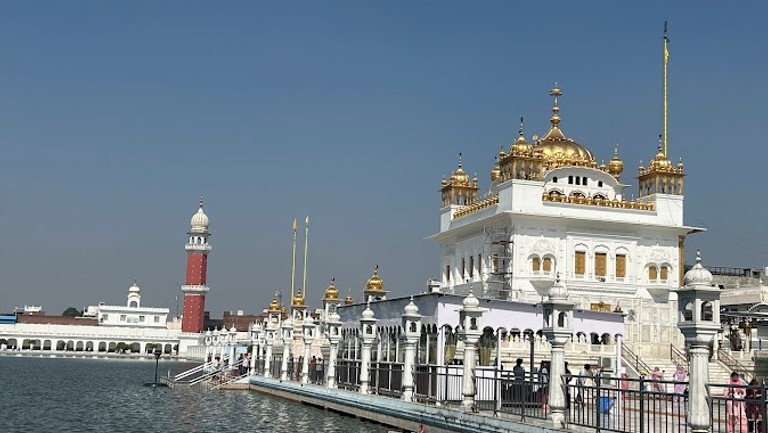
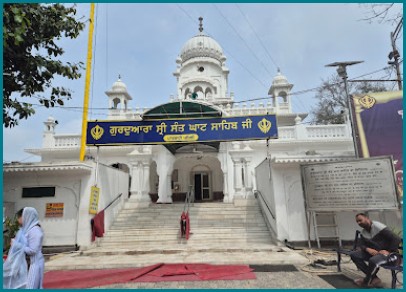
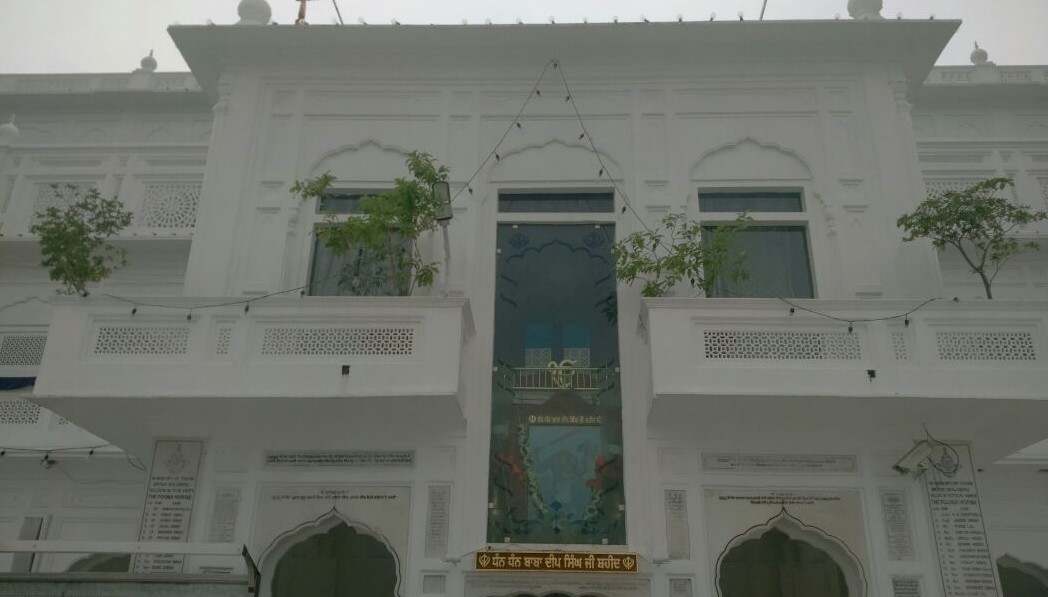
This dramatic event directly led to the passing of the spiritual mantle, as Guru Amar Das was anointed the third Sikh Guru right here by the venerable Baba Buddha. Shortly thereafter, on March 29, 1552, having anchored the foundational pillars of the faith, Guru Angad left his earthly form. The exact spot where his final sacred rites and cremation were performed by his grieving community is the very location where Gurudwara Sri Darbar Sahib Angitha Sahib stands today. The term Angitha literally translates to the sacred hearth or pyre, making this complex the ultimate physical monument to the life, transition, and eternal spirit of the Second Master.
Epochs of Architectural Transformation and Modern Preservation
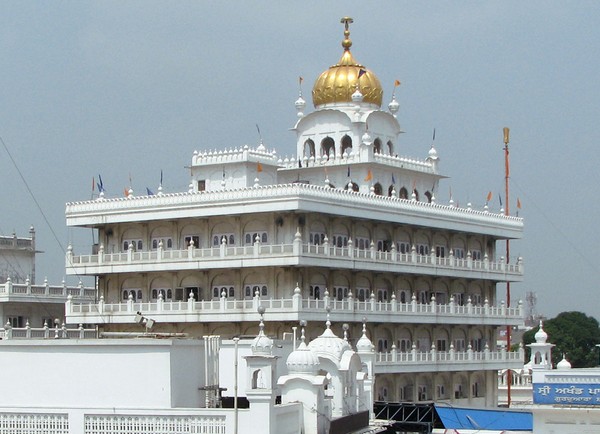
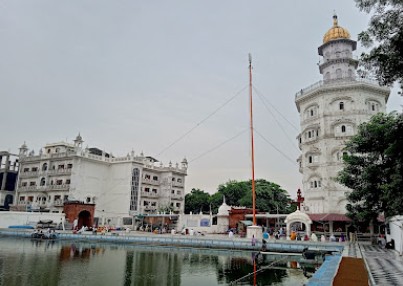
Over the centuries, the physical structure of Angitha Sahib transitioned from a simple, modest platform into a magnificent marvel of classic Sikh architecture. The complex features a massive, pristine white marble hall built on an elevated plinth, topped by an elegant central ribbed dome that reflects the synthesis of local Punjabi and Indo-Islamic design aesthetics characteristic of historical Gurudwaras. Over successive generations, prominent Sikh figures and later rulers of the Sikh Empire (Khalsa Raj) contributed significantly to the upkeep and expansion of this site. In recent decades, the architectural and environmental landscape of Khadoor Sahib has undergone a magnificent renaissance under the dedicated stewardship of Sant Baba Seva Singh Ji and the Kar Seva organization.
| Historical Site within Khadoor Sahib | Primary Historical / Institutional Significance |
|---|---|
| Gurudwara Angitha Sahib | The primary site marking the cremation and final rites of Guru Angad. |
| Mal Akhara Sahib | The site of the first Sikh wrestling arena and institutional school for Gurmukhi literacy. |
| Gurudwara Mai Bharai Ji | The residence where Guru Nanak stayed and where Guru Angad spent months in deep meditation. |
| Bibi Amro Ji Da Khooh | The historic well dug by Guru Angad’s daughter, whose hymns famously inspired Guru Amar Das. |
Today, the site stands not only as a place of quiet contemplation but as a living testament to environmental consciousness, surrounded by meticulously planned forests and educational institutions that honor Guru Angad's original vision of holistic community empowerment. For the modern historian, looking at the grand arches of Gurudwara Sri Darbar Sahib Angitha Sahib evokes a profound realization of how a small village community, armed with a new script, a communal kitchen, and an unshakeable dedication to human equality, permanently altered the socio-religious trajectory of the Indian subcontinent.
Location & contact
Khadur Sahib, Tarn Taran District
- Email: info@sgpc.net
- Map: Open in Google Maps
- Website: Visit website
- Associated Gurus: Guru Angad Dev Ji
Gallery