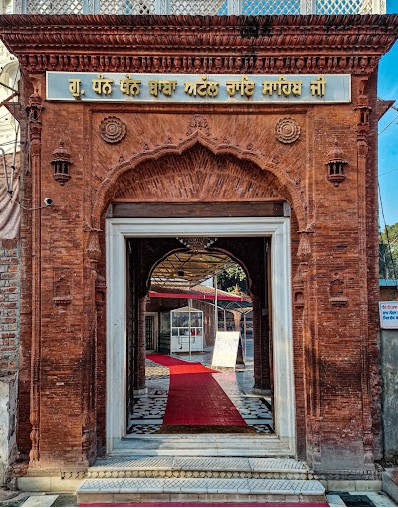
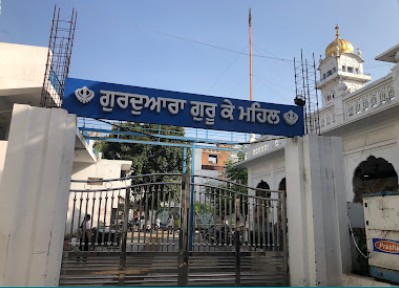
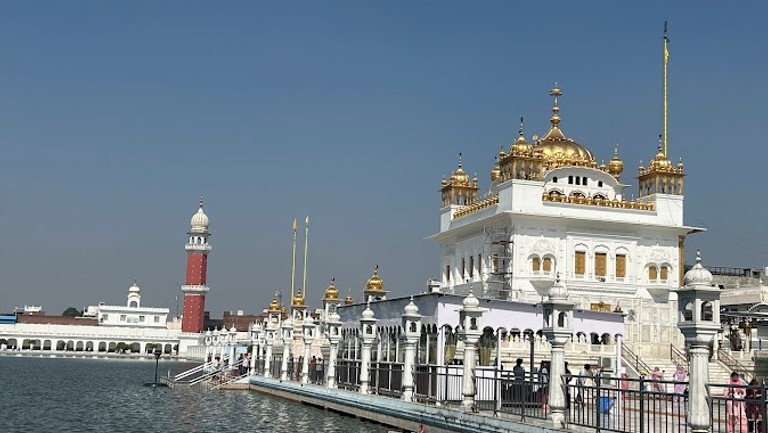
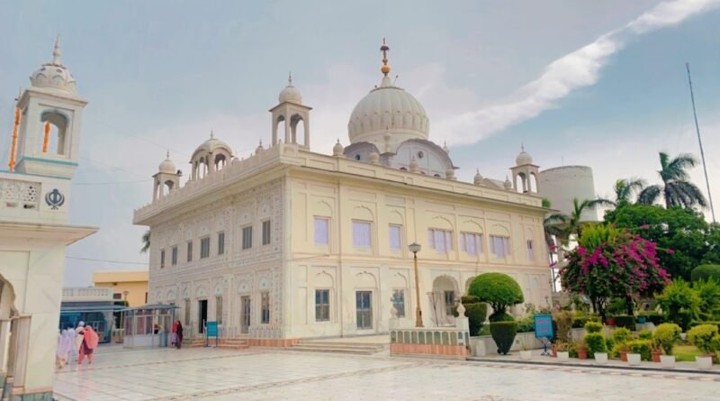
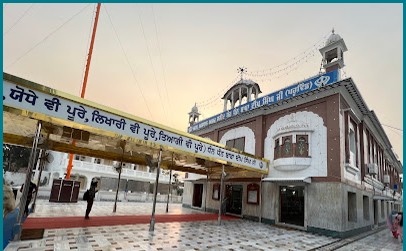
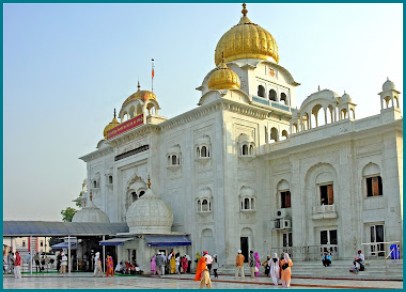
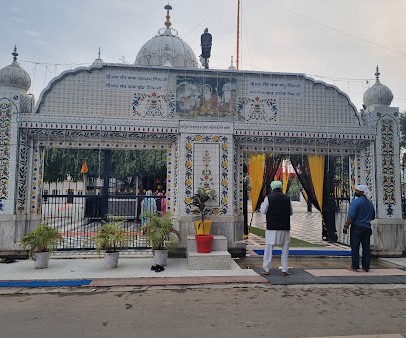
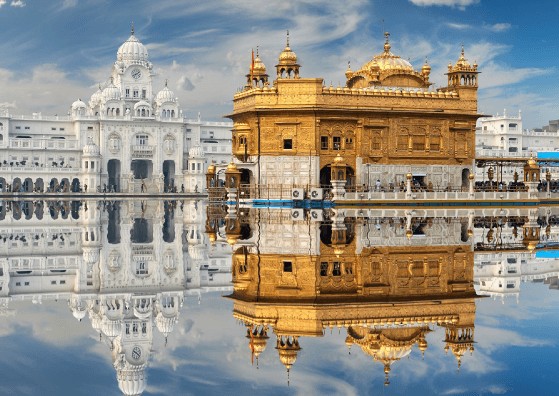
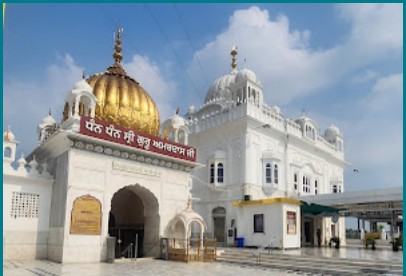
Gurdwara Baba Atal Rai Sahib Ji
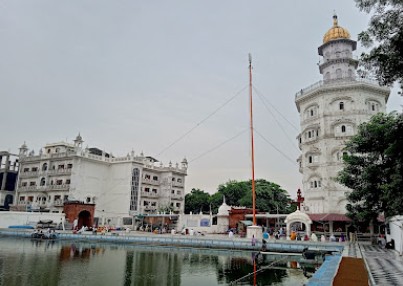
Gurudwara in the memory of Sri Baba Atal Rai Sahib (son of Guru Hargobind Ji ), who gave up his life here after performing a miracle to bring his dead friend back to life. Famous for the phrase 'Baba Atal Pakki Pakai Ghal' emphasizing continuous feeding of the hungry.
The Tower of Sobriety: Historical Reflections on Gurdwara Baba Atal Rai Sahib Ji
Slightly southward, past the bustling pathways of the pilgrims, is a structure that challenges the traditional landscape of Sikh religious architecture.
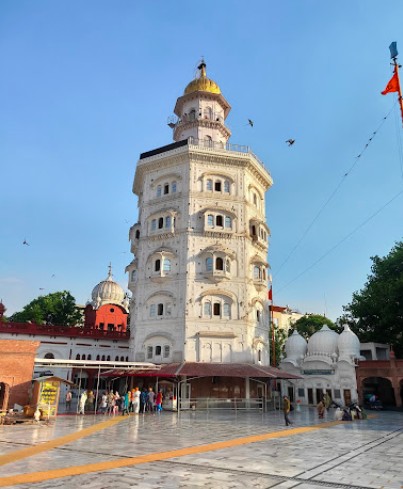
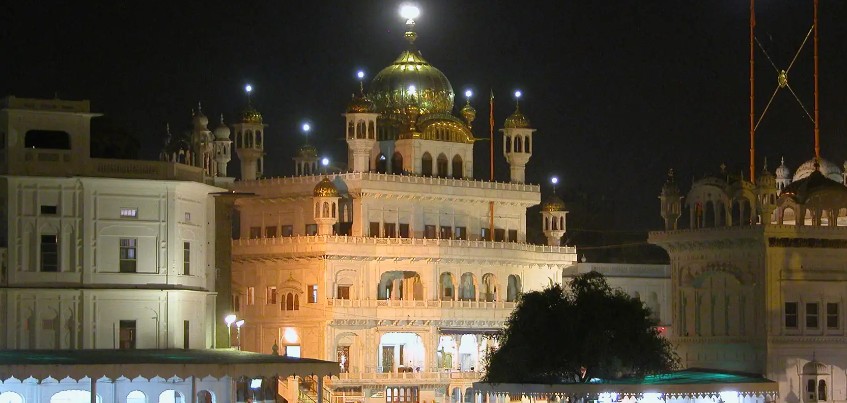
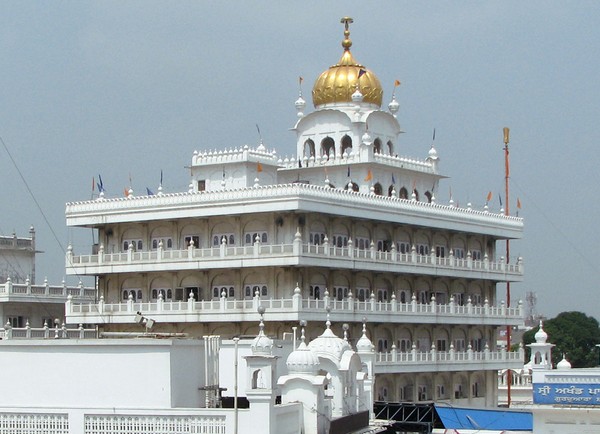
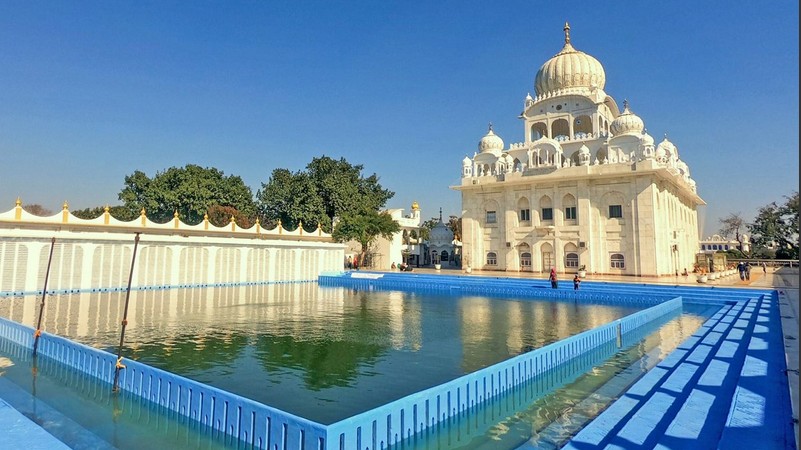
Rising forty meters above the city skyline, Gurdwara Baba Atal Rai Sahib Ji stands as the tallest architectural marvel in Amritsar.
It is an imposing, nine-story octagonal tower that commands an immediate sense of gravity, reflecting a deeply poignant chapter in early seventeenth-century Sikh history.
Built originally as a modest samadhi (cenotaph) before undergoing vast architectural developments in the late eighteenth and early nineteenth centuries, the monument commemorates the remarkably brief life of Baba Atal Rai, the sub-teenage son of the sixth Sikh Guru, Guru Hargobind Sahib.
Gurdwara Baba Atal Rai stands as a stone sermon on the central Sikh philosophical tenet of Bhana or Hukam—absolute surrender to the Divine Will—and the severe theological consequences that occur when that supreme order is breached.
The Child-Sage and the Cosmic Interruption
The historical setting of this narrative takes us back to the year 1628, an era when the young Sikh community was rapidly transforming under the leadership of Guru Hargobind Ji.
Following the tragic martyrdom of his father, Guru Arjan Dev, at the hands of the Mughal empire, the sixth Guru had introduced the revolutionary doctrine of Miri-Piri, balancing temporal sovereignty with spiritual authority.
It was in this atmosphere of rising dynamic power that young Baba Atal Rai, born in 1619, grew up.
Hagiographical texts like the Gurbilas Chhevin Patshahi capture the portrait of a child who carried an otherworldly aura, an individual so profoundly perceptive and spiritually grounded that the local community affectionately addressed him as "Baba" while he was still a boy playing in the dusty streets of Amritsar.
The defining event that forever bound Baba Atal Rai’s name to the landscape of Amritsar was a simple childhood game of bat and ball that went tragically awry.
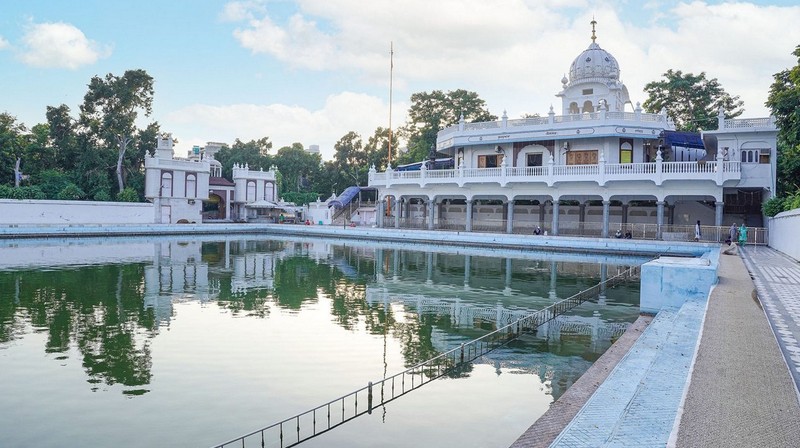
Every evening, the young prince would play with his neighborhood companions near the banks of the Kaulsar Sarovar, a historic reservoir constructed in dedication to Mata Kaulan.
On one hot, late summer evening, Baba Atal Rai was playing with his close companion, a merchant's son named Mohan.
As the shadows lengthened across the pool and night began to fall, the game ended abruptly with a forfeit remaining due from Mohan's side.
The children mutually agreed to resume the match first thing the following morning, and each departed for their respective homes under the cover of twilight.
Tragedy, however, struck in the dark hours of the night.
While sleeping in his family home, Mohan was bitten by a venomous cobra and succumbed to the poison before dawn broke over the city.
When the young Baba Atal Rai gathered his playmates the next morning and found his friend absent, he walked directly to Mohan's house, only to find the household consumed by heart-wrenching wails and lamentations.
Looking past the mourning relatives and approaching the lifeless form of his friend covered in a white burial shroud, the young Baba Atal Rai spoke with the innocent stubbornness of a child holding a debt in a game.
He tapped Mohan gently with his playing stick and commanded him not to avoid his turn, saying:
"Mohan, get up, open your eyes, and say Satnam Waheguru."
To the complete bewilderment and joy of the gathered family, the boy yawned, stretched as if waking from a long slumber, and walked out to play.
The Weight of Miracle and Divine Discipline
While the citizens of Amritsar rejoiced, celebrating the miracle across the markets, the news was received with a profound, solemn gravity by Guru Hargobind Sahib.
When the young boy later returned to sit upon his father's lap, he did not find the warm embrace he expected, but rather the unyielding gaze of a spiritual master enforcing cosmic discipline.
The sixth Guru reminded his son of the strict boundaries governing spiritual attainment in the Sikh path, stating that the performance of public miracles (Karamat) was an act of profound spiritual vanity, an artificial disruption of the natural laws set by the Creator.
The Guru’s warning was clear and absolute: the ability to wield spiritual power must always be tempered by humility, and interfering with the cycle of life and death was a direct violation of Hukam, the supreme divine command.
"Karamat te kehar hai" — Miracle working is an expression of wrath against the Divine Order.
The realization of his error hit the nine-year-old child with overwhelming clarity.
He recalled the legacy of his grandfather, Guru Arjan Dev, who had calmly accepted horrific torture and execution rather than use spiritual power to escape his fate.
Understanding that he had disrupted the cosmic ledger by drawing a soul back from the afterlife, Baba Atal Rai quietly resolved that he owed a life back to the universe to restore the balance.
He walked down to the banks of the Kaulsar Sarovar, took a ritual bath, and performed four circumambulatory walks around the Harmandir Sahib.
Sitting down in deep meditation, he softly recited the Japji Sahib, and surrendered his physical form back to the earth on July 23, 1628.
Architectural Evolution: An Eight-Sided Sentinel
Following the boy’s cremation, a modest brick shrine marked the spot for generations.
It was during the late eighteenth century—specifically around 1775 to 1780, an era dominated by the rise of the sovereign Sikh Misls—that the foundation for the massive tower was laid.
The construction received significant patronage under Jodh Singh Ramgarhia of the powerful Ramgarhia Misl.
Later, during the golden age of the Sikh Empire in the early nineteenth century, Maharaja Ranjit Singh expanded the structure, adding the crowning upper floors and finishing the pinnacle with a magnificent gilded golden dome.
| Floor Structure | Architectural Style & Purpose | Historic Artistry |
|---|---|---|
| Ground Floor & Base | Large outer octagonal shell with four massive brass/silver embossed gates facing the cardinal directions. | Houses the central sanctum with the Guru Granth Sahib under a brass canopy. |
| Stories 1 to 6 | Dual-octagonal layers containing a broad interior circumambulatory corridor. | Traditional wall frescoes depicting the life and travels of Guru Nanak Dev Ji. |
| Stories 7 to 9 | Narrower single-octagonal core ascending via a double staircase within the wall breadth. | Culminates in an open pavilion topped with a classic Sikh-style ribbed golden dome. |
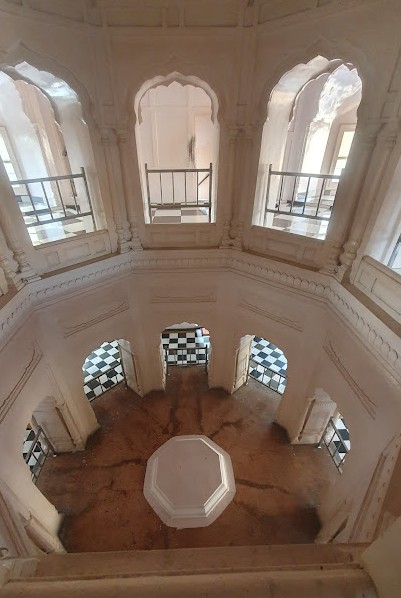
The choice of an octagonal design is highly significant to architectural historians.
It represents a transition point between the square earthly domain and the circular, infinite sky, perfectly encapsulating Baba Atal Rai's liminal position between human childhood and divine timelessness.
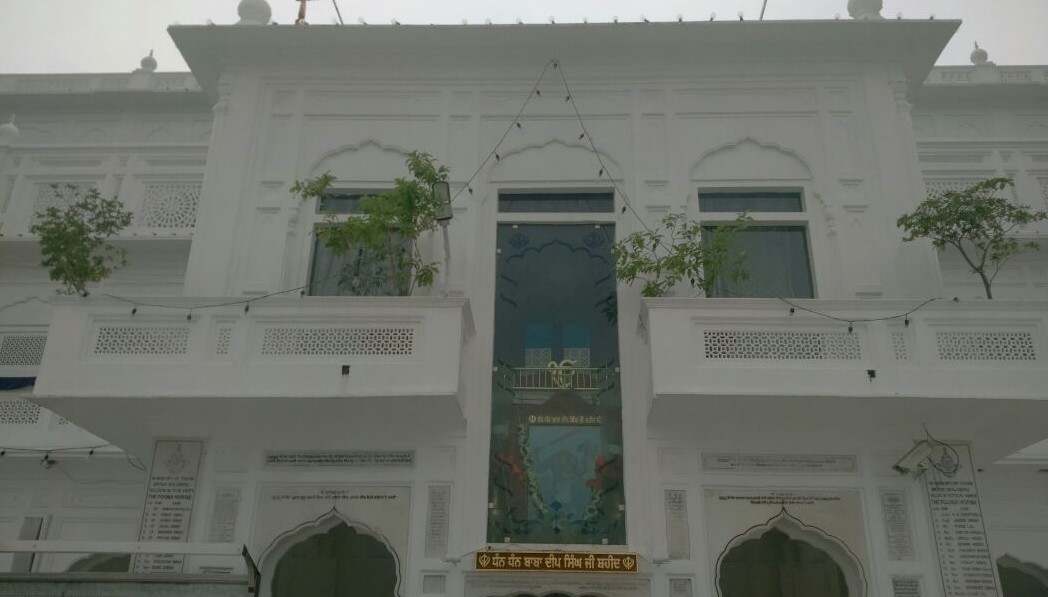
The external walls are punctuated by projected arched windows and miniature balconies supported by decorative stone brackets, demonstrating the apex of late Mughal-Sikh synthesis architecture.
The internal structure functions with a double staircase built directly into the thickness of the walls, allowing a seamless ascent through the history of the faith until one reaches the heights looking down upon the city.
The Living Heritage and the Lost Frescoes
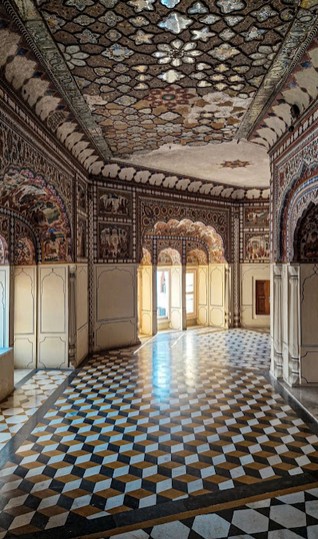
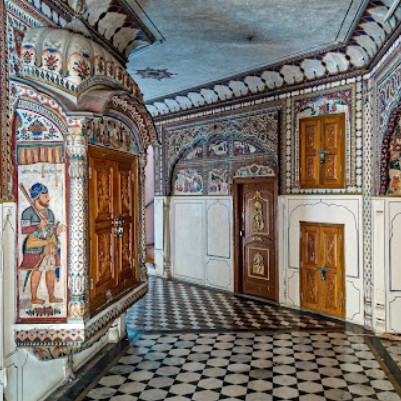
Beyond its soaring height, the interior of Gurdwara Baba Atal Rai serves as a repository of rare nineteenth-century visual art.
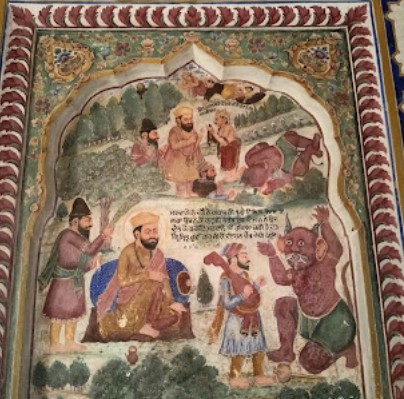
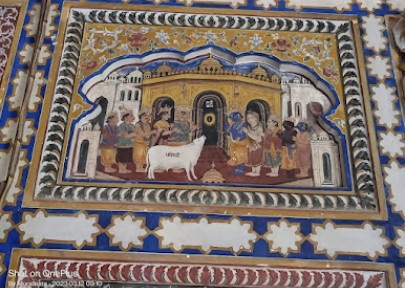
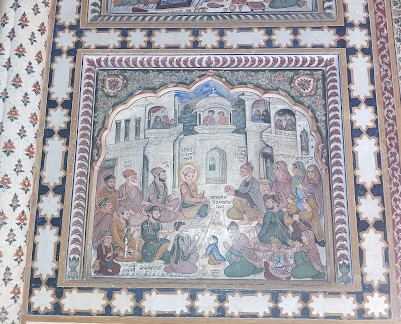
The ground floor corridors and upper stairways were historically covered with extraordinary fresco paintings executed using natural mineral pigments, Indian red ochre, and fine leaf gold.
These murals present extensive visual narratives of the Janamsakhis—the hagiographical life stories of Guru Nanak Dev Ji—alongside vivid depictions of later Sikh martyrs, including the sacrifices of the young Sahibzaades.
For historians, these paintings are crucial primary sources, providing clues regarding attire, weaponry, social hierarchy, and artistic sensibilities of the sovereign Sikh kingdom before British annexation.
Regrettably, the story of these frescoes is also a cautionary tale of heritage preservation.
Over the late twentieth century, well-intentioned but highly destructive Kar Seva initiatives resulted in a significant loss of this priceless visual history.
Large sections of irreplaceable nineteenth-century wall art were whitewashed, covered in plaster, or replaced with contemporary commercial tiles.
While a small fraction of the original panels remains intact, their altered states highlight the urgent need for professional scientific conservation.
Ultimately, Gurdwara Baba Atal Rai Sahib Ji remains a deeply moving space because it challenges our typical understanding of historical power.
In a world where monuments are usually built to celebrate military victories or territorial expansions, this towering structure stands instead as a monument to restraint, voluntary submission, and parental grief.
It reminds us that at the heart of the Sikh ethos lies the difficult obligation to accept the natural laws of the universe without demanding personal exceptions.
"Baba Atal, Pakian Pakaian Chal"
The local saying alludes to the legendary, unceasing community kitchen (langar) that operates here daily, proving that the young prince’s legacy of compassion and devotion continues to nourish the city centuries after his physical departure.
Location & contact
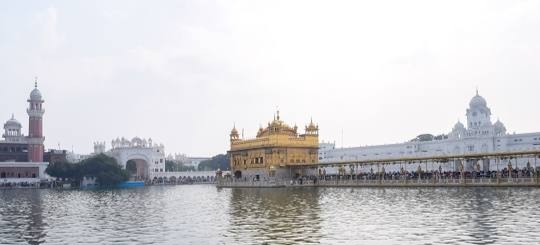
South of Sri Harmandir Sahib
- Email: info@sgpc.net
- Map: Open in Google Maps
- Website: Visit website
- Associated Gurus: Guru Hargobind Sahib Ji
Gallery