Gurudwara Shaheedi Asthaan Baba Deep Singh Ji
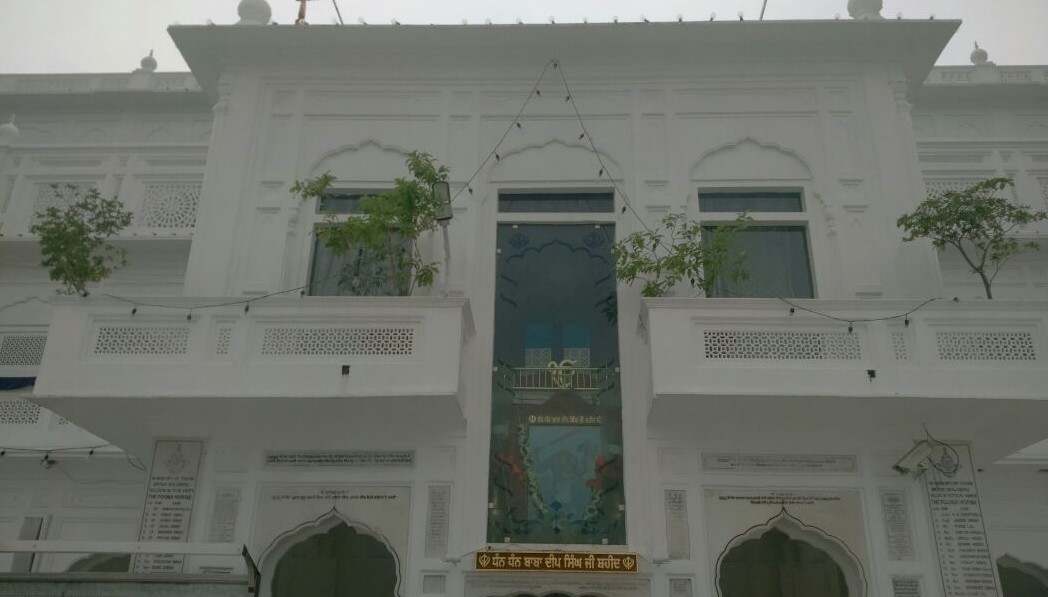
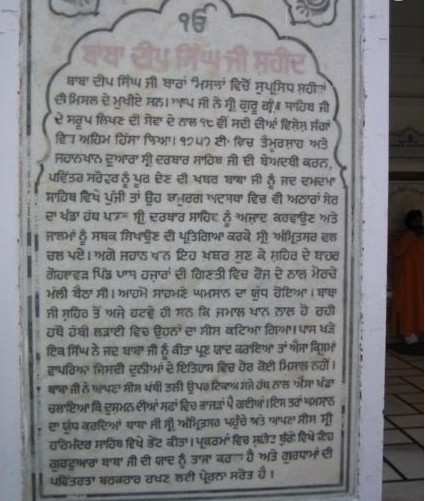
When Baba Deep Singh ji received word of Amritsar’s desecration in 1757, he Gathered a small core of 500 men at Damdama Sahib. Baba Deep Singh Ji offered a historic Ardaas vowing that his life would not leave his frame until his head reached the periphery of the sacred pool at Amritsar. The clash on November 11–13, 1757, was with imperial army of 20,000 men on the outskirts of Amritsar near the villages of Gohalwar and Chabba. Afgan commander Attal Khan was killed, and Baba Deep Singh Ji suffered a severe, near-decapitating wound to the neck. Baba Deep Singh Ji allegedly supported his shattered neck with his left hand while swinging his 14-kilogram Khanda with his right, cleaving a path through the panicked Afghan lines. This dramatic image—the warrior who refuses to die until his vow is fulfilled—became an indelible symbol of the Khalsa's ultimate triumph over physical mortality.
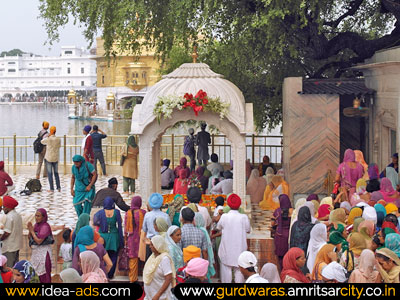
Shaheedi Asthaan Baba Deep Singh Ji
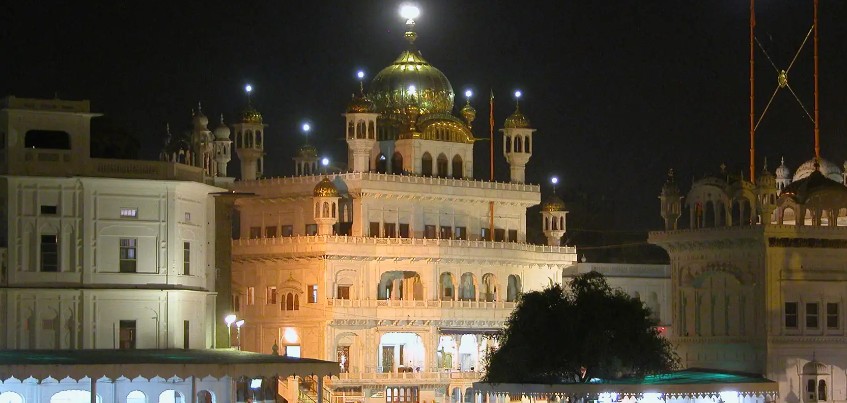
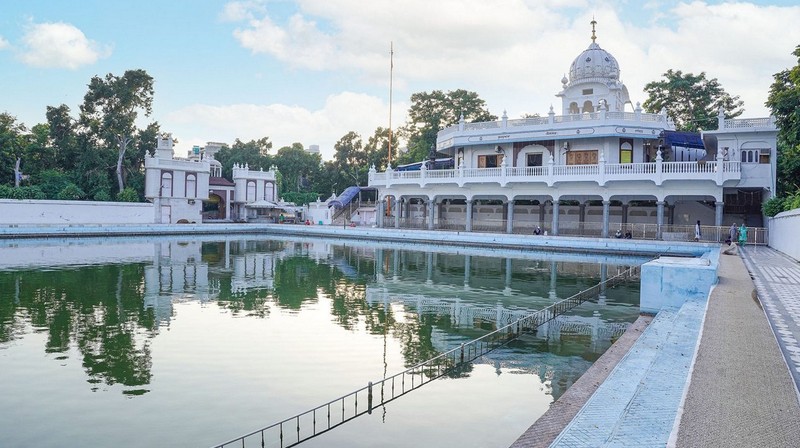
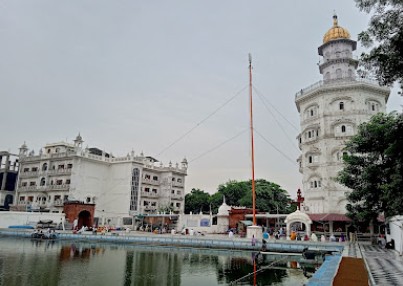
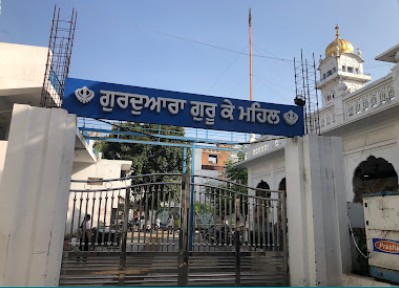
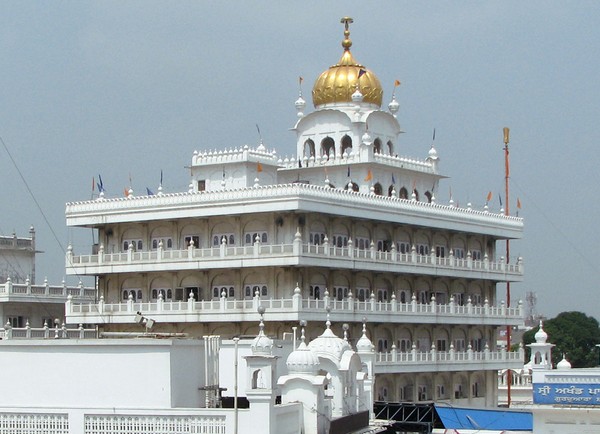
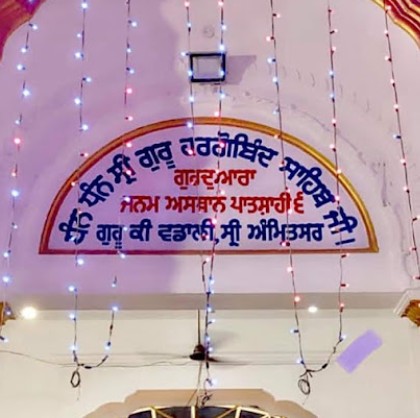
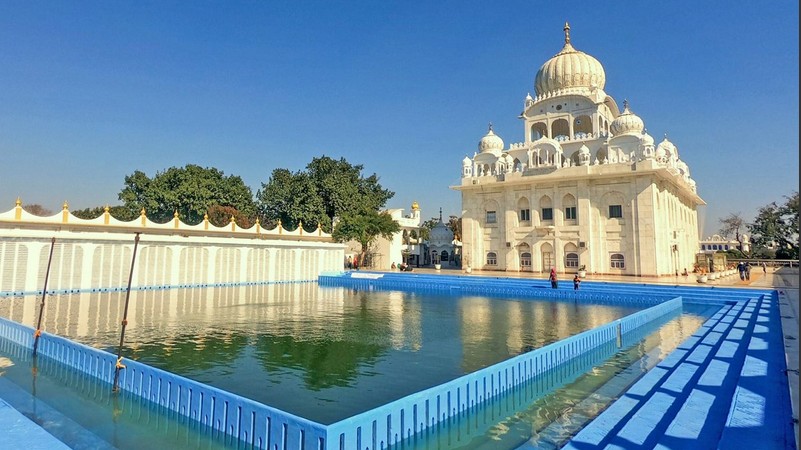
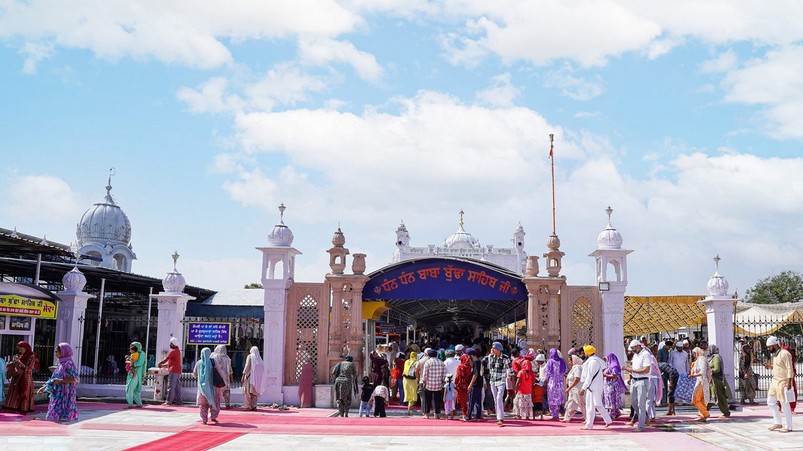
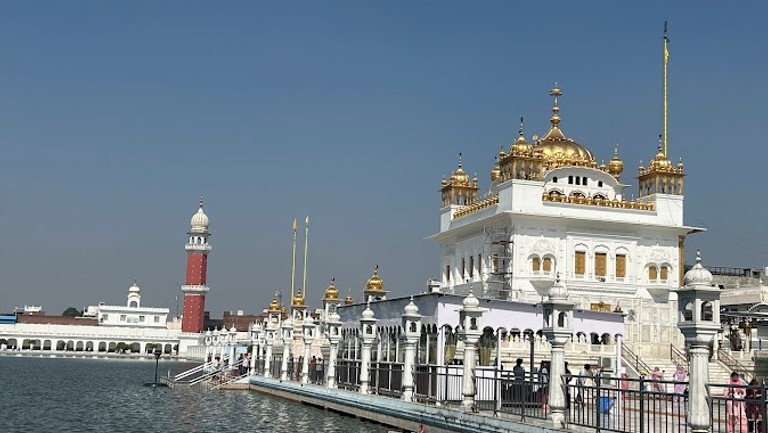
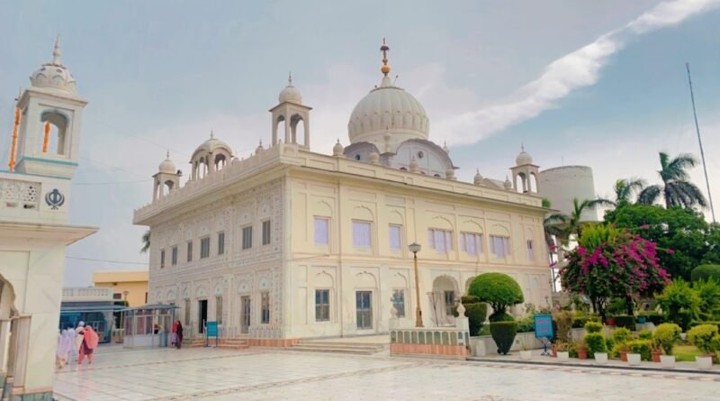
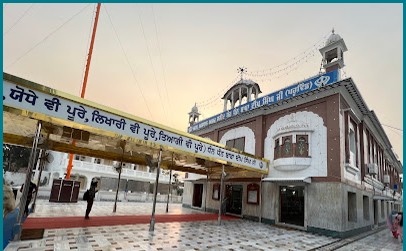
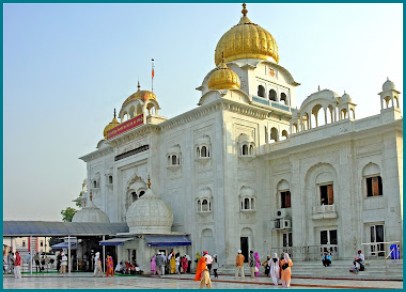
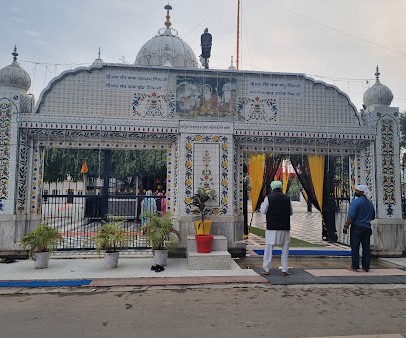
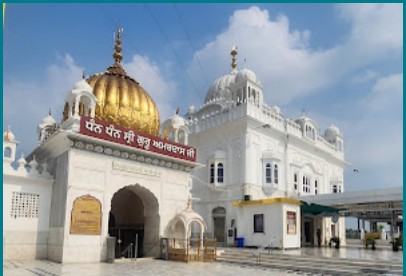
Shaheedi Asthaan Baba Deep Singh Ji, is a small, deeply revered shrine that marks the exact spot where the legendary 75-year-old warrior-scholar is commemorated as having offered his severed head to the ultimate sovereignty of the Guru.
The crucible of 18th-century South Asia was a chaotic, bloody transitional era defined by the collapse of Mughal hegemony, the ferocious incursions of the Afghan Durrani Empire, and the meteoric rise of the Sikh Misls (autonomous military confederacies). The Shaheedi Asthaan is not merely a monument to a singular act of martial defiance; it is a profound institutional anchor of Shaheedi (martyrdom) that reshaped the consciousness of a community and preserved its central sanctuary from physical and spiritual erasure.
1. The Crucible of the 18th Century and the Crisis of 1757
To understand why a 75-year-old scholar would march into an absolute meat-grinder of a battle, one must dissect the geopolitics of 1757. Northern India was caught in a violent tug-of-war between the fading Mughals, the emerging Maratha Confederacy, and Ahmad Shah Durrani (also known as Ahmad Shah Abdali), the fierce ruler of the Afghan Durrani Empire. During his fourth invasion of India, Durrani sacked Delhi and, on his return route to Kabul, plundered the towns of Punjab. Seeking to crush the insurgent Sikhs who had routinely harassed his baggage trains, Durrani left his young son, Taimur Shah, and his chief general, Jahan Khan, in control of Lahore with explicit instructions to systematically dismantle the foundation of Sikh political and spiritual power: the city of Amritsar and the complex of Sri Harmandir Sahib.
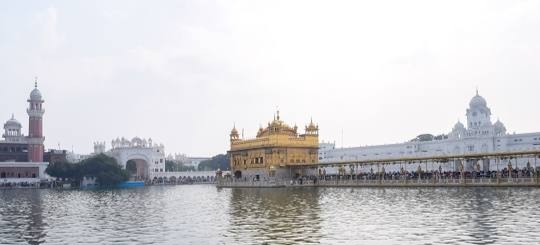
Historical chronicles, including the Prachin Panth Prakash, describe the profound devastation that followed. Under Jahan Khan’s orders, the sacred pool (sarovar) was defiled with the carcasses of slaughtered animals and deliberately filled with earth, debris, and garbage to render it unusable. The primary shrine was desecrated and partially demolished. In the worldview of the 18th-century Khalsa, this was not merely property damage or a military setback; it was an existential assault on their collective cosmic center.
When news of this beadbi (sacrilege) reached the southern wastes of Sabo Ki Talwandi (now Takht Sri Damdama Sahib), where Baba Deep Singh Ji presided as a spiritual custodian, it triggered a massive mobilization. This was a direct provocation that required an absolute response, challenging the very legitimacy of the Khalsa’s claim to sovereign existence.
2. Scholar, Scribe, and Soldier: The Multi-Faceted Legacy of Baba Deep Singh
Popular memory frequently simplifies Baba Deep Singh Ji into an iconic, sword-wielding warrior, but a critical historical analysis reveals a remarkably complex figure who embodied the dual ideal of the Sant-Sipahi (Saint-Soldier). Born in 1682 in the village of Pahuwind, his formative years were spent in the immediate presence of the tenth Guru, Gobind Singh Ji, at Anandpur Sahib. It was here that he was initiated into the Khalsa brotherhood during its early years and became an expert in Shastar Vidya (traditional martial arts). Crucially, he studied under the prominent scholar Bhai Mani Singh, mastering Gurmukhi, Arabic, Persian, and Sikh philosophy.
When Guru Gobind Singh Ji compiled the definitive version of the Sri Guru Granth Sahib at Damdama Sahib in 1705–1706, Baba Deep Singh Ji served as the primary scribe, providing the ink, pens, and paper, and later hand-copying four monumental master volumes to be distributed to the major seats of Sikh authority. He was subsequently appointed the first official custodian of Damdama Sahib, effectively founding the Damdami Taksal—the premier school of Sikh liturgy, theology, and textual pronunciation.
Concurrently, when the democratic Sarbat Khalsa organized its irregular guerilla forces into twelve distinct Misls in 1748, Baba Deep Singh was chosen to lead the Shaheedan di Misl (the Clan of the Martyrs). Thus, when he received word of Amritsar’s desecration in 1757, he did not react with the erratic fury of a young zealot. He acted with the calculated, heavy resolve of a senior statesman, a supreme theologian, and an experienced military strategist who understood that a faith which tolerates the destruction of its heart cannot endure.
3. The March from Damdama Sahib and the Sublimation of Death
The campaign that culminated at the Shaheedi Asthaan began with a solemn ritual of self-abnegation. Gathering a small core of five hundred men at Damdama Sahib, Baba Deep Singh Ji offered a historic Ardaas (supplicatory prayer), vowing that his life would not leave his frame until his head reached the periphery of the sacred pool at Amritsar. As this volunteer force marched northward through the Malha and Majha regions of Punjab, their numbers grew exponentially, swelling to over five thousand peasants, farmers, and veteran warriors armed with swords, spears, and rustic hatchets. They wore the saffron robes of those who had already performed their final rites.
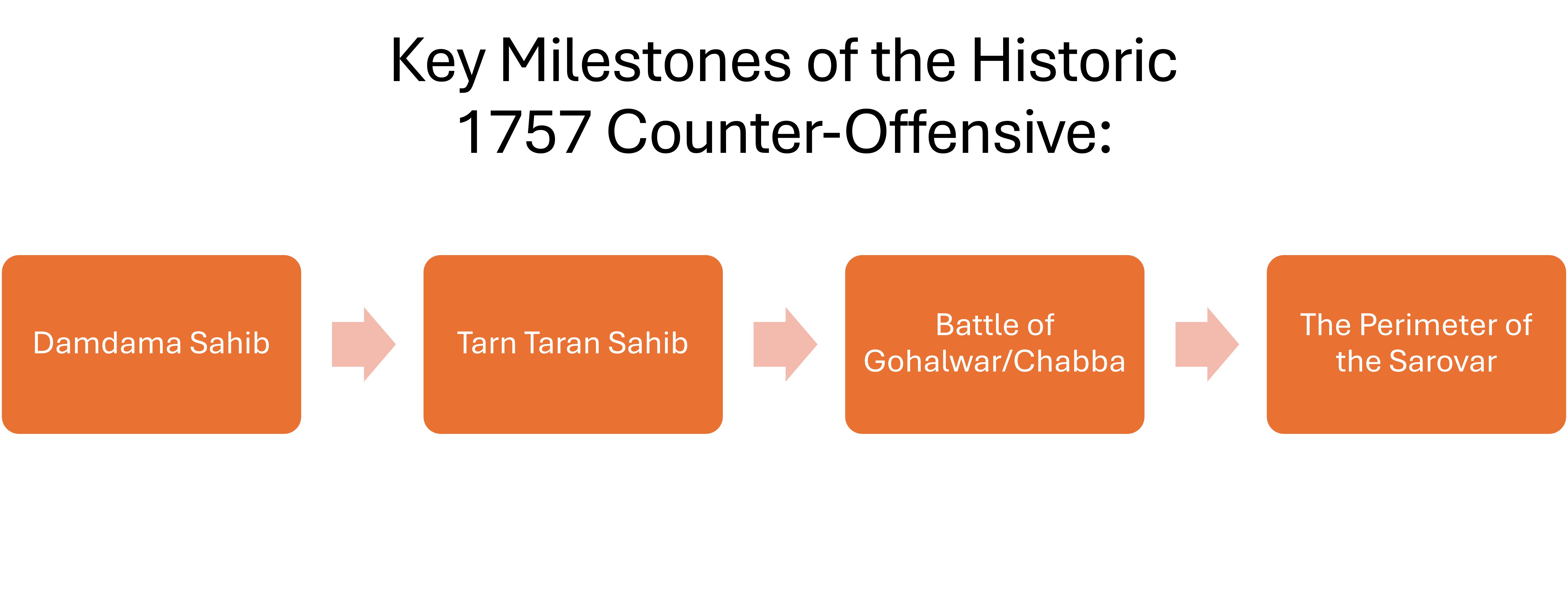
At Tarn Taran Sahib, located roughly ten miles from Amritsar, Baba Deep Singh drew a literal line in the dust with his heavy, double-edged Khanda, challenging only those who were entirely prepared for certain death to cross it. This act was a psychological transformation, converting a ragtag militia into a highly motivated force that was completely unburdened by the instinct for self-preservation.
4. The Topography of Battle and the Miracle at Chabba
The clash that took place on November 11–13, 1757, was a classic asymmetric encounter between a professional, state-backed imperial army and a highly motivated, insurgent religious force. Jahan Khan, warned of the advancing column, deployed an army of nearly twenty thousand soldiers on the outskirts of Amritsar near the villages of Gohalwar and Chabba.
The initial shock of the encounter was devastating. Despite their overwhelming numerical superiority, the Afghan lines buckled under the sheer force of the Sikh charge, which was driven by deep religious fervor. The battlefield soon became a chaotic, close-quarter melee. It was in the vicinity of Chabba village that Baba Deep Singh engaged in hand-to-hand combat with the Afghan commander Attal Khan (or Jamal Shah, depending on the chronicle). In a simultaneous trade of catastrophic blows, Attal Khan was killed, and Baba Deep Singh Ji suffered a severe, near-decapitating wound to the neck.
From a purely clinical, historiographical lens, this moment marks the intersection of physical reality and the transcendent metanarrative of faith. The standard historical record shows that the mortal blow was struck here. However, according to deep-seated Sikh historical tradition and accounts recorded in early texts like Ratan Singh Bhangu’s Prachin Panth Prakash, a fellow warrior reminded the faltering commander of his initial oath to reach the holy pool.
Spurred by an unimaginable surge of sheer willpower and divine devotion, Baba Deep Singh Ji allegedly supported his shattered neck with his left hand while swinging his 14-kilogram Khanda with his right, cleaving a path through the panicked Afghan lines. This dramatic image—the warrior who refuses to die until his vow is fulfilled—became an indelible symbol of the Khalsa's ultimate triumph over physical mortality.
5. Historiographical Reflections on the Shaheedi Asthaan
The architectural evolution of the Shaheedi Asthaan reflects the broader political history of the region. Initially marked by a simple concrete platform or stone slab laid down by the surviving Sikhs after they cleared the pool and celebrated the Diwali of 1757, the site was later formalised during the late 18th century as the Misls consolidated power and formed the Khalsa Theocracy.
During the reign of Maharaja Ranjit Singh and the rise of the Sikh Empire (1799–1849), the site was integrated into the grand marble renovation of the larger Darbar Sahib complex. The architecture of the Asthaan is deliberately minimalist. It features a low marble enclosure enclosing a patterned floor, marked by a commemorative inscription and a glass case that showcases traditional weaponry, including historical weapons associated with the era.
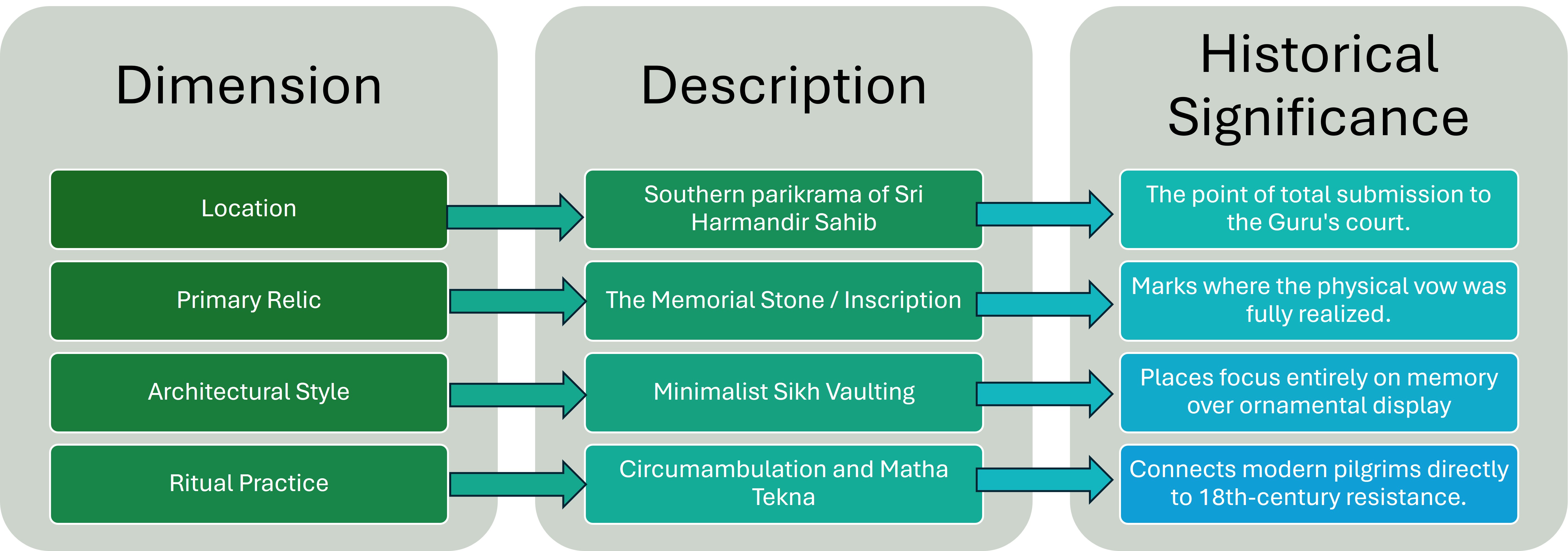
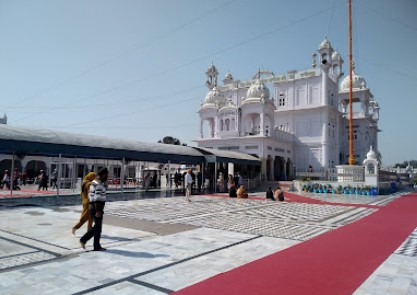
The space serves a dual function. It functions as a historical monument that marks a vital turning point in the Afghan-Sikh wars, which eventually stopped the path of nomadic invasions through the Khyber Pass. Simultaneously, it operates as a living sacred space where pilgrims perform parikrama, bow, and touch the marble, actively participating in a continuous cycle of memory that has remained unbroken for centuries.
6. The Philosophy of Shaheedi: Why Space and Memory Endure
Ultimately, the Shaheedi Asthaan Baba Deep Singh Ji stands as a powerful physical critique of imperial hubris. Ahmad Shah Durrani and his generals operated on a conventional military logic: they believed that by destroying a religious minority's central temple, breaking their icons, and polluting their waters, they could break their collective spirit and force them into political submission. They failed to realize that within the framework of the Khalsa panth, desecration did not breed despair; it created a powerful imperative for ultimate sacrifice.
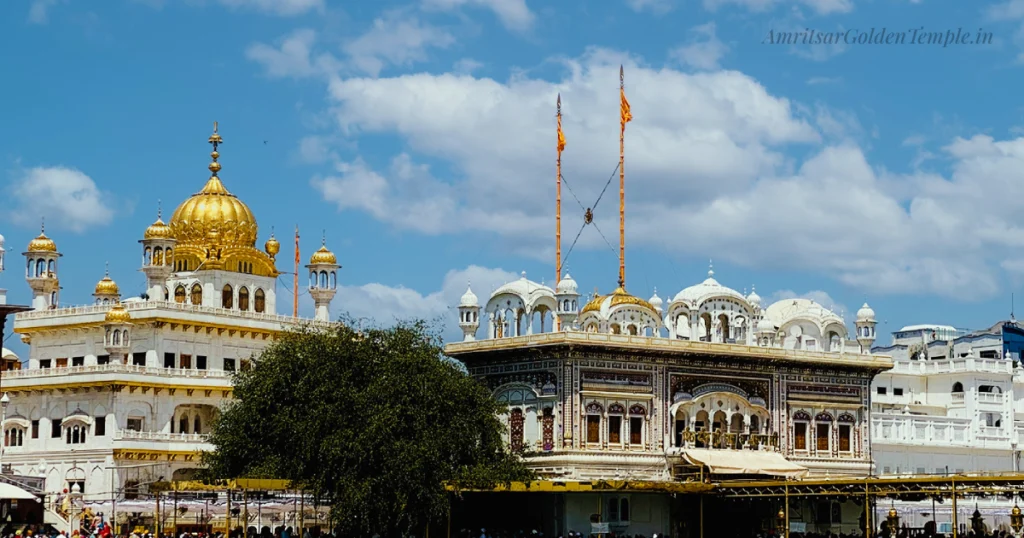
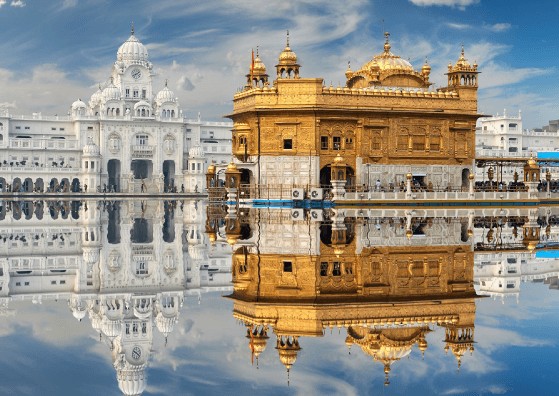
The site at Punjab pin code 143006 remains a central anchor for this philosophy. It teaches that sovereignty is not merely a matter of holding territory or commanding massive armies; it is found in the unyielding determination of the human spirit to defend its sacred values, even in the face of absolute physical destruction. The small marble platform under the shade of the golden domes reminds us that while empires crumble and conquerors are forgotten, the ground hallowed by an unyielding vow becomes immortal, drawing millions of people who come to touch the dust where a scholar-warrior laid down his head.
Location & contact
Potters Kot, Ramsar Road, Amritsar, Punjab 143006
- Phone: +91 183 254 0341
- Email: info@sgpc.net
- Map: Open in Google Maps
- Website: Visit website
Gallery