Gurdwara Achal Sahib
Marks the place where Guru Nanak Dev Ji held a historic theological debate with the Yogi ascetics (Siddhas) during the Shivratri fair. It was here that he delivered teachings on true renunciation
The Battleground of Truth: A Historical and Theological Analysis of Gurdwara Sri Achal Sahib
To fully comprehend the deep philosophical evolution of Sikhism and its decisive break from the prevailing ascetic traditions of medieval India, one must look beyond the serene banks of Kartarpur and trace the path of Guru Nanak Dev Ji to a historic battlefield of the mind located on the outskirts of Batala in Gurdaspur district, Punjab. This site is Gurdwara Sri Achal Sahib, a monumental sacred space that stands not merely as a physical monument of white marble and gold, but as the literal crucible where the life-affirming, householder-centric path of Sikhi engaged in its most dramatic and definitive intellectual confrontation with the life-denying, occult-driven establishment of the Nath Yogis. Historically, the area of Achal was already an ancient and deeply revered Shaivite sanctuary, dominated by the majestic Achaleshwar Mahadev Temple dedicated to Kartikeya, the warrior son of Lord Shiva. Every year, during the festival of Shivratri, this site became the epicenter of a massive religious and commercial fair, attracting thousands of traders, pilgrims, and ascetics from across the subcontinent. It was into this bustling, highly charged religious arena that Guru Nanak Dev Ji walked in the early sixteenth century, initiating a theological debate that would forever shift the spiritual landscape of South Asia.
The Geopolitical and Socio-Religious Hegemony of the Nath Yogis
To appreciate the gravity of the historical confrontation at Achal Sahib, one must reconstruct the socio-religious matrix of northern India during the transition from the fifteenth to the sixteenth century. At this juncture, the Nath Yogis, the spiritual heirs of the legendary Gorakhnath, exercised an immense and intimidating psychological hegemony over the collective consciousness of the masses. Clad in ashes, with their earlobes pierced with large glass or clay rings—earning them the title of Kanphata Yogis—they claimed supreme mastery over the natural and supernatural worlds through the physical and mental rigors of Hatha Yoga and the acquisition of occult powers known as riddhis and siddhis. Rather than employing their spiritual discipline to alleviate the suffering of a society crushed under the dual weights of rigid caste oppression and the military dominance of foreign dynasties, the Siddhas had systematically withdrawn from active society. They retreated to the high peaks of the Himalayas, descending only to demand tribute, perform fear-inducing feats of magic, and collect offerings from the gullible laity. They propagated a deeply pessimistic worldview that characterized the material world as an absolute trap, condemned household life as spiritually corrupting, and castigated women as spiritual obstacles. Despite their outward renunciation of the world, however, they remained utterly dependent on the charity of the very householders they despised, creating a parasitic relationship that went unchallenged due to the deep-seated public fear of their curses. It was this formidable, entrenched spiritual aristocracy that Guru Nanak Dev Ji resolved to dismantle when he directed his steps toward the annual Shivratri fair at Achal Batala.
Guru Nanak’s arrival at the fair, accompanied by his faithful companion and Muslim rabab player, Bhai Mardana, was a deliberate act of public engagement. While the various sects of Siddhas had established elaborate camps, displaying their physical austerities and occult trickery to attract crowds, the Guru sat quietly on a nearby open ground and began to sing the praises of the Formless Creator (Nirankar). The sublime, heart-melting melodies of Bhai Mardana’s rabab, coupled with the revolutionary, egalitarian message of the Guru’s hymns, acted as an irresistible spiritual magnet. The common folk, weary of the cold, intimidating ritualism of the yogis, began to desert the sectarian camps in droves, flocking instead to the Guru’s congregation (Sangat). This sudden shift in popular devotion struck a devastating blow to the pride and economic interests of the Siddhas. The tension reached a boiling point when a troupe of popular folk actors (Rases), performing a religious play at the fair, lost their collection bowl, which had been mischievously hidden by the jealous yogis to disrupt the performance and embarrass the Guru's followers. When the distressed actors appealed to the Guru, he exposed the petty malice of the yogis by indicating the exact spot where the bowl was hidden. Humiliated and furious, the supreme assembly of the Nath Yogis, led by the formidable and proud Yogi Bhangar Nath, marched to the Guru's camp to engage him in a public trial of spiritual authority.
The Great Dialectic: Deconstructing Asceticism and the Sidh Gosht
The philosophical battle that ensued between Guru Nanak Dev Ji and the assembly of the Siddhas is celebrated as one of the most intellectually rigorous dialogues in the history of world religions. This historic discourse is immortalized in the Guru Granth Sahib as the sublime composition titled "Sidh Gosht" (Discourse with the Siddhas), spanning seventy-three stanzas in Raga Ramkali. The debate opened with the Siddhas attempting to undermine the Guru's spiritual credibility by attacking his lifestyle. Yogi Bhangar Nath mockingly questioned why Guru Nanak, who had previously traveled the world in the garb of a holy pilgrim, had now discarded his ascetic robes to wear the ordinary clothes of a family man. Bhangar Nath accused the Guru of ruining his spiritual purity, comparing his actions to adding acid to milk, which spoils the milk and prevents it from ever being churned into butter. With calm composure and devastating logical precision, Guru Nanak turned the metaphor back upon his interrogator, declaring that the yogi's mind was untrained and lacked the clean vessel of contemplation. "O Bhangar Nath," the Guru responded, "your mother did not know how to clean the churn, and so the milk was spoiled. You claim to have renounced the world, yet you feel no shame in begging for food and shelter from the very householders whose lifestyle you condemn. If household life is a spiritually barren wasteland, why do you survive on their charity?" This response shattered the self-righteous facade of the yogis, exposing the deep parasitism at the heart of their ascetic lifestyle.
As the debate progressed, the Siddhas, realizing they could not defeat the Guru on ethical or moral grounds, shifted the discussion to complex metaphysical and yogic doctrines, asking seventy-three highly technical questions regarding the origin of creation, the nature of the mind, the function of the breath, and the ultimate path to liberation. They argued that the only way to cross the terrifying ocean of material existence was to retreat to the forest, practice extreme breath control (Pranayama), silence the senses, and merge into the void of the mind. Guru Nanak systematically dismantled this isolationist theology, replacing it with the revolutionary concept of the Gurmukh (the God-oriented being). The Guru explained that true liberation was not attained by fleeing society, but by living actively within it while remaining internally detached from its material temptations. He utilized the beautiful, natural metaphors of the lotus flower and the wild duck: just as the lotus remains dry and untouched by the muddy pond in which it grows, and just as a wild duck swims across a flowing river without wetting its wings, a true seeker must live as a householder, earning an honest living (Kirat Karni) and sharing resources with others (Vand Chhako), while keeping the mind constantly anchored in the divine Word (Shabad). This was a monumental paradigm shift in Indian philosophy, taking spirituality out of the exclusive domain of elite, mountain-dwelling recluses and giving it back to the common, hardworking human being as a practical path of social responsibility, active compassion, and inner realization.
The Chronology and Historical Milestones of Achal Sahib
| Historical Milestone | Geographical & Structural Marker | Socio-Spiritual Significance |
| The Arrival of Guru Nanak Dev Ji | The Grounds of the ancient Achaleshwar Temple | Guru Nanak arrives during the annual Shivratri Mela to engage with the public and challenge priestly and ascetic dominance. |
| The Great Philosophical Debate (Sidh Gosht) | Site of the Main Darbar Hall, Gurdwara Achal Sahib | Guru Nanak engages in a profound debate with Yogi Bhangar Nath and the Sidh assembly, recorded as 'Sidh Gosht' in Sri Guru Granth Sahib, establishing the primacy of householder life over ascetic escapism. |
| The Miracle of the Perennial Fruit Tree | The Sacred Beri Sahib (within the Gurdwara complex) | Guru Nanak transforms a thorny Kikkar twig used as a tooth-cleaner into a fruitful Beri tree that bears sweet jujubes all year round. |
| The Visit of the Sixth Sovereign | The Hath-Koni Khuh (Eight-Cornered Well) | Guru Hargobind Ji visits during the wedding of Baba Gurditta Ji and constructs an octagonal well to provide clean water to pilgrims. |
| The Legacy of Communal Harmony | The Shared Boundaries with Achaleshwar Mahadev Temple | The structural coexistence of the temple and the Gurdwara reflects Guru Nanak's core message of religious tolerance and universal brotherhood. |
The Defeat of Magic and the Triumph of the Shabad
Unable to match the Guru's philosophical intellect, the Siddhas resorted to their ultimate weapon: the terrifying display of their occult and magical powers. The historical Janamsakhis recount a chaotic scene where the yogis began to perform extraordinary, mind-bending illusions in an attempt to intimidate the Guru and the gathered crowds. Some yogis transformed themselves into roaring tigers and leopards, while others flew high into the sky like birds, produced continuous streams of fire from their mouths, or made it rain gold and silver coins over the fairgrounds. The Siddhas challenged Guru Nanak to display his own miracles to prove his spiritual authority, convinced that he would be powerless in the face of their magic. Guru Nanak, sitting in undisturbed, serene contemplation amidst the roaring and flying apparitions, looked at the yogis with deep compassion and sadness. When they demanded a miracle, the Guru delivered a speech that struck at the very root of spiritual vanity: "O Siddhas, I have no miracle to show you other than the True Name of God. Even if I were to wear a dress of fire, construct a temple of ice, swallow iron, or weigh the entire earth in a balance scale, all of these would be completely vain and useless illusions without the grace of the Divine Name."
Guru Nanak explained to the stunned assembly that the pursuit of occult powers (Riddhi-Siddhi) was a severe spiritual disease that only served to inflate the ego and pull the human soul away from the path of ultimate truth and submission to the Divine Will (Hukam). He argued that those who seek to manipulate the laws of nature through magic are spiritually blind, trapped in the illusion of their own power. True power, the Guru asserted, lay in the complete surrender of the ego and the cultivation of a pure, compassionate heart that seeks the welfare of all creation (Sarbat da Bhala). Witnessing the Guru's absolute, unshakable peace, and realizing that their elaborate illusions had failed to move even a single hair on his head, the grand Siddhas fell silent. The illusions vanished, replaced by a deep, contemplative stillness. Realizing the profound truth of the Guru's words, the great Siddhas, including Bhangar Nath, Charpat Nath, and Loharipa, bowed their heads in deep reverence before the Guru, declaring: "Hail, O Nanak! You have lit a magnificent light of truth in this dark age of falsehood."
The Living Miracles of Nature and the Blessings of the Sixth Guru
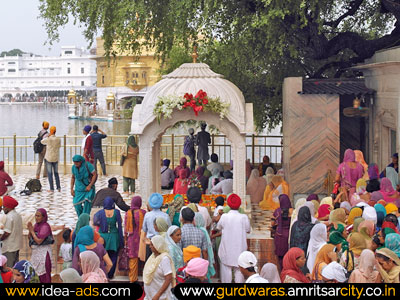
A beautiful physical testament to Guru Nanak Dev Ji's historic visit still stands within the sacred compound of Gurdwara Achal Sahib, deeply cherished by generations of pilgrims. Following the successful conclusion of the great debate, Guru Nanak took a Kikkar (acacia) twig, which he had used as a datan (natural toothbrush), and planted it into the dry soil of Achal. Observing this, the local villagers and disciples expressed their concerns to the Guru, pointing out that the Kikkar is a highly thorny, non-fruiting tree that would provide neither sweet shade nor sustenance to the weary travelers and pilgrims who would visit this site in the future. Understanding their practical concern, the Guru asked what kind of tree they desired. When the congregation requested a sweet, fruit-bearing tree, Guru Nanak blessed the planted twig, and it miraculously grew into a lush Beri (jujube) tree. Furthermore, he blessed the tree with a unique, perennial trait: unlike ordinary Beri trees that only bear fruit seasonally during the winter months, this sacred tree would yield sweet, delicious fruit throughout the entire year. To this day, the historic Beri tree stands proudly near the main sanctum, its vibrant green leaves and year-round blossoms serving as a living symbol of the Guru's deep connection with the natural world and his infinite grace.
The sacred geography of Achal Sahib was further enriched a century later during the spiritual reign of the sixth Sikh preceptor, Guru Hargobind Sahib Ji, who pioneered the concept of Miri and Piri (the synthesis of temporal and spiritual authority). Guru Hargobind Ji visited Achal Sahib on the joyous occasion of the marriage of his eldest son, Baba Gurditta Ji, whose grand wedding procession had traveled from Kartarpur to nearby Batala. To honor the memory of his grandfather, Guru Nanak Dev Ji, and to address the pressing physical needs of the ever-growing numbers of pilgrims visiting the historic site, Guru Hargobind Ji personally commissioned the digging of a magnificent, unique eight-cornered well (Hath-Koni Khuh) directly in front of the main entrance of the Gurdwara. This octagonal well, designed to provide cool, sweet, and pure water to the congregation, remains fully functional to this day, representing the deep continuity of the Gurus' mission to serve both the physical and spiritual needs of humanity. Adjacent to this well, a beautiful shrine dedicated to Baba Gurditta Ji also stands, preserving the memory of the young prince who would go on to lead the Udasi sect founded by Baba Sri Chand Ji, thereby reconciling the ascetic lineage with mainstream Sikhism.
Architectural Splendor and the Message of Peaceful Coexistence
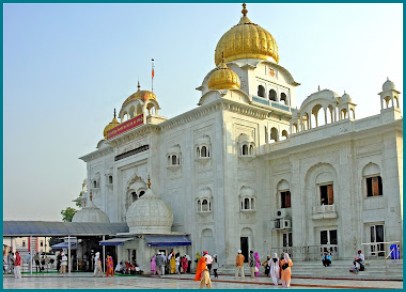
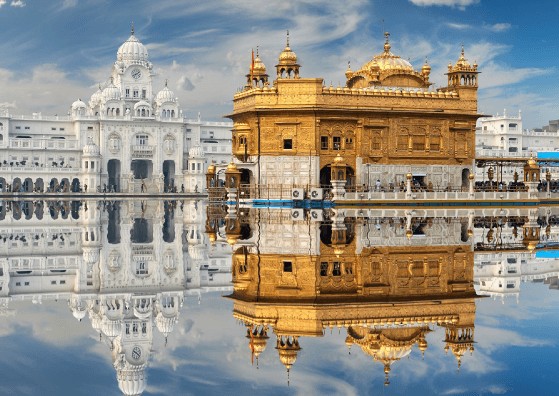
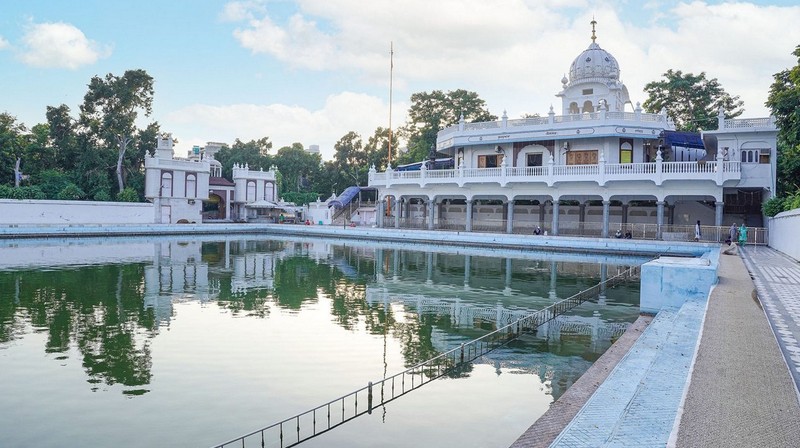
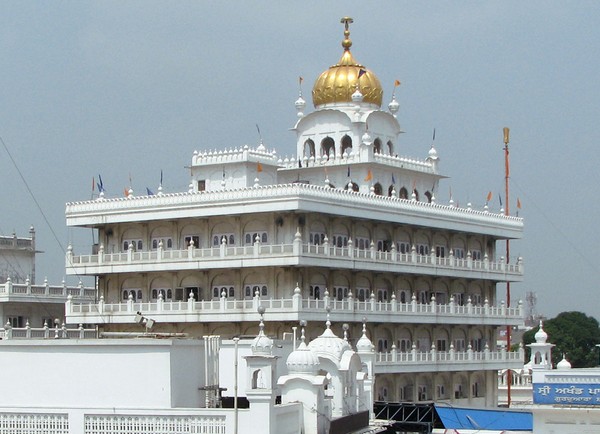
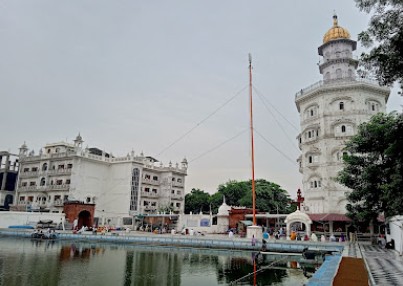
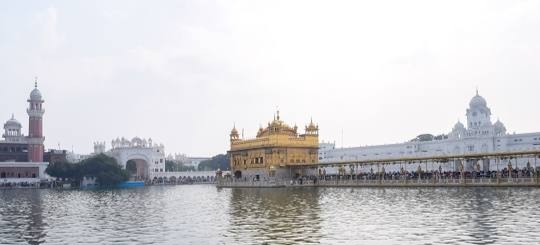
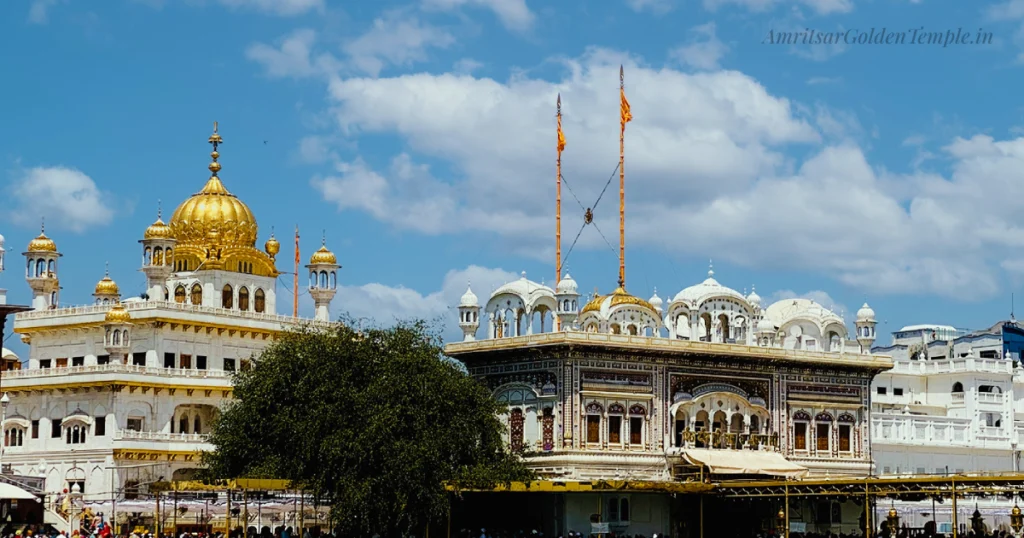
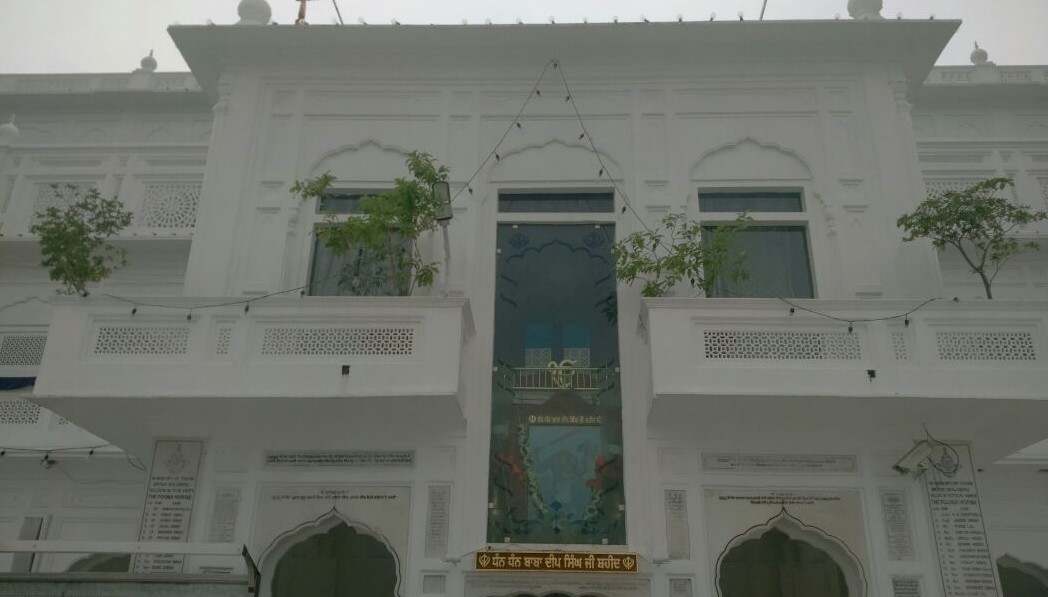
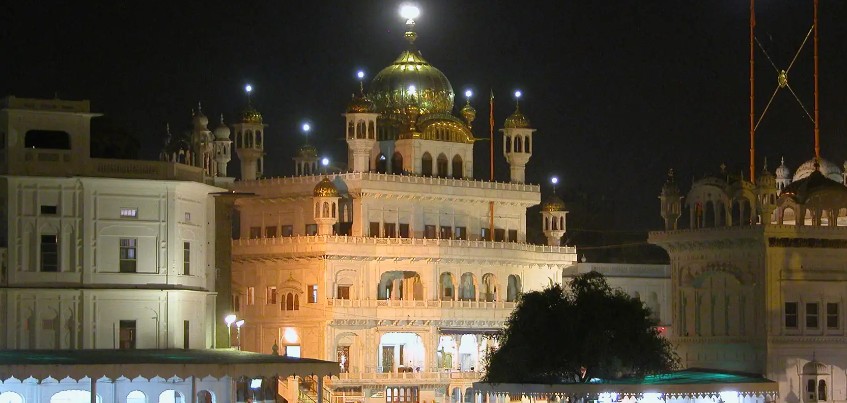
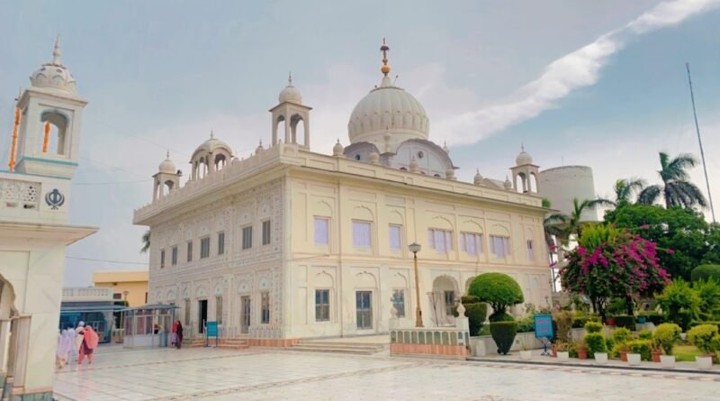
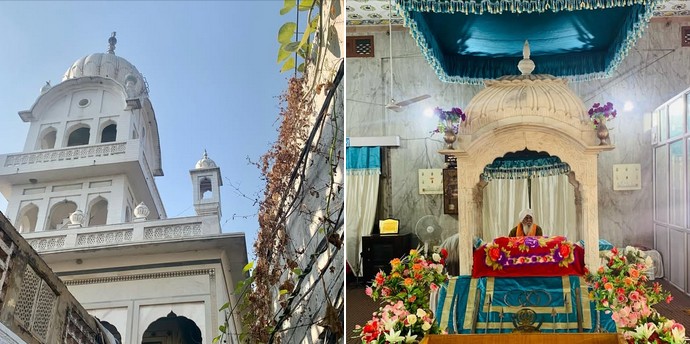
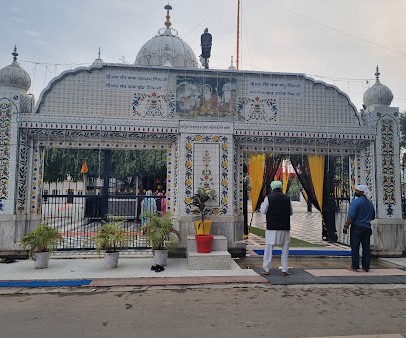
The present-day architectural complex of Gurdwara Sri Achal Sahib is a breathtaking monument crafted in pristine white marble, blending classic Sikh architectural elements with modern engineering. Its majestic central dome, gold-plated pinnacles, and elegant, ornate chhatris rise proudly against the sky, reflecting the deep reverence of the global Sikh community. The central sanctum, where the Sri Guru Granth Sahib is seated on an exquisitely carved marble palanquin beneath a canopy of rich silk and gold thread, is filled with the continuous, soothing strains of Gurbani kirtan, creating an atmosphere of profound meditative silence. Surrounding the main shrine is the wide, peaceful sarovar (sacred pool), where pilgrims from all walks of life take holy dips, seeking spiritual purification and physical healing in the very place where the Siddhas once surrendered their vanity to the Shabad.
Most remarkably, Gurdwara Achal Sahib stands in immediate, peaceful proximity to the ancient Hindu Achaleshwar Mahadev Temple. For centuries, these two major shrines have shared the same sacred ground, drawing devotees from both communities who pay respects at both places without conflict or division. In an era often fractured by communal tension, the structural and spiritual coexistence of these two monuments stands as a profound, living testament to Guru Nanak's universal philosophy: that the Divine is not confined within sectarian boundaries, and that true religion lies in mutual respect, ethical living, and the recognition of the shared light of God in all of humanity. Walking through the wide, sunlit courtyards of Achal Sahib, watching the shadow of the white dome fall upon the ancient temple steps, and hearing the peaceful ripples of the sarovar, one can still feel the electric, revolutionary energy of that historic Shivratri morning five centuries ago when a lone teacher stood firm in the face of occult power, looked out at a divided world, and proved that truth, love, and active service are the only true miracles that can save humanity.
Location & contact
Batala-Jalandhar Road, Achal Batala, Gurdaspur District, Punjab 143505
- Email: info@sgpc.net
- Map: Open in Google Maps
- Website: Visit website
- Associated Gurus: Guru Nanak Dev Ji · Guru Hargobind Sahib Ji