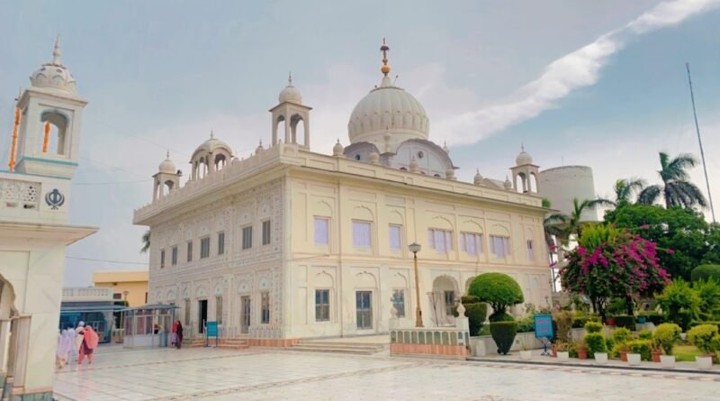
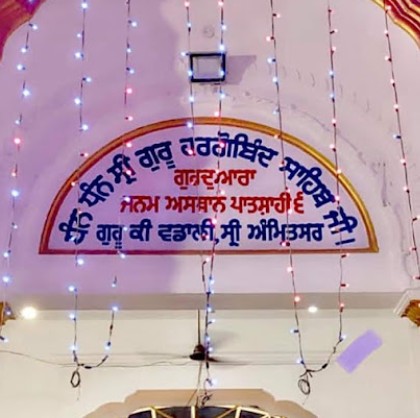
Gurdwara Sri Dera Sahib (Batala)
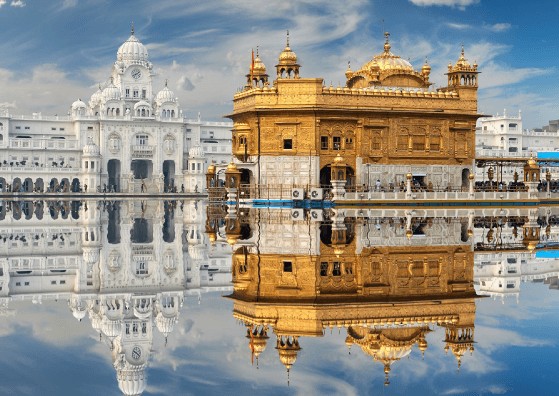
Gurdwara Sri Dera Sahib (Batala) stands on the exact location of the house of Bhai Mula Chona, the father-in-law of Guru Nanak Dev Ji. It is the definitive venue where the actual wedding rituals (*Anand Karaj* equivalent ceremony of that era) took place between Guru Nanak Dev Ji and Mata Sulakhni Ji.
Gurdwara Sri Dera Sahib
Gurdwara Sri Dera Sahib in the ancient, walled city of Batala provides a rare, intimate window into the private and domestic life of Guru Nanak Dev Ji. While the surrounding landscape of the Majha region of Punjab is densely dotted with shrines marking epic spiritual discourses, miraculous encounters, and battles, Gurdwara Sri Dera Sahib stands out because it commemorates a deeply human, domestic milestone: the solemnization of the Guru’s marriage to Mata Sulakhni Ji in 1487 CE.
This site is not merely a monument to a religious wedding; it is the physical space where early Sikhism explicitly broke away from the dominant medieval Indian traditions of asceticism and world-renunciation. By establishing his household right here, Guru Nanak fundamentally redefined the path to spiritual liberation, demonstrating that true enlightenment did not require abandoning one's family or fleeing to the safety of the wilderness, but could instead be achieved while fully participating in the everyday responsibilities of a householder (Grihastha).
1. The Social Context of 15th-Century Batala
In late 15th-century Punjab under the Lodi Dynasty, Batala was founded in 1465 by Raja Ram Deo, a Bhati Rajput who had embraced Islam under the patronage of Bahlul Lodi. Batala was a young, booming urban center driven by strategic trade routes and agricultural wealth. The town's social fabric was deeply conservative, strictly governed by rigid caste hierarchies, complex Brahmanical rituals, and patriarchy.
Within this environment, families like that of Bhai Mool Chand Chauna—a high-ranking Khatri of the Chona clan who served as a local revenue official (patwari)—held significant civic power and social prestige.
When the wedding procession (baraat) arrived in Batala from Sultanpur Lodhi, it brought together two vastly different worlds. On one side stood Bhai Mool Chand, representing the entrenched, orthodox social order that demanded total adherence to ancestral customs, astrological timing, and priestly authority.
On the other side stood the young Guru Nanak, whose growing reputation as a radical divine philosopher had already begun to disquiet traditionalists. The Chona ancestral home, which originally occupied the exact ground where Gurdwara Sri Dera Sahib now stands, became a crucible where these two opposing forces collided.
For the historian, this domestic threshold was the staging ground for a quiet social revolution that challenged the fundamental ways human relationships and family structures were valued in medieval India.
2. The Ancestral Home as a Historical Crucible
The physical ground of Gurdwara Sri Dera Sahib represents the private, domestic sphere of this grand historical narrative. In 1487 CE, this location was not a public temple but a bustling, multi-tiered Punjabi courtyard house (haveli), alive with the nervous energy of an elite family preparing for a major wedding.
As a revenue official, Mool Chand’s home would have been an expansive compound designed to host large gatherings, store grain, and receive state officials. When Guru Nanak stepped across this threshold, he was entering an environment completely bound by the social expectations of the Khatri caste.
Every aspect of the upcoming ceremony—from the gifts exchanged to the food prepared—was scrutinized through the lens of family honor and tradition.
It was within these intimate domestic quarters that the tension between orthodox ritualism and the Guru's emerging philosophy reached its peak. Traditional accounts describe a household caught between the desire to celebrate a prestigious union and growing anxiety over the groom's radical ideas.
For a historian, analyzing this specific space allows us to see how early Sikhism did not just develop in isolated spaces of meditation, but actively engaged with the deeply rooted traditions of ordinary family life.
The home of Mata Sulakhni Ji was transformed from a traditional stronghold of caste orthodoxy into the historic birthplace of a new, egalitarian model for the family.
3. The Structural Revolution of the Marriage Vows
The defining historical event that gives Gurdwara Sri Dera Sahib its profound significance is the radical departure from traditional marriage rites that occurred within its central courtyard.
Mool Chand had spared no expense, retaining a council of traditional Brahmin priests to oversee an elaborate ceremony centered around a sacrificial fire (havan), astrological charts, and ancient Sanskrit chants.
However, Guru Nanak firmly refused to participate in these rituals, viewing them as hollow superstitions designed to enforce priestly authority and caste divisions. He argued that a marriage should not be built on a fear of bad omens or the appeasement of deities, but on a shared, conscious commitment to divine truth.
Faced with an intense standoff that threatened to halt the wedding entirely, the young Guru proposed a beautiful, simplified alternative that bypassed the priestly class altogether.
He penned the Mool Mantar—the foundational theological statement of Sikhism proclaiming the oneness, eternity, and self-existent nature of the Divine—onto a piece of parchment and placed it on a small wooden pedestal (Chaurang) in the center of the courtyard.
Guru Nanak and Mata Sulakhni Ji then walked around this written Word of God four times, effectively formalizing their union.
For historians of religion, this moment at Dera Sahib represents the early origin of the Anand Karaj (the formal Sikh marriage ceremony). By substituting a sacred text for a sacrificial fire, the Guru took a massive step toward liberating ordinary people from the grip of religious exploitation, turning the marriage ceremony into an egalitarian, spiritually grounded partnership.
4. Architectural Transformation and Preserved Antiquities
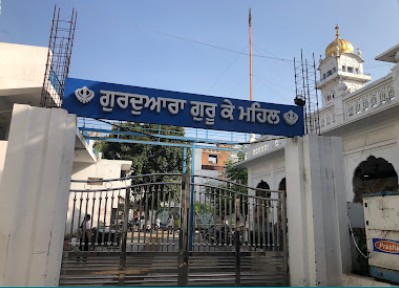
The physical evolution of Gurdwara Sri Dera Sahib reflects the broader historical journey of the Sikh community—evolving from a private family home into a revered historical monument.
For generations after the 1487 wedding, the site was quietly maintained as a private sanctuary by local caretakers and descendants. It was during the era of the Sikh Empire in the early 19th century, and later through mid-20th-century community reconstruction initiatives, that the site was transformed into the grand architectural monument we see today.
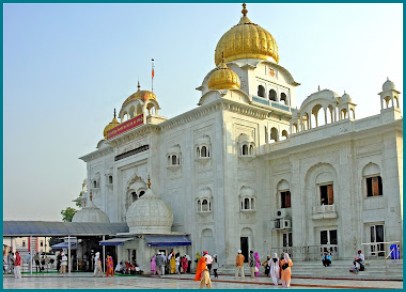
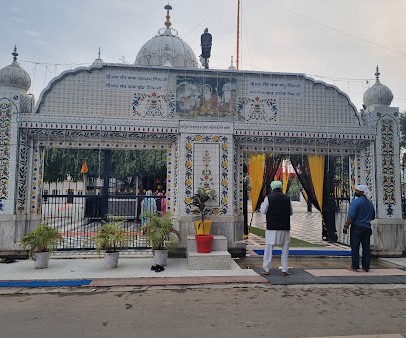
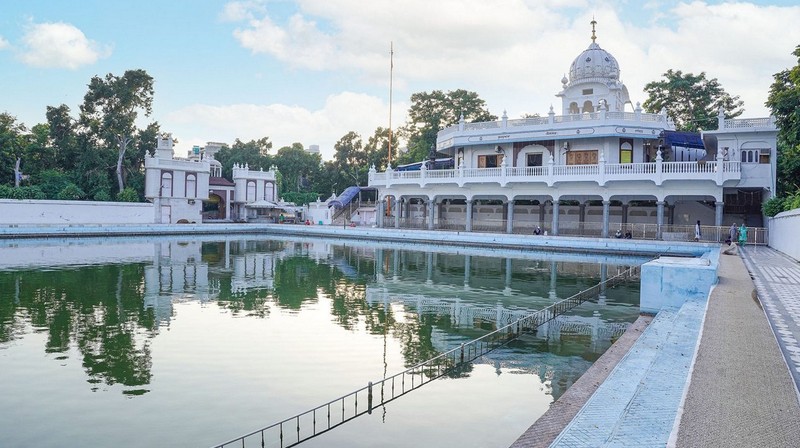
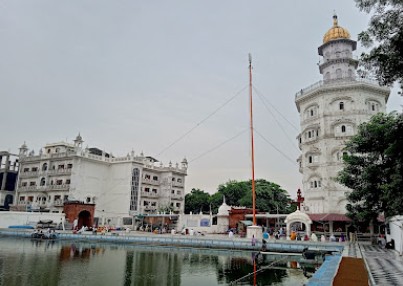
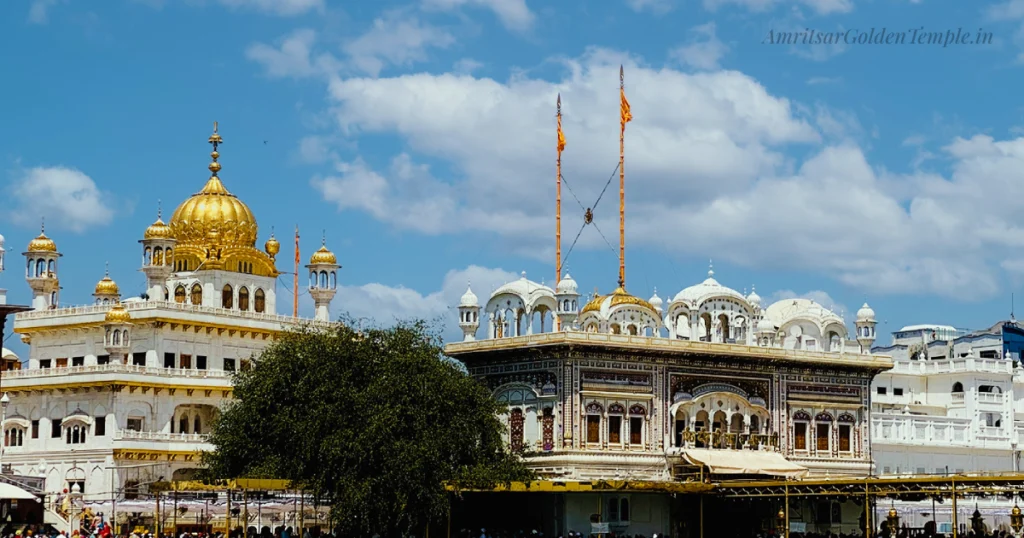
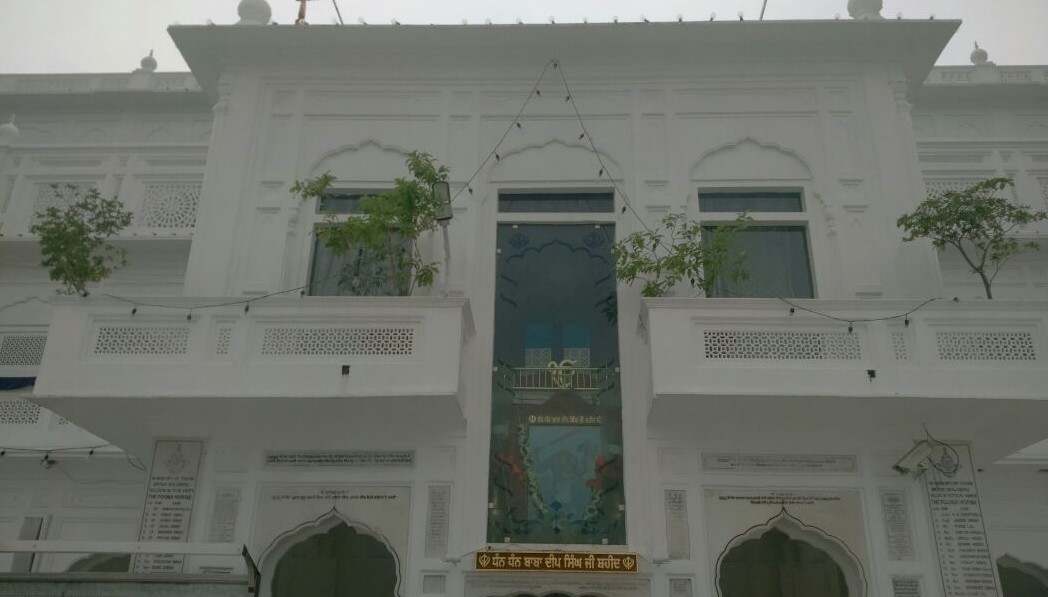
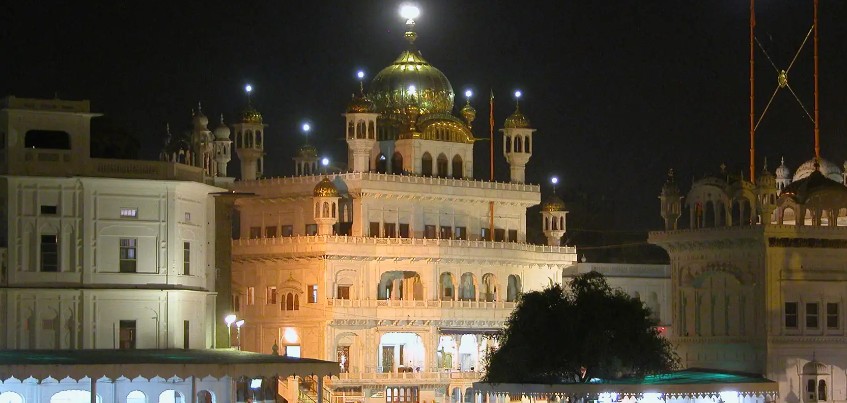
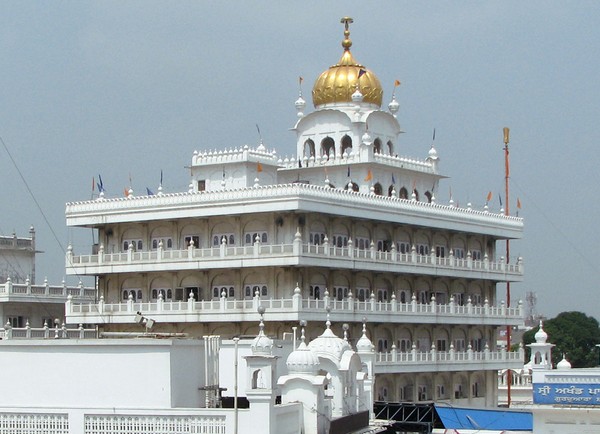
Built largely with pristine white marble to signify spiritual purity and peace, the modern complex blends traditional elements of Mughal and Rajput architecture into a distinct Sikh style.
Archeological Artifacts Inside the Complex
- The Sacred Altar (Thada Sahib): The exact spot in the inner sanctum marking where the wooden pedestal held the Mool Mantar during the wedding circumambulations.
- The Historic Well: A deep, brick-lined well dug by the Chona family to provide water for the wedding guests, carefully preserved within the modern compound.
The central sanctuary hall is a large, square space designed to accommodate thousands of pilgrims, with the Guru Granth Sahib beautifully seated under an ornate canopy.
Rising directly above the inner sanctum is a magnificent fluted dome topped with an elegant, gold-plated pinnacle (kalasa). The walls are adorned with intricate marble inlays and delicate floral reliefs.
For the historian, the most compelling feature remains the historic well, which continues to yield water today. This well provides a tangible, material link to the day of the wedding, serving as a silent witness to the massive crowd of travelers, musicians, and townspeople who gathered in this courtyard over five centuries ago.
5. The Living History: Babe Nanak Da Viah
In the modern era, the historical legacy of Gurdwara Sri Dera Sahib is vividly preserved through the annual celebration of Babe Nanak Da Viah, the festival commemorating the wedding anniversary of Guru Nanak Dev Ji.
Held during the late summer month of Bhadon (August–September), this massive celebration transforms the entire city of Batala into an open-air theater of living history.
While nearby Gurdwara Sri Kandh Sahib serves as the focal point for the arrival of the groom's symbolic wedding party, Gurdwara Sri Dera Sahib assumes the deeply symbolic role of the "Bride's House," welcoming the grand procession with immense warmth, hospitality, and reverence.
| Key Historical Elements | Significance at Dera Sahib | Modern Preservation Status |
|---|---|---|
| The Marriage Altar | The physical space where the Mool Mantar was circumambulated. | Enshrined as the main sanctum (Prakash Asthan). |
| The Historic Well | Provided water for Guru Nanak's wedding guests. | Fully functional and integrated into the courtyard for pilgrims. |
| Babe Nanak Da Viah | Annual celebration of the Guru's marriage. | Serves as the ultimate destination for the holy procession (Nagar Kirtan). |
During the festival, a grand Nagar Kirtan (religious procession) travels from Gurdwara Ber Sahib in Sultanpur Lodhi to Batala, meticulously retracing the exact geographical path taken by the historic wedding party in 1487.
When the procession arrives at Dera Sahib, the atmosphere is charged with devotional music (Shabad Kirtan), traditional martial arts displays (Gatka), and the serving of free community meals (Langar) to hundreds of thousands of pilgrims.
To an anthropologist or historian, this festival demonstrates how a single domestic event from the late medieval period continues to actively shape the cultural identity, economic life, and collective memory of modern Punjab. It ensures that the revolutionary message of Gurdwara Sri Dera Sahib remains a living, breathing reality.
Location & contact
Bazaar Thathiaran, Near Nehru Gate
Batala, Gurdaspur District
- Email: info@sgpc.net
- Map: Open in Google Maps
- Website: Visit website
- Associated Gurus: Guru Nanak Dev Ji