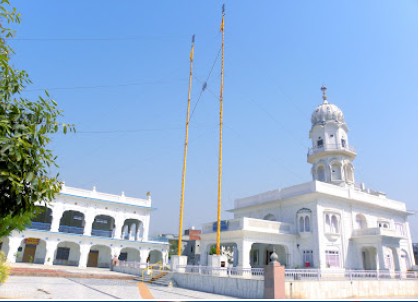
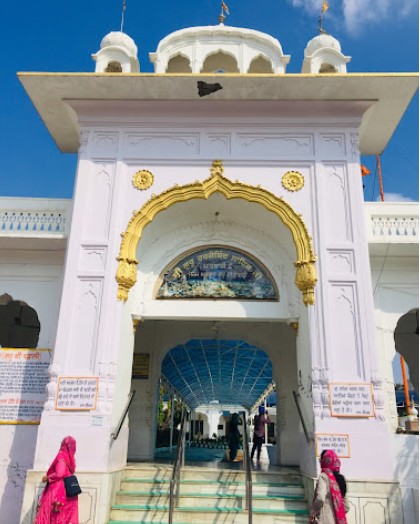
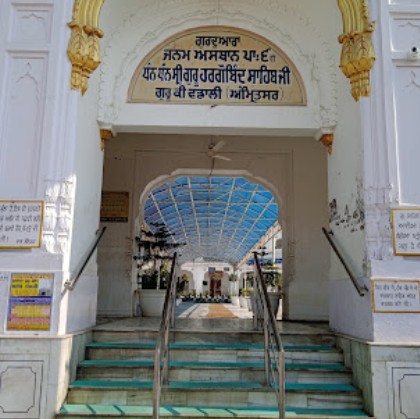
Gurudwara Sri Guru Ki Wadali
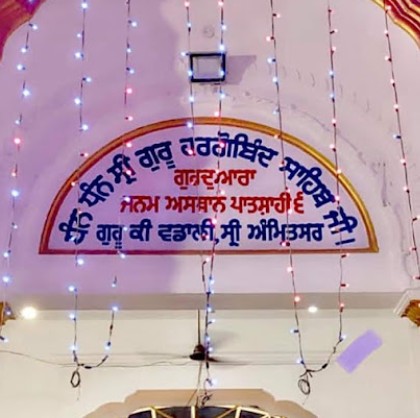
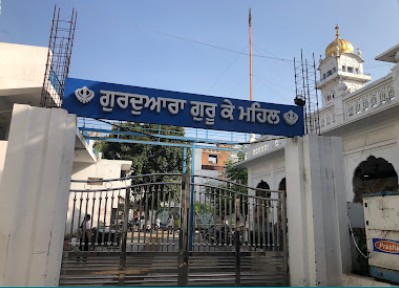
The primary historical significance of Gurudwara Guru Ki Wadali is its status as the Janam Asthan (birthplace) of the sixth Sikh Guru, Hargobind Sahib, who was born here on June 14, 1595.
The Crucible of Miri and Piri: Gurudwara Guru Ki Wadali
The landscape of the Majha region in the late sixteenth century was marked by a profound socio-religious transformation, driven largely by the consolidation of the early Sikh community under its Gurus. At the heart of this geopolitical and cultural shift lies a site located just eight kilometers west of the historic city of Amritsar: Wadali Guru (or Guru Ki Wadali). The events that unfolded within this rural enclave of Gurudwara Guru Ki Wadali between 1594 and 1597 laid the foundational groundwork for the institutionalization of Miri (temporal authority) and Piri (spiritual authority), which fundamentally reshaped the history of northern India.
The Geopolitical Context: Exile, Agitation, and the Agrarian Frontier
To understand why the fifth Sikh master, Guru Arjan Dev, relocated his family from the burgeoning urban center of Amritsar to the small village of Wadali in 1594, one must dissect the factional politics within the house of the Gurus. The eldest brother of Guru Arjan, Prithi Chand, contested the succession to the Guruship with intense hostility. This was not a minor domestic dispute; it was a structural factionalism that threatened the stability of the early Sikh institutional center at Ramdaspur (Amritsar). Prithi Chand’s constant interference, coupled with his alliances with local Mughal administrative officials (officious elements of the Lahore subah), made daily administration and spiritual discourse at the central complex exceedingly difficult.
Guru Arjan Dev, exhibiting a strategic preference for de-escalation over confrontation, chose to temporarily shift his residential headquarters to the agrarian hinterland of Wadali. This relocation allowed the central community room to breathe while simultaneously extending the agrarian and social footprint of the Sikh movement further west toward the Beas-Sutlej corridor.
During this three-year residency, Guru Arjan Dev did not merely live in passive retreat; instead, he engaged in intensive regional development and social engineering. The Majha region was periodically gripped by devastating droughts, an ecological reality that severely hampered the economic independence of the local peasantry.
In response, Guru Arjan Dev initiated massive infrastructure projects, the most prominent of which was the construction of a large, state-of-the-art irrigation well nearby. This well utilized six Persian wheels (chheharta) working concurrently to extract groundwater at a scale previously unseen in the immediate locality. From a socio-economic standpoint, this was a masterful stroke of community-building. By addressing the material scarcity of water, the Guru secured the economic loyalty of the local agrarian populace, integrated diverse castes into a singular cooperative framework, and laid the literal foundation for the nearby town of Chheharta Sahib.
The Birth of the Sixth Nanak: Dynastic Security and the Plots of Wadali
The primary historical significance of Gurudwara Guru Ki Wadali is its status as the Janam Asthan (birthplace) of the sixth Sikh Guru, Hargobind Sahib, who was born here on June 14, 1595. For a considerable duration of their marriage, Guru Arjan Dev and his consort, Mata Ganga, had remained childless. This demographic reality had emboldened Prithi Chand, who anticipated that the lack of a direct male heir would naturally result in the Guruship reverting to his own lineage.
The birth of Guru Hargobind at Wadali shattered these expectations and firmly stabilized the line of succession. The early hagiographical texts, such as the Gurbilas Chhevin Patshahi, describe this birth not just as a domestic celebration, but as a watershed moment of divine intervention that preserved the integrity of the young faith.
"The Guru Nanak was pleased to bestow this gift."
— Guru Arjan Dev, celebrating the birth of his son (Guru Granth Sahib, Ang 396)
From a strictly analytical view, the infant years of Guru Hargobind at Wadali resemble a political thriller, characterized by successive assassination plots orchestrated by factional rivals. Historians document at least three distinct attempts on the child's life within the environs of Wadali: the deployment of a poisoned wet-nurse, an engineered attack by a lethal cobra, and an attempt to administer poison through curd.
The survival of the young Guru in the face of these proximal threats became central to the early community's narrative of divine protection. These events hardened the resolve of the inner circle of the Guru's court. It was during this formative residency at Wadali, under the tutelage of veteran scholars like Bhai Gurdas and Baba Buddha, that the structural framework for the child's unique education was devised—combining classical spiritual training with martial arts, horsemanship, and weaponry.
Architectural Evolution: From Domestic Quarters to a Sacred Shrine
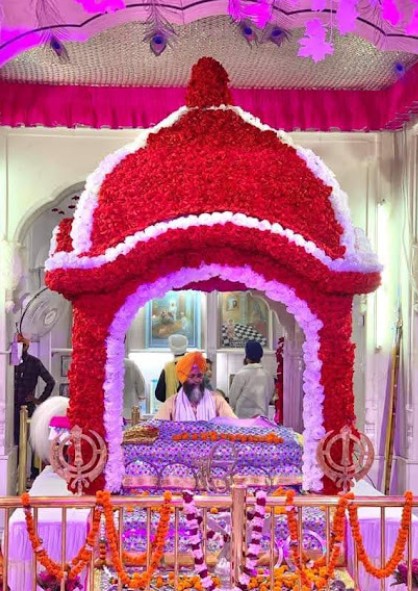
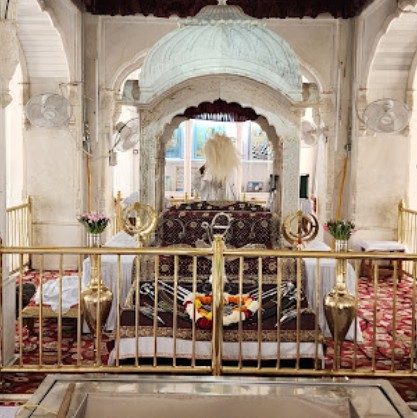
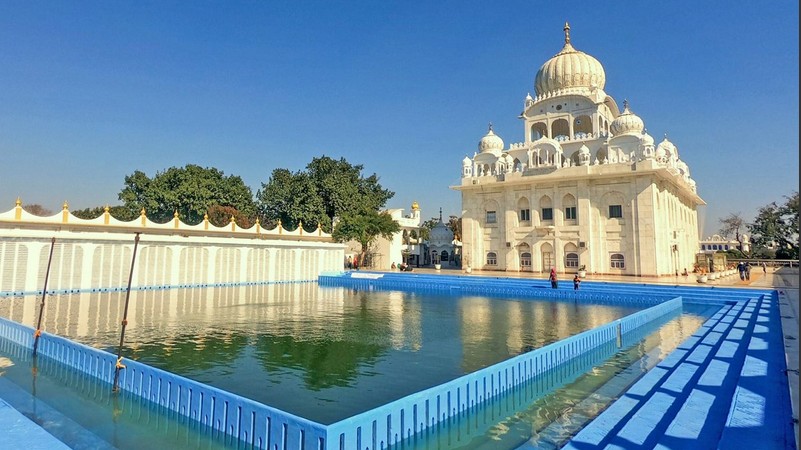
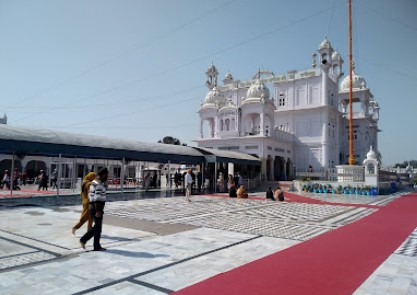
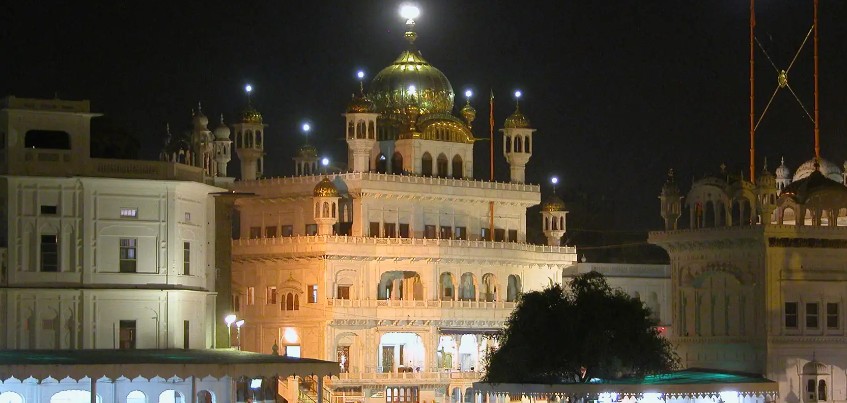
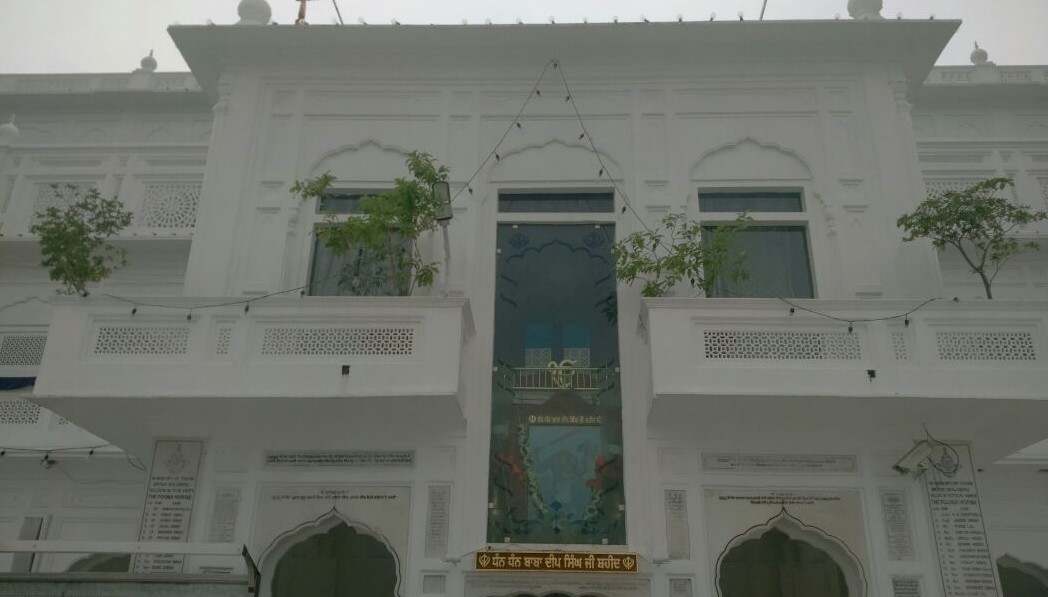
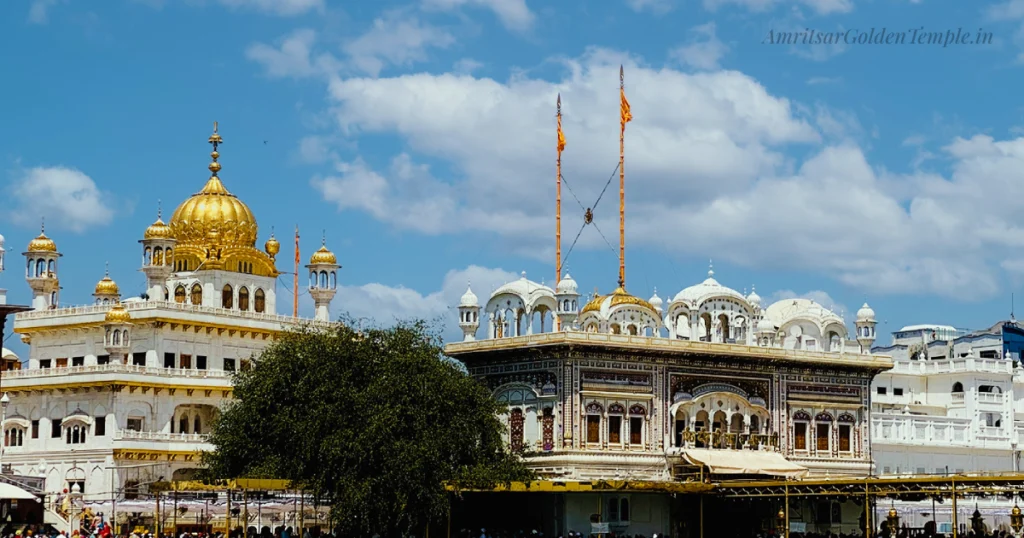
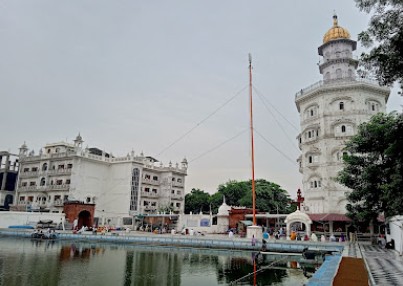
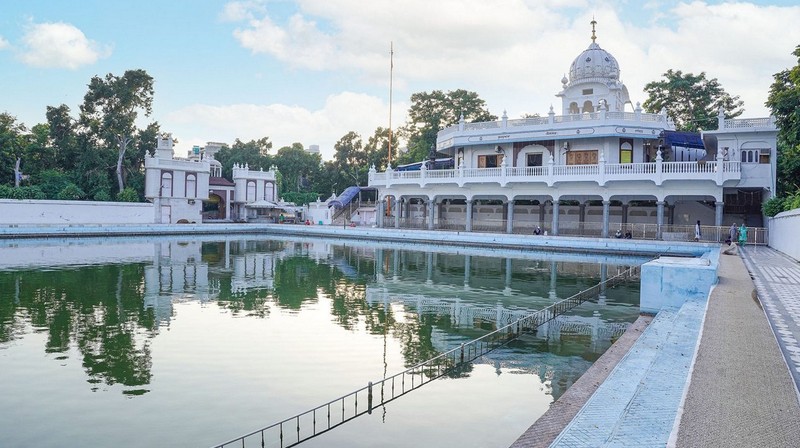
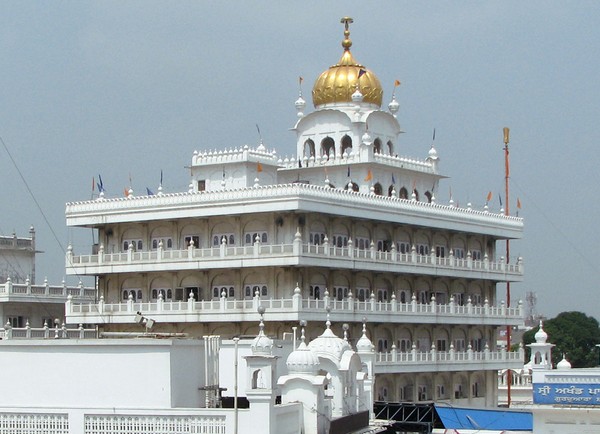
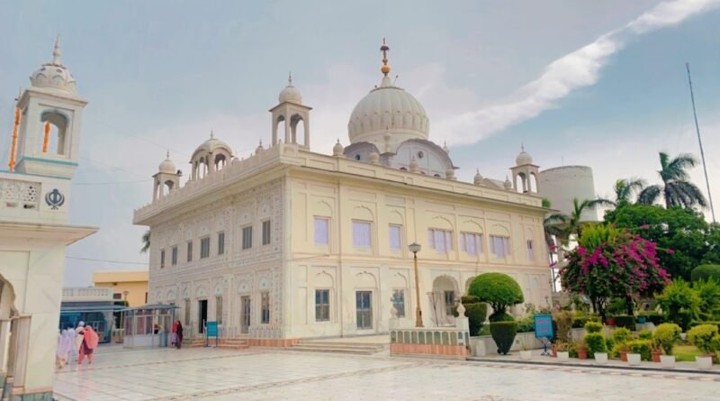
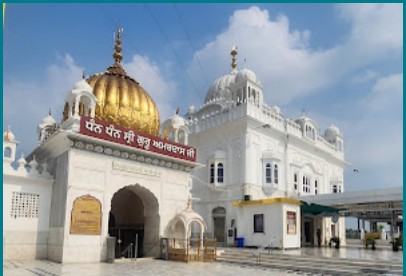
The spatial layout of the modern Gurudwara complex reflects centuries of evolution, moving from a modest sixteenth-century domestic residence to an imposing monument of public memory. The current structure, largely designed and reconstructed in the 1960s under the supervision of Baba Kharak Singh of the Kar Seva movement, features a grand, high-ceilinged congregational hall flanked by mid-height galleries.
A crucial feature for architectural historians is the Bhora Sahib located in the basement. This subterranean chamber marks the exact site of the original room where Mata Ganga gave birth to Guru Hargobind. The preservation of this lower level, below the modern marble flooring, maintains a direct link to the sixteenth-century topography of the village.
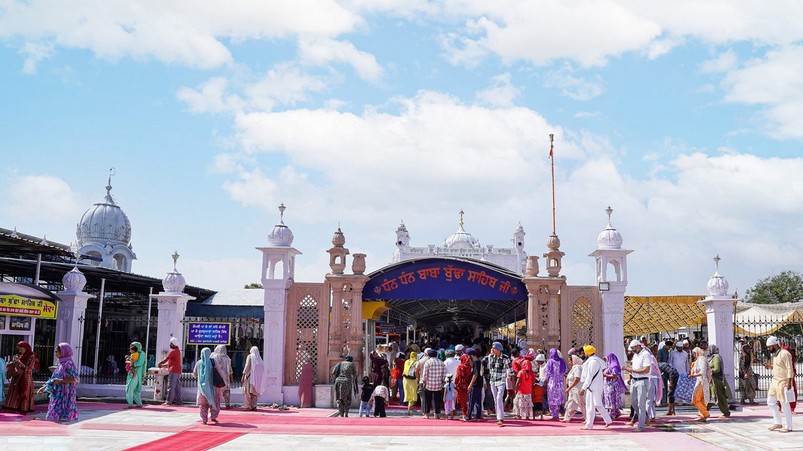
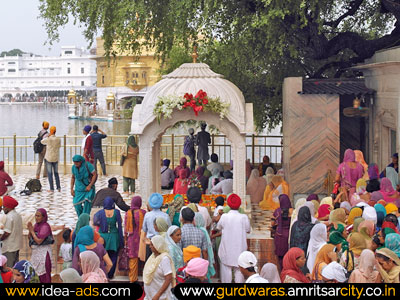
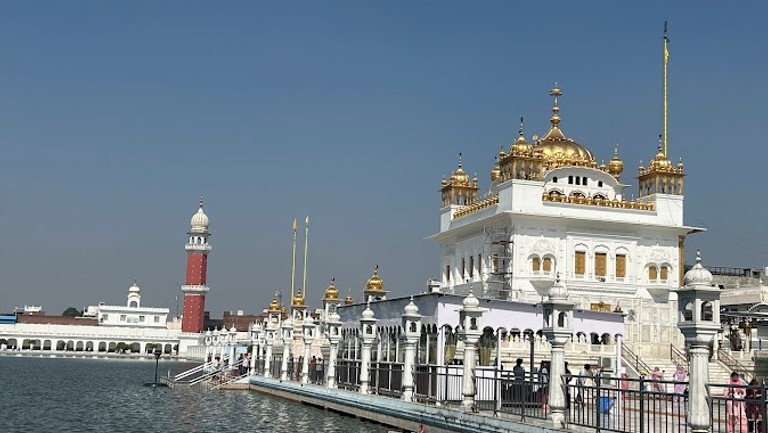
Adjacent to the main Janam Asthan shrine are two closely linked historic markers: Gurudwara Manji Sahib and Gurudwara Damdama Sahib, situated within a short walking distance. The Manji Sahib marks the exact platform where Guru Arjan Dev sat to supervise local agricultural works and deliver his daily discourses to the sangat (congregation).
The spatial proximity of these shrines illustrates how early Sikhism blended spiritual devotion with active, physical labor. The fields surrounding the Wadali complex were explicitly dedicated to producing grain for the Langar (community kitchen), showing a self-sustaining economic model that ran parallel to the spiritual capital generated within the residential compound.
Historical Legacy: The Shift to the Saint-Soldier Ideal
When analyzing the long-term historical trajectory of Sikhism, Gurudwara Guru Ki Wadali stands as the cradle of the Sant-Sipahi (Saint-Soldier) paradigm. Though the formal adoption of the two swords of Miri and Piri occurred later in 1606 at the Akal Takht in Amritsar following the martyrdom of Guru Arjan Dev, the physical and psychological foundations for that transition were laid right here in Wadali.
The child who survived the political plots of this village grew up to realize that spiritual purity required a temporal shield to survive within the hostile geopolitical climate of the Mughal Empire.
The site also records a famous subsequent visit by Guru Hargobind as an adult monarch. Historical memory records a diwan held here where the Guru, accompanied by his martial retinue (including figures like Painde Khan), engaged with the local population, linking his childhood space with his adult role as a sovereign protector.
This later visit cemented Wadali's status not just as a historical memory of a childhood home, but as an active center of sovereign authority that could command loyalties across the Majha frontier.
In conclusion, for the modern historian, Gurudwara Guru Ki Wadali is a remarkable site of memory. It captures a moment when the Sikh movement was expanding its socio-economic base through irrigation, stabilizing its lineage in the face of internal dissent, and nurturing the leader who would fundamentally change the social structure of the Punjab. It stands as a physical archive of stone, marble, and water that narrates the transition of a spiritual fellowship into a resilient nation.
Location & contact
Chheharta-Wadali Road, Amritsar Outskirts
- Email: info@sgpc.net
- Map: Open in Google Maps
- Website: Visit website
- Associated Gurus: Guru Arjan Dev Ji · Guru Hargobind Sahib Ji
Gallery