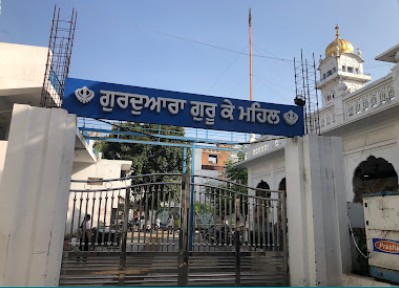
Gurudwara Beed (Bir) Baba Budha Sahib Ji
Bir Baba Buddha Ji's presence in the Bir at Chabal was a strategic deployment of a trusted elder to oversee agricultural assets, manage livestock for the Guru ka Langar (the community kitchen), and maintain a sanctuary adjacent to the growing nerve-center of Amritsar. Mata Ganga Ji walked barefoot to the bir, carrying a simple, rustic meal of missi roti (flatbread made of chickpea and whole wheat flour) and raw onions. As Baba Buddha Ji broke the raw onion with his palm, he prophesied that Mata Ganga Ji would give birth to a son who would similarly crush the tyrannical oppressors of the era. This interaction directly foreshadowed the birth of the sixth Guru, Hargobind Ji, who would introduce the Miri-Piri doctrine. The very prasad distributed at Chabal Kalan to this day—consisting of missi roti and an onion.
Echoes in the Bir: Gurudwara Beed (Bir) Baba Budha Sahib Ji
Situated roughly twenty kilometers south of Amritsar along the Chaabal–Amritsar Road in Chabal Kalan, Gurudwara Beed Baba Budha Sahib Ji represents a crucial evolutionary node in the institutionalization of early Sikhism. In the Majha region of Punjab—the socio-geographic cradle of the faith—this specific site functions as a living chronicle of the transition from a meditative, nascent fellowship under Guru Nanak Dev Ji to a robust, self-defending, and institutionalized community under his successors.
The term beed (or bir) refers directly to a preserved forest or pasture land, and it was within this specific ecology that Baba Buddha Ji (1506–1631) spent a significant portion of his extraordinary 125-year life, transforming a wilderness into an administrative, agricultural, and spiritual hub for the early community.
The Patriarchal Linchpin: Baba Buddha Ji’s Role in Early Institutionalization
To contextualize the geographic significance of the Chabal Kalan site, one must first dissect the socio-religious weight of the figure who inhabited it. Born Bura Randhawa in 1506, the young cattle-herder’s initial encounter with Guru Nanak Dev Ji altered his trajectory completely; observing a maturity and existential curiosity that bypassed his youth, the first Guru famously declared him “Buddha” (the wise elder).
As the Sikh movement expanded across the plains of Punjab, Baba Buddha Ji became the ultimate structural bridge across generations, uniquely serving and anchoring the first six Sikh Gurus.
From a historiographical perspective, his role was intensely institutional: he was tasked with applying the ceremonial tilak (coronation mark) to five consecutive successors, validating the lineage of the Guruship. Furthermore, when the Adi Granth was compiled and formally installed within the sanctum of the Harmandir Sahib in 1604, Guru Arjan Dev Ji chose Baba Buddha Ji as the inaugural Granthi (head priest).
His presence in the bir at Chabal was not an act of ascetic withdrawal; rather, it was a strategic deployment of a trusted elder to oversee agricultural assets, manage livestock for the Guru ka Langar (the community kitchen), and maintain a sanctuary adjacent to the growing nerve-center of Amritsar.
The Micro-History of a Blessing: Mata Ganga and the Metaphor of the Onion
The most celebrated narrative tied directly to the soil of Gurudwara Beed Baba Budha Sahib Ji occurs during the late sixteenth century, serving as a critical political and theological turning point for the faith.
Facing intense anxiety over the lack of a direct heir to the Guruship—a vulnerability actively exploited by rival factions and state informants—Mata Ganga Ji, the consort of the fifth Guru, Arjan Dev Ji, sought the spiritual counsel of the venerable elder residing in the Chabal forest.
The historical accounts meticulously record two distinct journeys: the first, a grand, aristocratic procession featuring horses and attendants which Baba Buddha Ji politely disregarded, and a second, humble journey where Mata Ganga Ji walked barefoot to the bir, carrying a simple, rustic meal of missi roti (flatbread made of chickpea and whole wheat flour) and raw onions.
The material details of this meeting carry deep symbolic resonance for historians studying the period. As Baba Buddha Ji broke the raw onion with his palm, he prophesied that Mata Ganga Ji would give birth to a son who would similarly crush the tyrannical oppressors of the era.
This interaction directly foreshadowed the birth of the sixth Guru, Hargobind Ji, who would introduce the Miri-Piri doctrine—the explicit synthesis of spiritual authority and temporal, military resistance.
The very prasad distributed at Chabal Kalan to this day—consisting of missi roti and an onion—functions as a sensory archive. It actively resists the elitist structures of the Mughal court by elevating the food of the subaltern peasant into a permanent liturgical sacrament.
The Birth of the Akal Sena and Early Martial Developments
Moving beyond the purely theological dimension, the bir at Chabal Kalan must be evaluated as an early training ground for Sikh defense strategies.
Following the tragic martyrdom of Guru Arjan Dev Ji in 1606 under imperial orders, the newly anointed Guru Hargobind Ji recognized the immediate necessity of armed self-defense. He turned to Baba Buddha Ji, who, despite his advanced age, had been initiated into traditional physical arts and systems of Shastar Vidya (martial arts).
Within this forested estate, away from the immediate surveillance of regional Mughal administrative outposts, early recruits were organized, trained, and disciplined. This nascent military force, initially termed the Akal Sena, laid the groundwork for what would later evolve into the structured Budha Dal.
Historians look to these woods as the space where the ideological shift from peaceful non-cooperation to active martial resistance was systematically operationalized, transforming the peaceful farmers of the Majha region into a disciplined, protective force.
Architectural Synthesis and Cultural Landscape
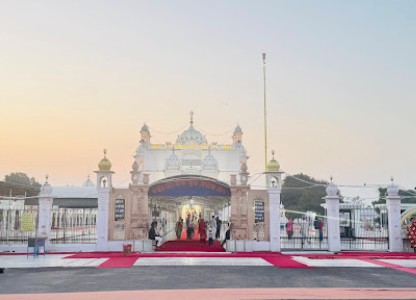
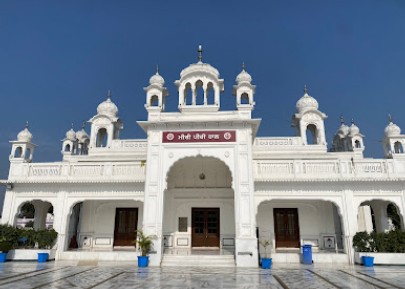
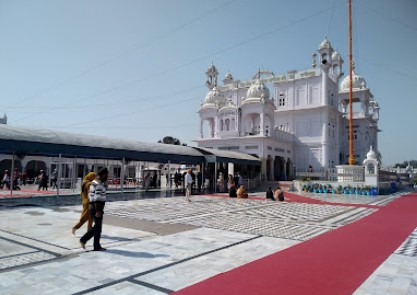
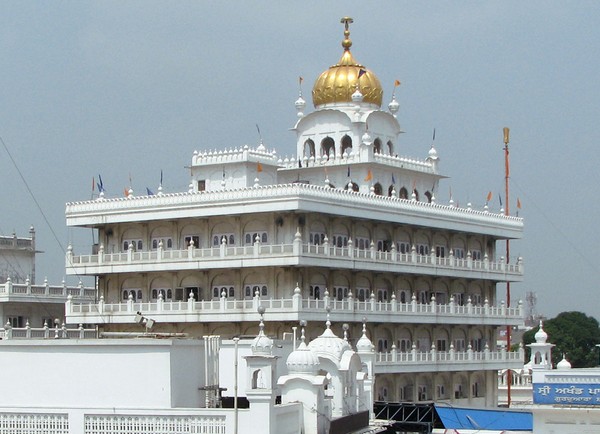
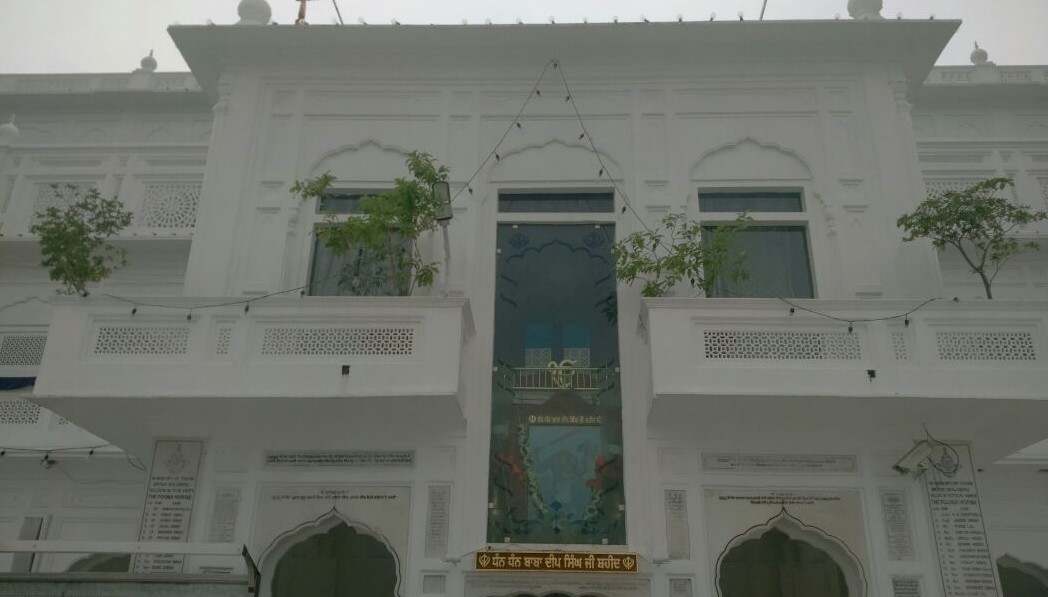
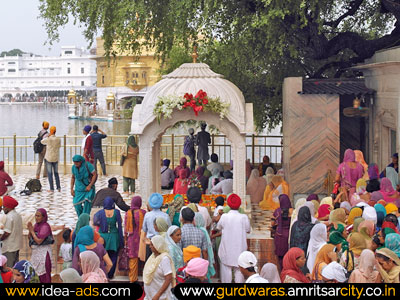
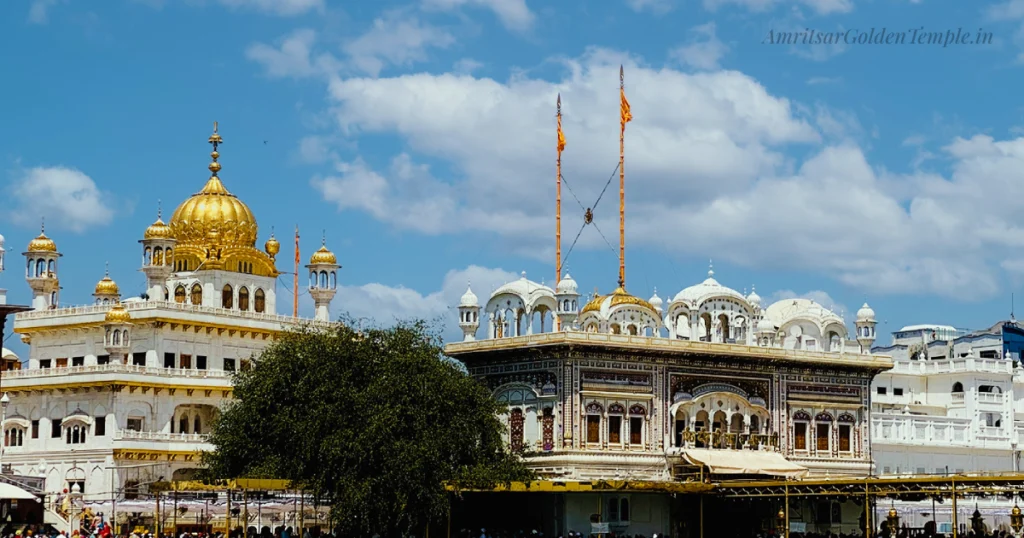
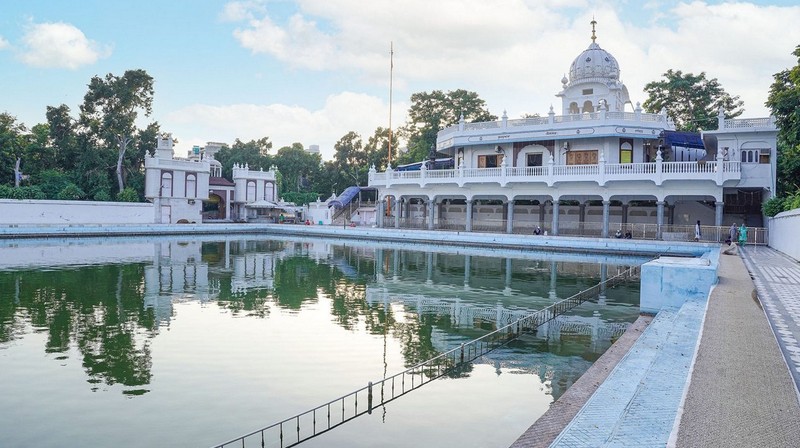
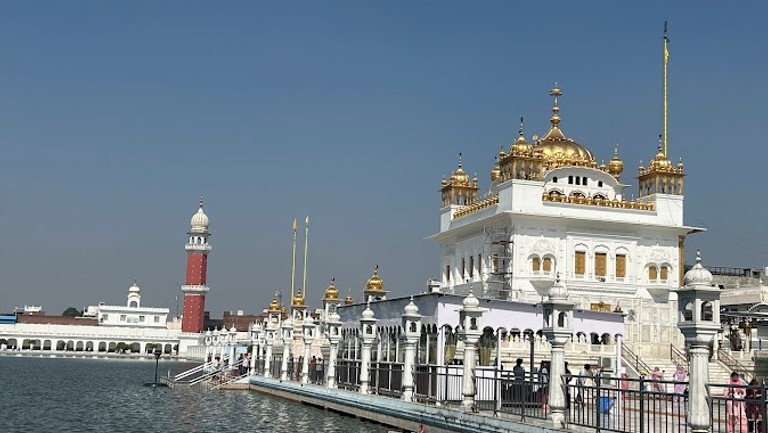
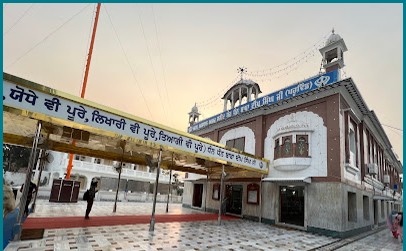
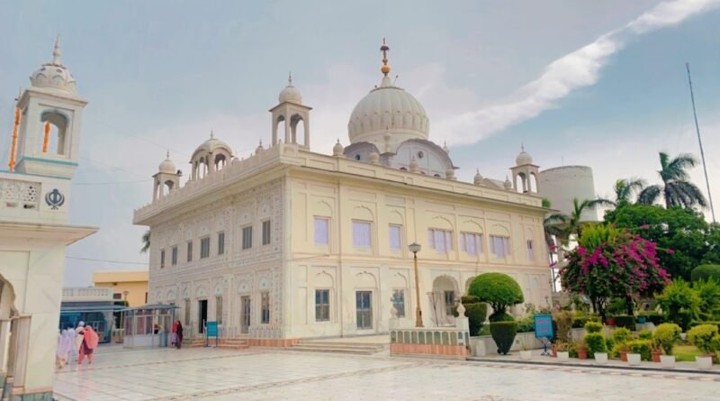
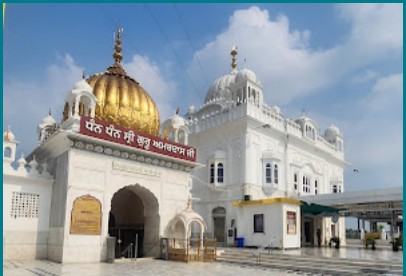
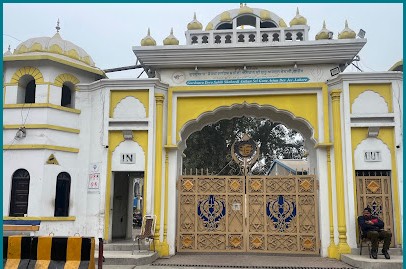
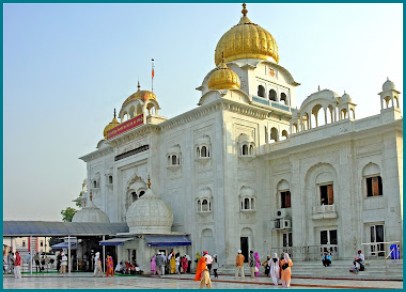
The modern architectural layout of Gurudwara Beed Baba Budha Sahib Ji, while significantly renovated by twentieth-century kar seva (voluntary community labor) movements led by figures like Baba Kharak Singh, still respects the spatial arrangements of its historical environment.
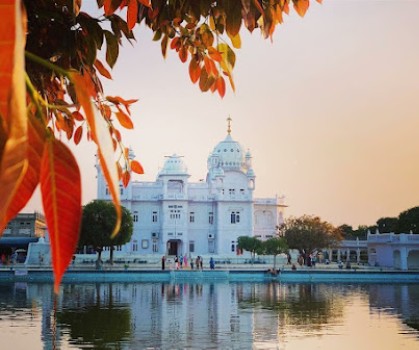
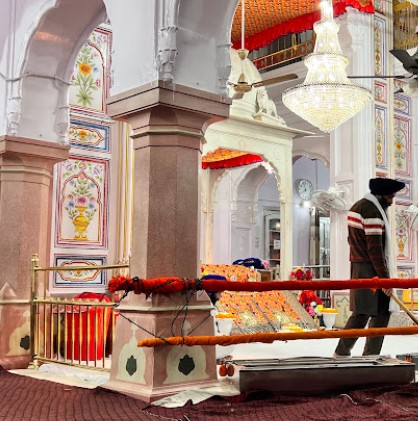
The core complex features a massive, white-marbled rectangular divan hall, at the far end of which sits the elevated sanctum housing the Sri Guru Granth Sahib Ji beneath a grand canopy.
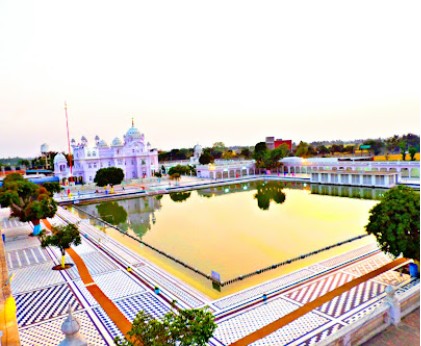
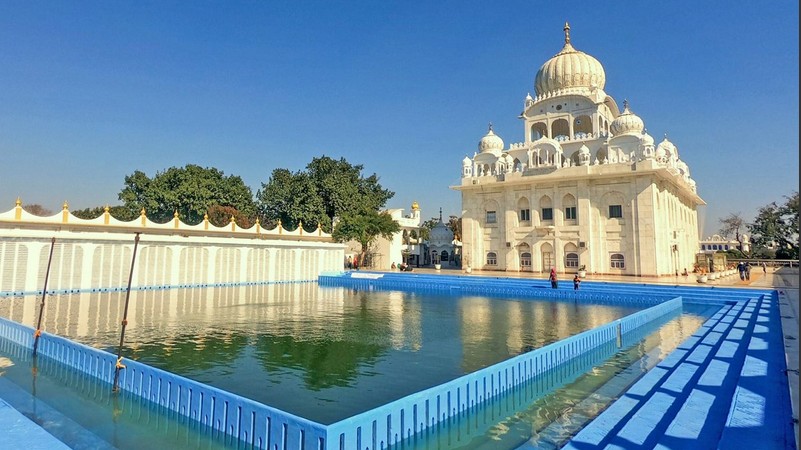
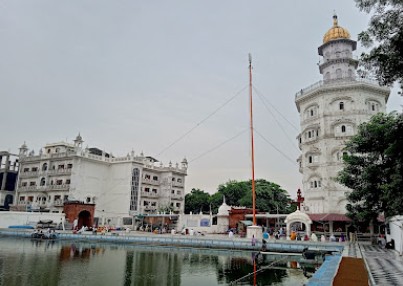
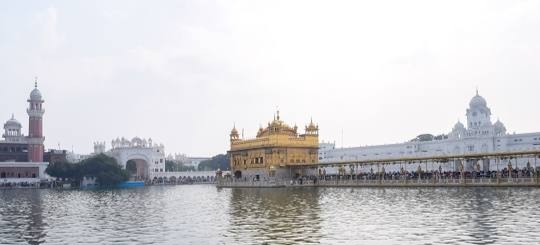
To the northern side lies a beautifully maintained Amrit Sarovar (holy pool) measuring roughly seventy square meters, offering a quiet space for reflection that contrasts with the bustling traffic of the adjacent highway.
| Spatial Feature | Functional & Historical Role |
|---|---|
| Main Darbar Hall | Holds the central congregation; features acoustic resonance adapted for traditional kirtan. |
| Amrit Sarovar | Northern pool utilized for ritual cleansing and spatial cooling during intense summers. |
| Guru Ka Langar | Multi-storied dining complex perpetuating the egalitarian food traditions established in the bir. |
| Agricultural Lands | Original jagir tracks reflecting the site's history as an active farm commune. |
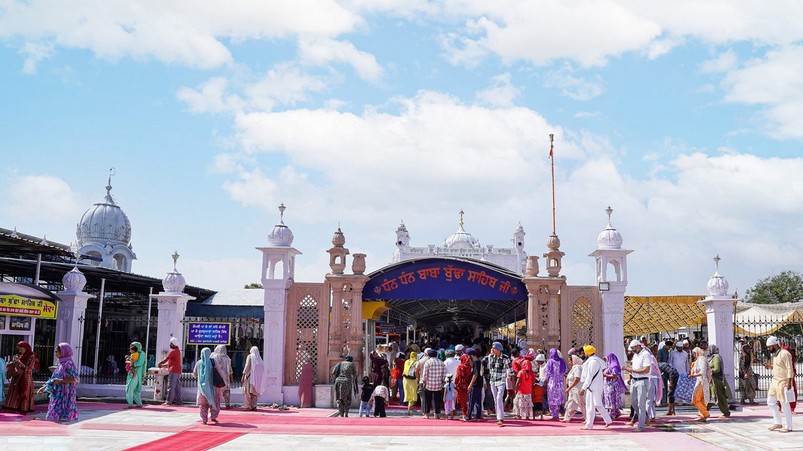
The structural materiality of the site relies on wide open courtyards and high-ceilinged galleries designed to handle massive influxes of pilgrims, especially during the annual religious fair held every September/October (marking the birth anniversary of Baba Buddha Ji).
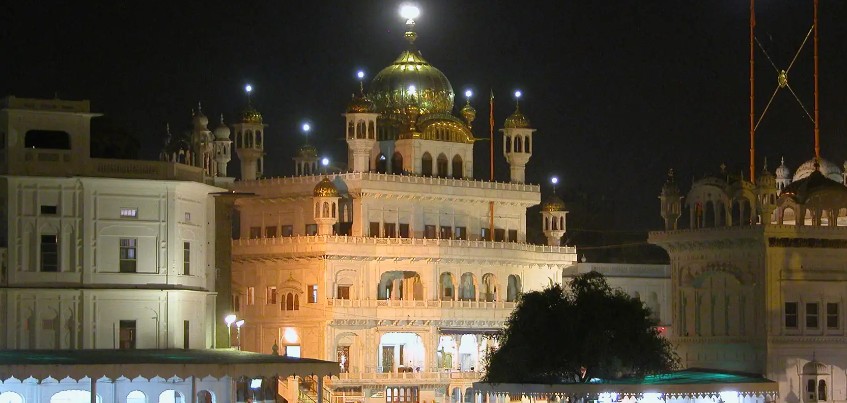
For the historian, the site beautifully blends classic elements of late-period Sikh architecture—characterized by elegant fluted domes, decorative kiosks (chhatris), and white surfaces—with its original identity as a functional, protective rural commune.
Conclusion: The Living Archive of Chabal Kalan
Ultimately, Gurudwara Beed Baba Budha Sahib Ji demands an interpretive approach that looks past its modern concrete and marble to see the foundational choices made here centuries ago.
It stands as a physical testament to a pivotal chapter in history: a site where agrarian labor, spiritual devotion, and political defense converged under the stewardship of one of Sikhism’s most durable patriarchs.
By analyzing its origins, its role in the preservation of the Guruship's lineage, and its persistence as a space of egalitarian pilgrimage, we gain a clearer understanding of how the early Sikh community successfully navigated the challenges of its era.
The site continues to remind us that history is shaped not just by royal edicts or distant battlefields, but by the quiet spaces where communities gather, build, and defend their way of life.
Location & contact
Chaabal-Amritsar Road, Thatta Village, Tarn Taran District
- Phone: +91 185 227 8222
- Map: Open in Google Maps
- Associated Gurus: Guru Hargobind Sahib Ji
Gallery