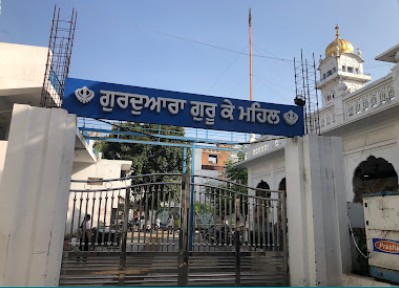
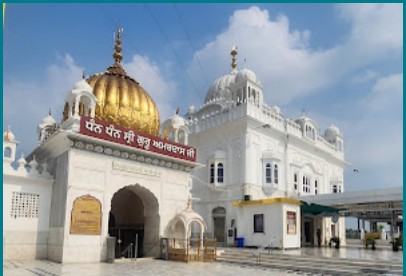
Gurdwara Sri Baba Deep Singh Ji (Pahuwind)
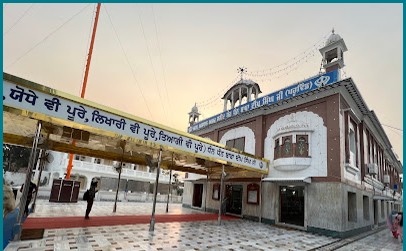
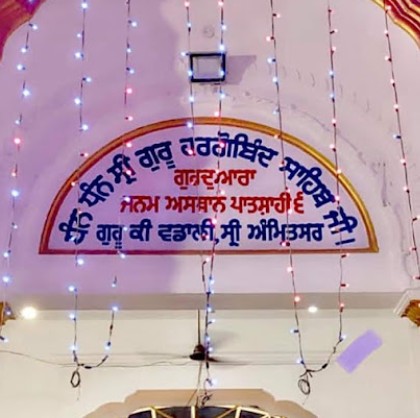
This marks the historic birthplace of Baba Deep Singh Ji; the legendary first commander of the Shaheedan Misl and one of the most revered icons of bravery in Sikh history. He was a master calligrapher who made handwritten copies of the Guru Granth Sahib and a fierce warrior who; at the age of 75; took a solemn vow to free Amritsar from Afghan occupiers; famously fighting even after sustaining a fatal neck injury.
The Cradle of the Saint-Soldier: An Introduction to Gurdwara Janam Asthan Pahuwind
In the sacred geography of the Majha region of Punjab, where the soil itself seems saturated with the blood of martyrs and the verses of the Gurus, the village of Pahuwind stands as an unparalleled monument to spiritual sovereignty and martial valor. Located in the modern-day Tarn Taran district, this historic settlement is the birthplace of Dhan Dhan Baba Deep Singh Ji Shaheed, one of the most revered and iconic figures in the entirety of Sikh history. For a Sikh historian, visiting Gurdwara Janam Asthan Baba Deep Singh Ji in Pahuwind is not merely a geographic pilgrimage, but an intellectual and spiritual return to the very fountainhead of the 18th-century Khalsa consciousness. It was here, in the year 1682, that a life began which would ultimately redefine the parameters of human endurance, faith, and the metaphysical reality of Shaheedi (martyrdom). The Gurdwara erected at this birthplace acts as a living bridge connecting contemporary generations with the raw, uncompromising spirit of an era when the survival of the Sikh faith hung in the balance of the sword.
To understand the profound historical weight that Gurdwara Pahuwind carries, one must look past the pristine white marble, the shimmering sarovar, and the majestic domes that characterize the modern complex today. Instead, we must visualize this space as it was in the late 17th century: a rustic, agricultural heartland under the heavy shadow of Mughal imperial hegemony, yet secretly vibrating with the revolutionary spiritual fire ignited by Guru Nanak Dev Ji and consolidated by his successors. The birth of Baba Deep Singh Ji at this site marked the arrival of a soul destined to perfectly synthesize the dual Sikh concepts of Miri (temporal power) and Piri (spiritual authority). Today, as the Sangat gathers within the serene halls of the Gurdwara to sing the praises of the Almighty, the air remains charged with the legacy of a saint-scholar who could copy the entire Adi Granth with the same hand that wielded an eighteen-seer double-edged sword. It is this unique synthesis of the pen and the steel, of deep mystical absorption and ferocious defensive warfare, that began in the humble fields of Pahuwind.
The Genesis of a Legend: Early Life and Formative Years (1682–1700)
Baba Deep Singh Ji was born on January 26, 1682, to a devout farming couple belonging to the Sandhu Jat clan, Bhai Bhagtu Ji and Mata Jiyoni Ji. For many years, the couple had remained childless, dedicating their lives to prayer, honest labor, and the service of passing Sikh congregations. Historical accounts record that their long-awaited son was named "Deepa" (meaning light or lamp), a name that would prove profoundly prophetic as he grew to become a towering beacon of righteousness for the entire Sikh Panth. Growing up in the rural expanse of Pahuwind, young Deepa was nurtured on the stories of the Gurus, learning the values of Vand Chhako (sharing one's earnings), Kirat Karo (honest living), and Naam Japna (meditation on the Divine Name). Even in his early childhood, local traditions suggest he possessed an unusually contemplative disposition, combined with a robust physical constitution that made him a natural leader among his peers in the village's wrestling arenas and fields.
The turning point in young Deepa's life occurred in the year 1700 (some historical records suggest the Vaisakhi of 1699), when his parents traveled to Sri Anandpur Sahib to pay homage to the Tenth Master, Guru Gobind Singh Ji. The atmosphere of Anandpur Sahib during this period was electric; the Khalsa had just been manifested, and the valley of the Shivalik hills echoed with the sounds of Gurbani, drumbeats of the Ranjit Nagara, and the clashing of swords in martial practice. The young eighteen-year-old Deepa was so deeply transformed by the sight of the Guru and the sublime beauty of the Khalsa brotherhood that he resolved to dedicate his entire life to the Guru's mission. He received the rites of Khande di Pahul (the double-edged sword initiation) from the Panj Pyare, transforming from "Deepa" into "Deep Singh"—a consecrated lion of the Akal Purakh's army. His parents returned to Pahuwind, but with their blessings, Deep Singh remained at the feet of the Guru in Anandpur Sahib, beginning an eight-year-old period of rigorous spiritual, scholarly, and martial training that would shape the rest of his historic destiny.
The Confluence of Shastras and Shaastras: The Scholar-Warrior of Anandpur
At Sri Anandpur Sahib, Baba Deep Singh Ji entered an intellectual and spiritual crucible. Guru Gobind Singh Ji, a masterful patron of both the arts and the martial sciences, recognized the immense potential in the young youth from Pahuwind. Under the direct supervision of the Guru and the legendary scholar Bhai Mani Singh Ji, Baba Deep Singh Ji mastered the Gurmukhi script, alongside classical languages including Sanskrit, Persian, and Arabic. He underwent intensive training in Santhya—the precise, correct pronunciation and philosophical interpretation of the Gurus' hymns. This deep scriptural immersion was balanced by daily, grueling physical conditioning; he became an expert equestrian, an unmatched archer, and a master of the Khanda (the heavy, double-edged sword) and other traditional weapons. This dual education was the practical manifestation of the Sant-Sipahi (Saint-Soldier) ideal, proving that academic brilliance and mystical devotion were not separate from, but rather essential to, the warrior's path.
This period of intense study laid the foundation for Baba Deep Singh Ji’s monumental contribution to the preservation of Sikh scripture. After the tragic evacuation of Anandpur Sahib and the subsequent battles, Baba Deep Singh Ji was reunited with Guru Gobind Singh Ji at Sabo Ki Talwandi (now known as Takht Sri Damdama Sahib) in 1705. It was here that Guru Gobind Singh Ji dictated the definitive, final recension of the Sri Guru Granth Sahib Ji, including the compositions of the Ninth Master, Guru Tegh Bahadur Ji. Working closely with Bhai Mani Singh Ji, Baba Deep Singh Ji served as a primary scribe, transcribing the divine word into the pristine format we revere today. After the Guru departed for the Deccan, Baba Deep Singh Ji was appointed as the head of the newly established educational institution at Damdama Sahib, which came to be known as the Damdami Taksal. He personally hand-wrote four magnificent, complete copies of the Sri Guru Granth Sahib Ji, which were dispatched to the four major Takhts of the Khalsa, ensuring the absolute preservation and standardization of the sacred text across the subcontinent.
Chronology of a Sovereign Legacy
To contextualize the monumental journey of Baba Deep Singh Ji from his childhood in Pahuwind to his ultimate sacrifice, the following historical chronology outlines the key milestones of his life and their profound impact on the Sikh Panth:
| Year | Historical Milestone | Sikh Historical Significance |
| 1682 | Birth in Pahuwind Village | The arrival of a legendary soul in the agricultural heartland of Majha, born to Bhai Bhagtu Ji and Mata Jiyoni Ji. |
| 1700 | Initiation into the Khalsa | Received Khande di Pahul at Sri Anandpur Sahib, dedicating his youth to Guru Gobind Singh Ji's revolutionary mission. |
| 1705-1706 | Scribing of the Damdami Bir | Assisted Bhai Mani Singh Ji in writing the definitive recension of Sri Guru Granth Sahib Ji; established the Damdami Taksal. |
| 1709-1715 | Campaigns with Banda Bahadur | Joined the Khalsa forces to punish provincial tyrants, fighting in the historic battles of Sadhaura and Chappar Chiri. |
| 1748 | Leadership of Shaheedan Misl | Appointed Jathedar of the Misl of the Martyrs during the formal reorganization of the Dal Khalsa at Sri Amritsar. |
| 1757 | Vow and Ultimate Martyrdom | Marched to liberate Sri Harmandir Sahib from Afghan desecrators; fought decapitated, offering his head at the Darbar Sahib. |
The Era of the Misls: Leading the Shaheedan Jatha
Following the departure of Guru Gobind Singh Ji to the eternal realm and the eventual martyrdom of Baba Banda Singh Bahadur, the Sikh community entered its darkest period of state-sponsored extermination during the mid-18th century. Mughal governors like Zakariya Khan and Mir Mannu placed bounties on the heads of Sikhs, forcing the Khalsa to seek refuge in the dense jungles of Kahnuwan and the desert expanses of Rajputana. It was during this period of extreme crisis that the decentralized Sikh groups reorganized themselves into highly disciplined, mobile military units known as Jathas, which eventually consolidated into the twelve sovereign Misls of the Dal Khalsa under the supreme command of Nawab Kapur Singh. Because of his immense spiritual stature, vast administrative wisdom, and unmatched martial prowess, Baba Deep Singh Ji was unanimously chosen to lead the legendary Shaheedan Misl (the Misl of the Martyrs).
The Shaheedan Misl was unique among the twelve confederacies; while they were formidable warriors, they were primarily recognized as the spiritual guardians of the faith, composed of highly disciplined Nihangs, Akalis, and scholars. Operating from their headquarters at Talwandi Sabo, Baba Deep Singh Ji’s forces protected travelers, liberated captives, and defended vulnerable populations from foreign invaders and local tyrants alike. Despite being in his sixties and seventies during the height of the Misl operations, Baba Deep Singh Ji’s physical strength remained legendary. He was a giant of a man, standing well over six feet tall, with a flowing white beard that commanded instant reverence. His weapon of choice was a massive double-edged sword (Khanda) weighing approximately fifteen kilograms, a weapon that required superhuman strength to wield in the heat of close-quarters combat. Under his leadership, the Shaheedan Misl became a symbol of divine justice, demonstrating to the oppressive rulers of Delhi and Kabul that the Khalsa could never be suppressed.
The Sacrilege of Amritsar and the Resolute Vow
The catalytic event that led to Baba Deep Singh Ji's ultimate martyrdom occurred during the fourth Indian invasion of the Afghan ruler Ahmad Shah Abdali in 1757. As Abdali retreated toward Kabul with a vast treasury of plundered wealth and thousands of young Indian men and women taken as slaves, the guerrilla bands of the Dal Khalsa, including the warriors of the Shaheedan Misl, launched relentless hit-and-run attacks near Kurukshetra. They successfully liberated hundreds of captives and stripped Abdali of a significant portion of his looted treasure. Infuriated by this humiliation, Abdali ordered his son, Timur Shah, and his chief general, Jahan Khan, to systematically dismantle the foundation of the Sikh faith. The Afghan forces invaded the holy city of Amritsar, blew up the sacred sanctuary of Sri Harmandir Sahib (the Golden Temple), and filled the surrounding holy Sarovar (pool of nectar) with the entrails of slaughtered cows and debris, committing an unspeakable act of sacrilege designed to break the spiritual backbone of the Khalsa.
When the devastating news of this desecration reached Baba Deep Singh Ji at Damdama Sahib, the seventy-five-year-old scholar-warrior felt a profound, burning sense of responsibility. He declared to the gathered congregation that it was far better to die in defense of the Guru's house than to live a life of passive safety while the center of their spiritual universe lay in ruins. He immediately emerged from his scholastic retirement, grabbed his heavy Khanda, and took a solemn vow before the Akal Takht of his own conscience: that he would celebrate the upcoming festival of Diwali in the precinct of Sri Harmandir Sahib, or lay down his life in the attempt. He drew a line in the dust with his sword and issued a historic challenge: only those who were prepared to offer their heads to the Almighty should cross that line and join his march of liberation. Five hundred dedicated souls stepped forward without hesitation, setting in motion one of the most sublime military marches in human history.
The Walk of Miracles: The Battle of Gohalwar and Chabba
As the small band of five hundred warriors marched out of Damdama Sahib toward Amritsar, news of Baba Deep Singh Ji’s vow spread like wildfire through the villages of the Majha region, including his ancestral birthplace of Pahuwind. Inspired by his courage, hundreds of young farmers, veterans, and peasants armed themselves with whatever weapons they could find—swords, spears, hatchets, and clubs—and joined the column. By the time the force reached the holy city of Tarn Taran, located just ten miles from Amritsar, Baba Deep Singh Ji's army had swollen to over five thousand determined fighters. Here, they performed their final prayers, bathing in the sacred waters of Tarn Taran, and tying the traditional saffron turbans of martyrdom, prepared to face the twenty-thousand-strong professional army of Jahan Khan, which was marching from Lahore to intercept them.
The two forces clashed in a titanic battle near the villages of Gohalwar and Chabba on November 13, 1757. The fighting was incredibly fierce, characterized by chaotic hand-to-hand combat where the sheer spiritual fervor of the Sikhs collided with the overwhelming numbers and heavy artillery of the Afghan regulars. Despite the massive numerical disparity, the Khalsa forces fought with a ferocious, desperate energy, pushing the Afghan vanguard back toward the outskirts of Amritsar. In the midst of this chaotic melee, a young Afghan commander, Attal Khan (or Jamal Shah in some records), rode directly toward Baba Deep Singh Ji, challenging the aged patriarch to single combat. The two warriors exchanged terrible blows, their swords flashing in the afternoon light. In a synchronized moment of mortal violence, both struck each other simultaneously; Baba Deep Singh Ji was struck with a severe blow to the neck that nearly severed his head from his body, while his opponent fell dead instantly.
What occurred next has passed into the realm of spiritual immortality, challenging the very laws of biological science. As Baba Deep Singh Ji’s body began to collapse onto the blood-soaked earth, a nearby Sikh warrior cried out, reminding him of his sacred vow: "Baba Ji! You had resolved to reach the very periphery of the holy pool of Amritsar, yet you are laying your life down miles away!" Hearing these words, the dying warrior's consciousness transcended physical death. Driven by an incomprehensible force of pure devotion, Baba Deep Singh Ji supported his leaning head with his left hand, picked up his heavy Khanda with his right, and stood back up on his feet. Slicing through the stunned enemy ranks with supernatural strength, he fought his way over several miles, clearing a path through the terrified Afghan soldiers who fled in the belief that they were witnessing a divine wrath. Upon reaching the parikrama (circumambulation) of the Sri Harmandir Sahib, Baba Ji offered his severed head at the feet of the Guru, taking his final breath exactly where he had promised.
Gurdwara Janam Asthan Pahuwind: Preserving the Sacred Birthplace
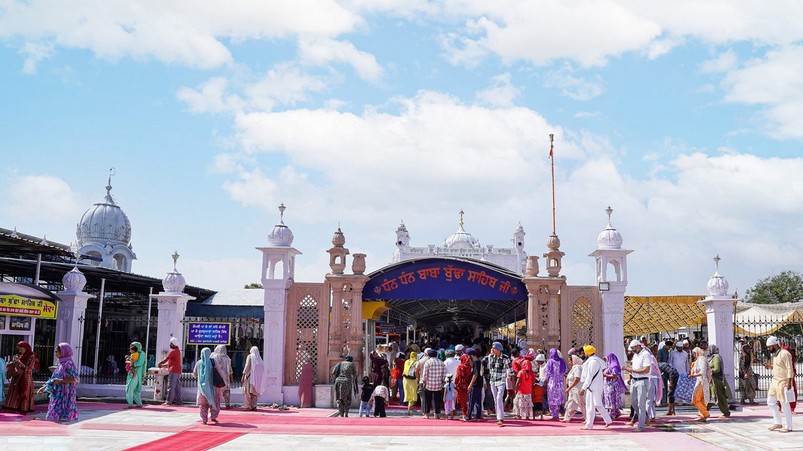
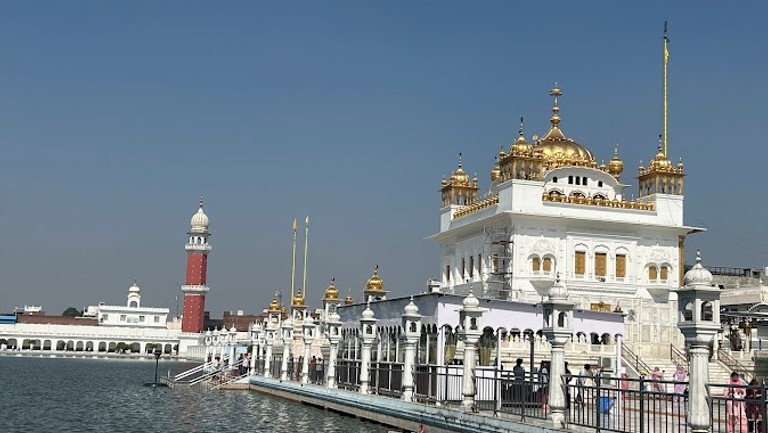
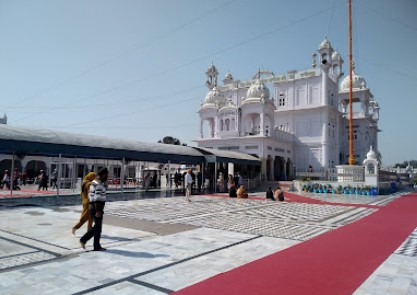
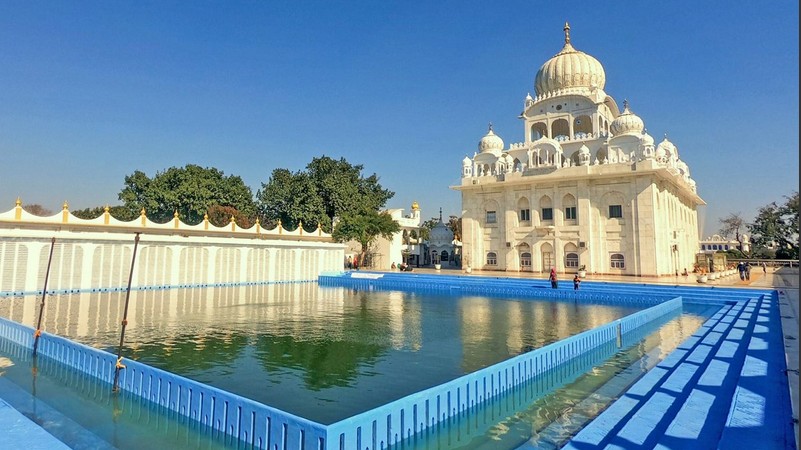
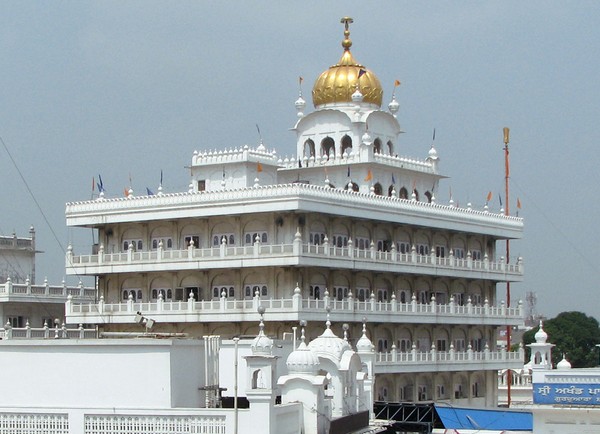
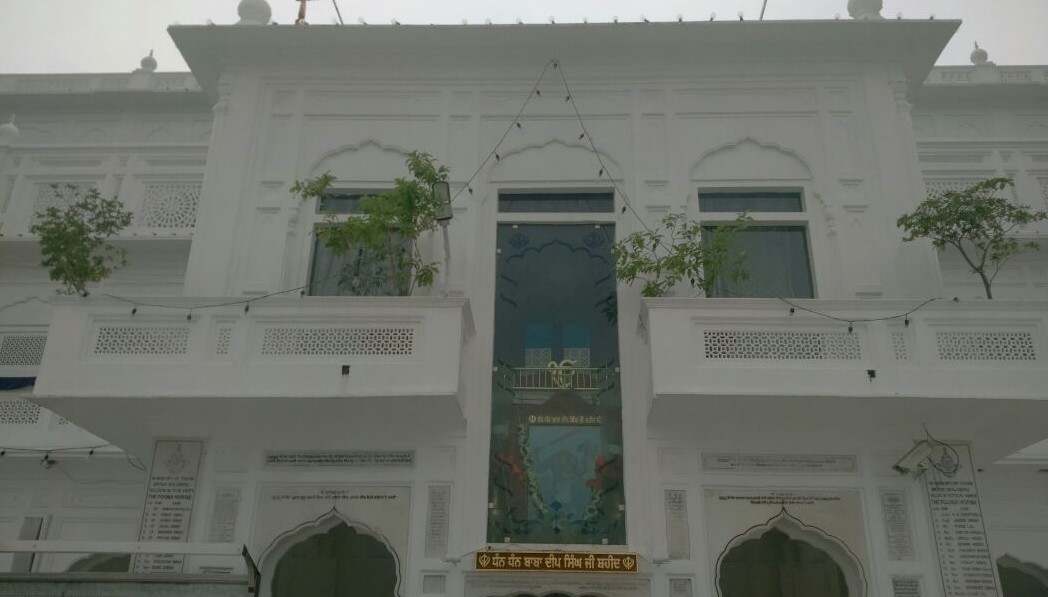
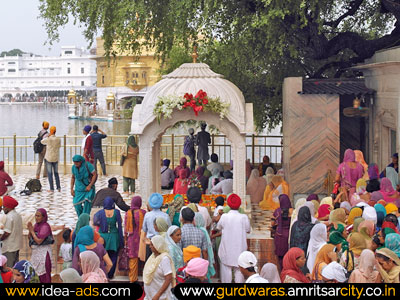
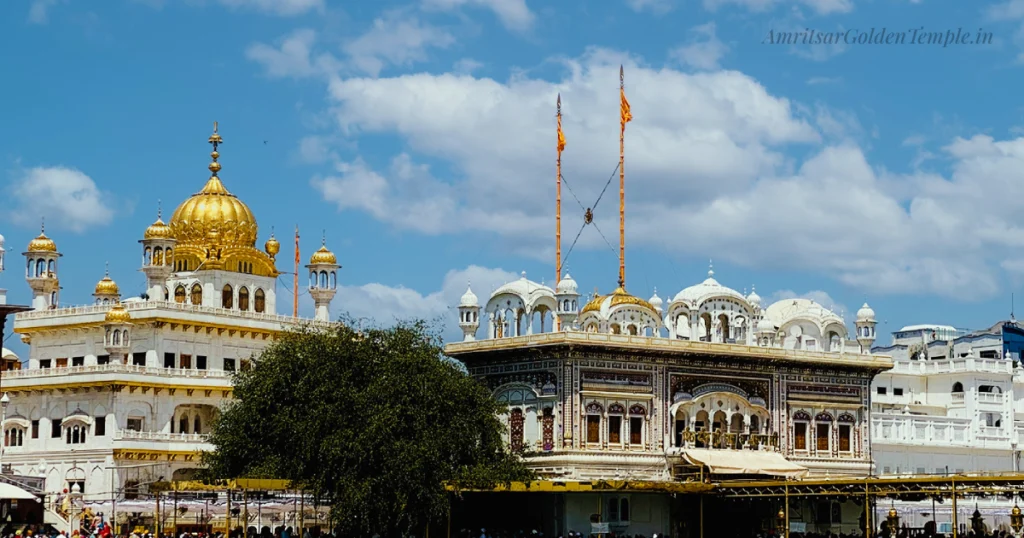
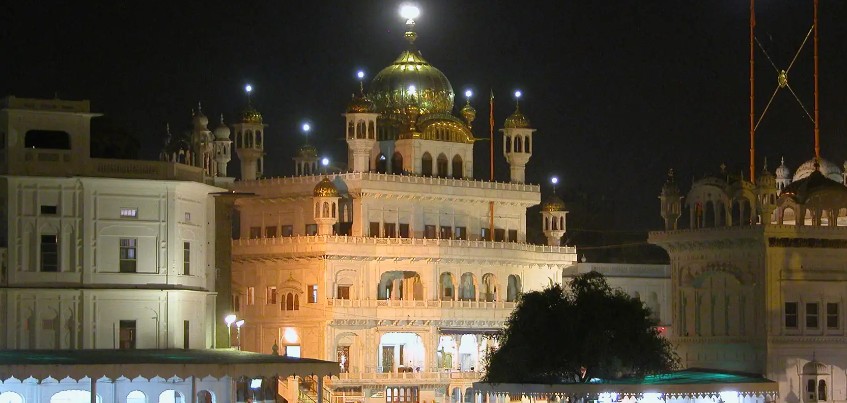
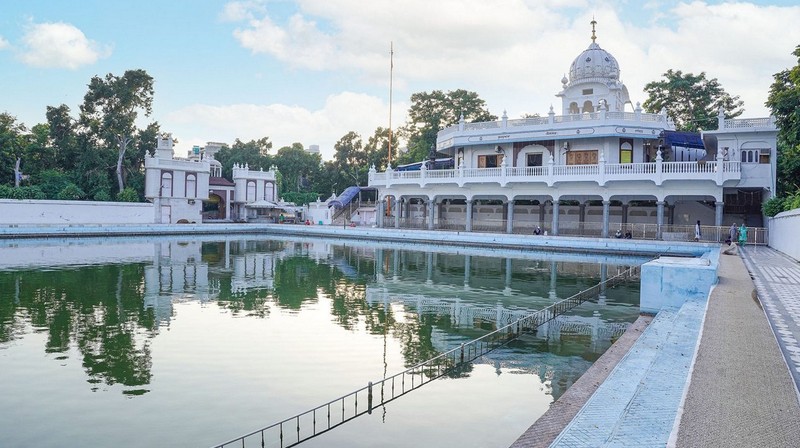
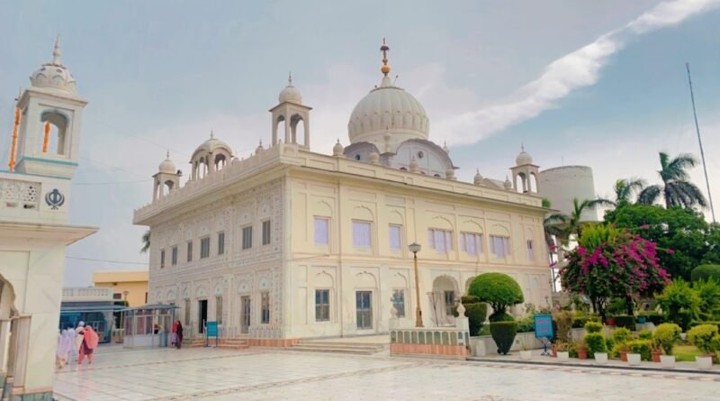
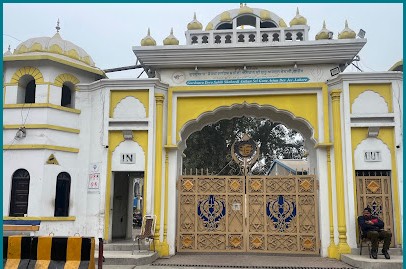
While the spot where Baba Deep Singh Ji breathed his last is immortalized inside the parikrama of the Golden Temple, and his cremation site is marked by Gurdwara Shaheed Ganj Sahib in Amritsar, the village of Pahuwind holds a uniquely intimate place in the hearts of the global Sikh community. It is the place where the grand narrative began, the soil that nurtured the child who would become the ultimate martyr. Gurdwara Janam Asthan Baba Deep Singh Ji in Pahuwind stands today as a magnificent, serene tribute to this legacy. The architecture of the Gurdwara is a stunning example of traditional Sikh design, featuring high arched gateways, intricate floral reliefs, and a majestic white central dome that dominates the local landscape. The core of the sanctuary is built over the exact site of Baba Ji’s ancestral family home, allowing visitors to stand in the very space where Bhai Bhagtu Ji and Mata Jiyoni Ji cradled their miracle child.
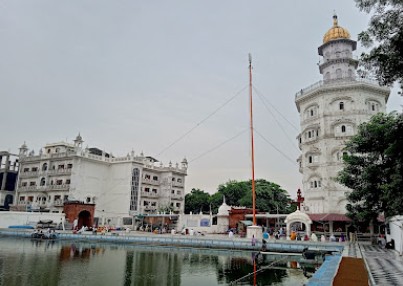
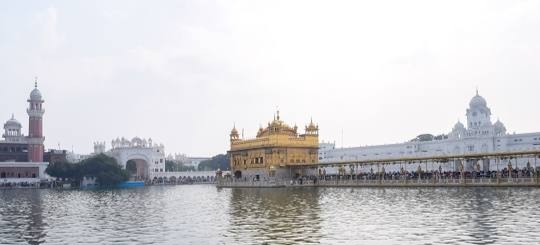
The spiritual atmosphere at Gurdwara Pahuwind is one of profound peace, offering a stark, beautiful contrast to the violent battles that marked Baba Ji's final days. A beautiful, clean Sarovar is situated within the complex, its calm waters reflecting the white marble walls and the blue sky, inviting pilgrims to sit in quiet contemplation and dip their hands in the sacred waters. The Gurdwara also features a large, highly organized Langar Hall, where free, vegetarian meals are served twenty-four hours a day to all visitors, regardless of caste, creed, or social status, keeping alive the fundamental egalitarian principles of the Sikh faith. For the local villagers of Pahuwind, the Gurdwara is the beating heart of their community; they take immense pride in being the custodians of a lineage that produced the first Jathedar of the Damdami Taksal and the savior of the Darbar Sahib.
The annual celebration of Baba Deep Singh Ji's birth anniversary, observed with immense devotion on January 26 (and according to traditional calendars in mid-late January), transforms Pahuwind into a bustling hub of Panthic activity. Led by the chief of the Damdami Taksal and representatives from the Shiromani Gurdwara Parbandhak Committee (SGPC), the festival draws hundreds of thousands of pilgrims from across Punjab, India, and the global diaspora. The air resonates with continuous Akhand Paths (unbroken reading of the scriptures), followed by deeply moving Dhadi Vars (heroic ballad singing) and detailed Katha (theological expositions) explaining the historical lessons of Baba Ji's life. A massive Nagar Kirtan (religious procession) winds its way through the decorated streets of the village, led by the Panj Pyare and displaying breathtaking exhibitions of Gatka (traditional Sikh martial art) by young boys and girls, proving that the martial spirit of Pahuwind is still very much alive in the 21st century.
The Eternal Beacon: Theological Reflections for the Modern Era
As we analyze the legacy of Gurdwara Janam Asthan Baba Deep Singh Ji through the lens of Sikh history, we realize that Baba Ji's life stands as the ultimate synthesis of the Khalsa ideal. In a world that often separates the intellectual from the physical, the scholar from the soldier, and the contemplative from the activist, Baba Deep Singh Ji demonstrated that these dimensions are intimately integrated within the sovereign human soul. He was a master of the pen, spending decades teaching the correct pronunciation of the Guru's words, yet when the honor of his faith was threatened, he did not hesitate to lay down his books and pick up his sword. He did not fight out of hatred for the enemy, nor out of a desire for territorial conquest or political power; he fought out of an absolute, ecstatic love for the Guru and a commitment to preserving the sanctity of the spiritual center of the universe.
For the modern global citizen, a visit to Gurdwara Pahuwind is a powerful reminder of the importance of standing up for justice, religious freedom, and human dignity, even when the odds are overwhelmingly against us. The image of Baba Deep Singh Ji fighting with his head in his hand is not merely a historical miracle; it is a profound metaphysical metaphor. It teaches us that when a human being is completely surrendered to a higher divine truth, they become liberated from the limitations of the physical body, the fear of death, and the constraints of earthly logic. The sacred soil of Pahuwind produced a warrior who showed the world that physical decapitation is nothing compared to the spiritual death of living a life of cowardice and compromise. As long as the white domes of Gurdwara Pahuwind stand against the Punjab sky, they will continue to inspire generations to live lives of high moral character, intellectual depth, and fearless dedication to the welfare of all humanity.
Location & contact
Village Pahuwind, Near Bhikhiwind, Tarn Taran District, Punjab 143303
- Map: Open in Google Maps