Gurudwara Shri Sann Sahib
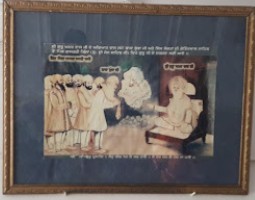
Seeking absolute solitude for deep meditation and wanting to test the spiritual maturity of his disciples, Guru Amar Das ji closed the single door to the hut and affixed an uncompromising, historic notice upon the wooden surface. The decree read clearly: “He who opens this door is no Sikh of mine, nor am I his Guru.” Through a chiseled opening, Baba Buddha Ji and the faithful community peered inside, obtaining the sacred Darshan (glimpse) of Guru Amar Das Ji without ever technically crossing or opening the forbidden door.
The Threshold of Humility: Gurudwara Shri Sann Sahib
To understand the full weight of the soil at Basarke Gillan, a small village located just twelve kilometers outside the bustling, historic heart of Amritsar, one must lay aside modern conceptions of power, lineage, and authority. This sacred architecture records an entirely different kind of struggle: a quiet, psychological, and profoundly spiritual revolution. Gurudwara Shri Sann Sahib does not commemorate a grand military victory, nor does it mark the opulent seat of a sovereign ruler. Instead, it is a monument dedicated to an act of radical humility, an intentional self-isolation, and a fascinating chapter of systemic succession within early Sikh history that completely redefined how spiritual authority was claimed and maintained in sixteenth-century Punjab.
When you approach the white domes of this sanctuary today, passing through the tranquil fields of the Amritsar district, you are stepping directly into the year 1552. To contextualize this era, the infant Sikh community, established by Guru Nanak Dev Ji and systematically nurtured by the second Nanak, Guru Angad Dev Ji, was finding its distinct sociological identity. It was a time of immense vulnerability. The traditional socio-religious structures of the Indian subcontinent, deeply entrenched in caste hierarchies and dynastic succession, viewed this burgeoning egalitarian path with deep suspicion. When Guru Angad Dev Ji bypassed his own flesh and blood—his sons Datu and Dasu—and instead bestowed the mantle of Guruship upon his seventy-three-year-old devoted disciple, Bhai Amar Das, he shattered the conventional mold of hereditary rule. This single act was a revolutionary democratic turn in spiritual stewardship, and it was an action that inevitably carried a high cost of human resentment and political friction.
The Footprint of Discontent and the Retreat to Basarke
The drama that catalyzed the founding of Gurudwara Shri Sann Sahib began at Goindwal Sahib, the newly established headquarters of the Sikh faith. Following his formal appointment as the third Sikh Guru, Guru Amar Das Ji began attracting vast crowds of seekers, travelers, and common folk, all drawn to his message of equality and his rigorous reinforcement of the Guru ka Langar (the community kitchen where all sat on the floor as equals). However, this burgeoning communal harmony was abruptly punctured by historical conflict. Datu, the younger son of Guru Angad Dev Ji, consumed by a sense of familial betrayal and hereditary entitlement, refused to acknowledge the new Guru's spiritual authority.
Marching into the presence of Guru Amar Das Ji with a small group of partisan supporters, Datu confronted the elderly teacher. In a moment of raw, undisguised arrogance, Datu struck the seventy-three-year-old Guru, kicking him off his Manji (the low wooden cot serving as the seat of authority) and proclaiming himself the rightful master of the household.
What followed next is a sequence that leaves an indelible mark on any historian studying the nature of non-violent resistance and ethical leadership. Instead of mobilizing the faithful Sangat (congregation) to defend his position or reacting with predictable human outrage, Guru Amar Das Ji responded with a gesture of staggering gentleness. He massaged the very foot that had kicked him, expressing concern that his old, hardened bones might have injured Datu’s tender feet.
That very evening, choosing to completely defuse a potentially violent schism within the young community, the Guru quietly slipped away from Goindwal Sahib under the cover of night. He returned on foot to his ancestral roots—his birthplace in the village of Basarke Gillan. This was not a tactical retreat of a defeated leader, but a profound demonstration of absolute detachment from the external trappings of institutional power.
The Sealed Mud Hut and the Paradox of the Sann
Upon arriving at Basarke Gillan, Guru Amar Das Ji did not seek shelter in a grand house or rally his relatives. Instead, he withdrew to a tiny mud room situated quietly in the village fields—a simple shelter originally constructed by local farmers seeking respite from the blistering Punjabi sun. Seeking absolute solitude for deep meditation and wanting to test the spiritual maturity of his disciples, he closed the single door to the hut and affixed an uncompromising, historic notice upon the wooden surface.
The decree read clearly:
“He who opens this door is no Sikh of mine, nor am I his Guru.”
With that dramatic boundary established, the Guru immersed himself in divine contemplation, leaving the external world to grapple with his sudden, agonizing absence.
The narrative shifts beautifully to a frantic search. Back in Goindwal, the sudden disappearance of their beloved spiritual guide threw the Sikh community into a state of deep distress and profound spiritual alienation. Realizing the gravity of the crisis, the elder statesperson of early Sikh history, Baba Buddha Ji—a revered figure who had known Guru Nanak himself—was implored to track down the third Guru.
Employing a deep intuitive wisdom, Baba Buddha Ji unleashed the Guru’s personal horse, allowing the animal to wander freely, trusting its natural instincts to lead them to its master. The horse trotted through the dusty terrain of Punjab, eventually halting right outside the unassuming mud walls of the structure at Basarke Gillan.
When the pursuing delegation arrived, they were immediately confronted with the devastating ultimatum written upon the door. To open it meant direct disobedience to their Guru’s explicit command; to turn away meant abandoning their spiritual lifeblood.
It is at this precise juncture that Baba Buddha Ji executed an act of brilliant hermeneutic navigation. Recognizing that the spirit of devotion must ultimately supersede the literal restriction of a physical threshold, he decided neither to open nor to break down the door. Instead, he approached the back wall of the mud house and meticulously chiseled a small, narrow opening—historically known in Punjabi as a Sann (ਸੰਨ), a term typically used to describe a hole made by a burglar or a subterranean tunnel.
The Historical Legacy of the Sann
Through this chiseled opening, Baba Buddha Ji and the faithful community peered inside, obtaining the sacred Darshan (glimpse) of Guru Amar Das Ji without ever technically crossing or opening the forbidden door.
Deeply moved by this brilliant blend of profound obedience, unwavering devotion, and sharp intellect, the Guru relented, breaking his isolation to warmly embrace his followers and ultimately agreeing to return to Goindwal Sahib to lead the community once more.
Architectural and Spiritual Topography of the Contemporary Complex
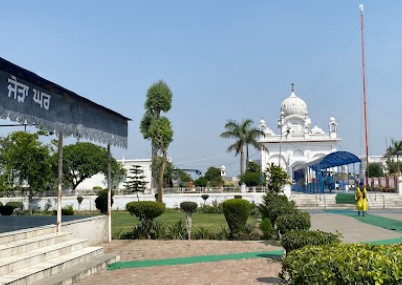
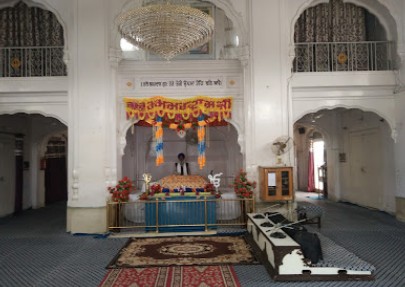
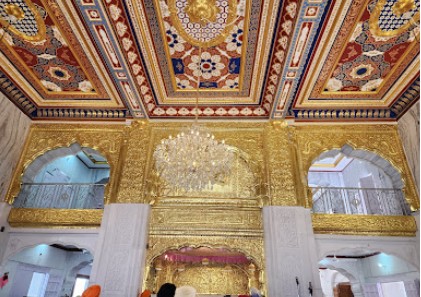
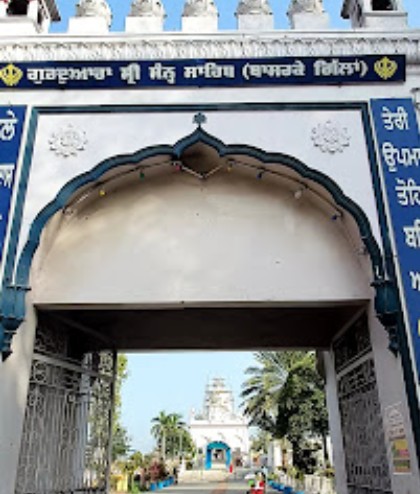
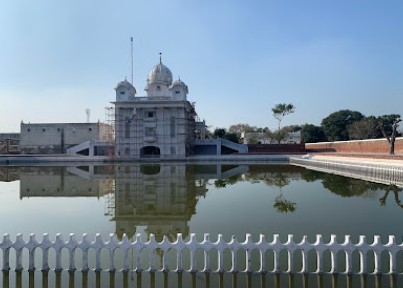
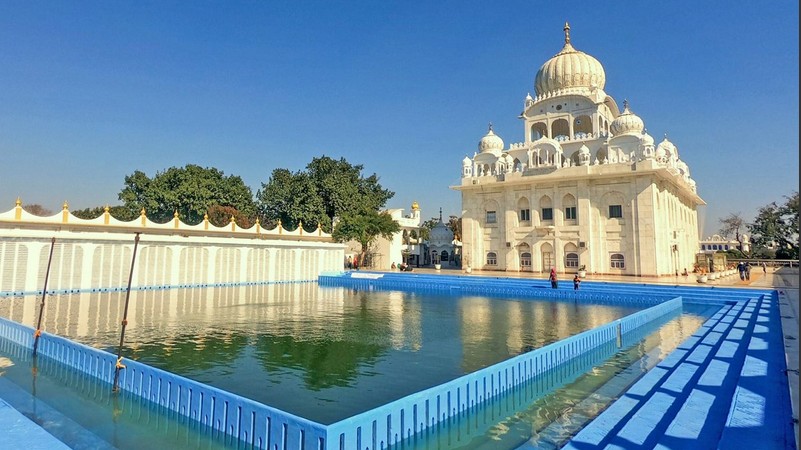
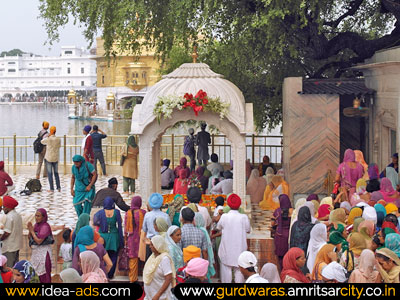
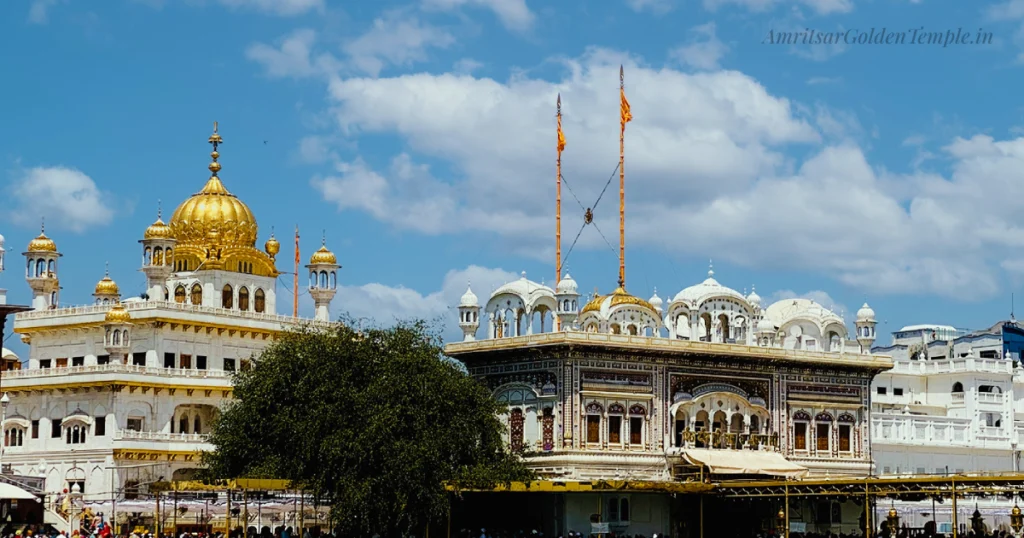
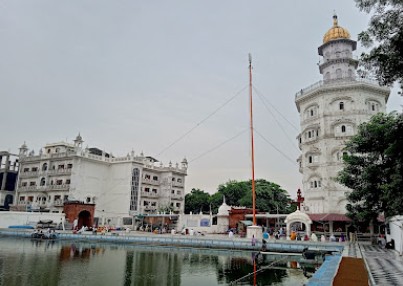
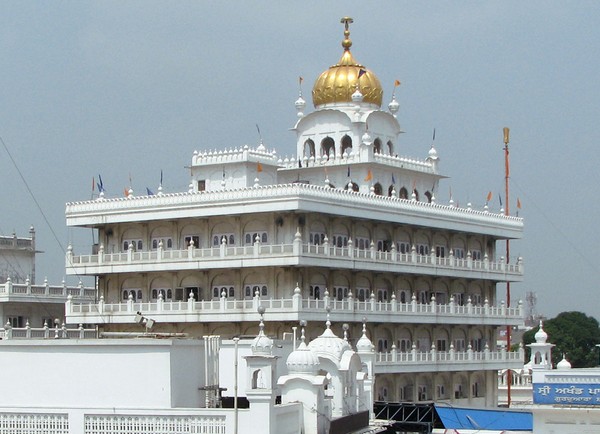
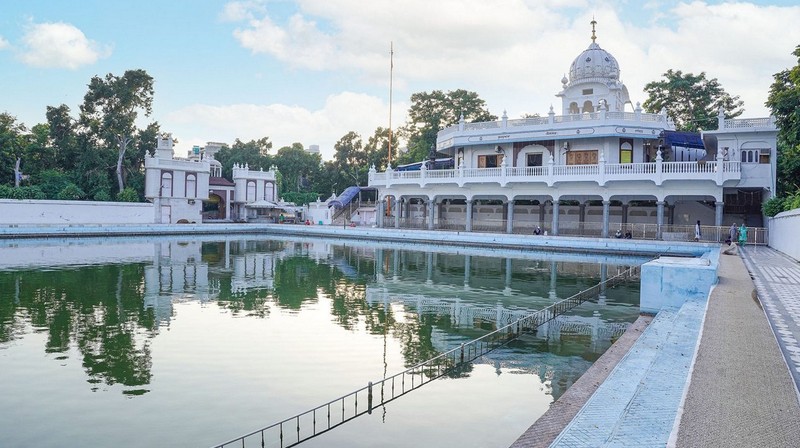
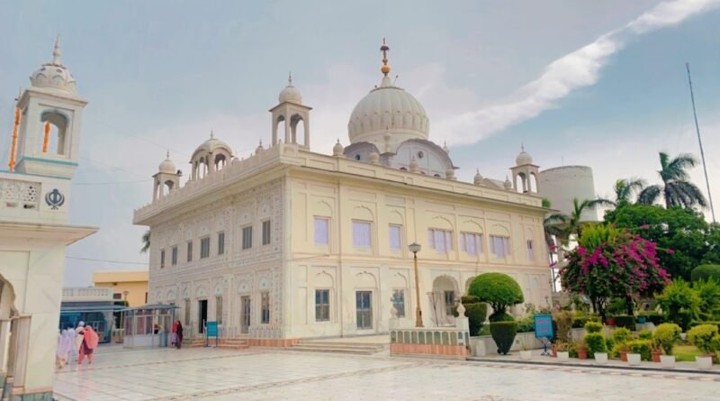
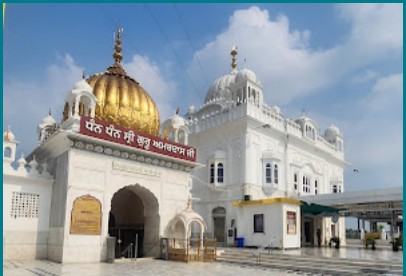
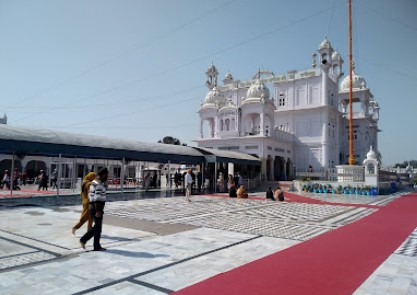
Gurudwara Shri Sann Sahib today spans an expansive and immaculately maintained six-acre complex. One can see how carefully the sacred geography has preserved the spatial memory of that sixteenth-century event. The main sanctuary features a beautifully proportioned congregational hall, crowned with a pristine white pinnacled dome that gleams against the rural Punjabi sky.
Yet, the absolute emotional and spiritual epicenter of this vast structure is entirely internal, housed safely within the sanctum sanctorum. Here, enclosed carefully within the modern marble structures, the historic Sann—the physical hole chiseled through the brick wall—has been meticulously preserved across the centuries.
For centuries, a powerful, living ritual has persisted at this location. Pilgrims from all corners of the globe arrive here not merely to look at the opening, but to actively crawl through the narrow, tight space of the preserved Sann.
According to long-standing oral traditions and local belief, Guru Amar Das Ji was so deeply moved by the love of his followers that he blessed this very opening, decreeing that anyone who passes through this narrow passage with genuine faith and absolute humility would be spiritually liberated from the agonizing, cyclical wheel of birth and death.
Watching people of all ages, social standings, and backgrounds bend their bodies to navigate this tight physical space is an extraordinary sight. It serves as a vivid, tangible reenactment of the very humility that the Guru demanded of his followers and embodied himself.
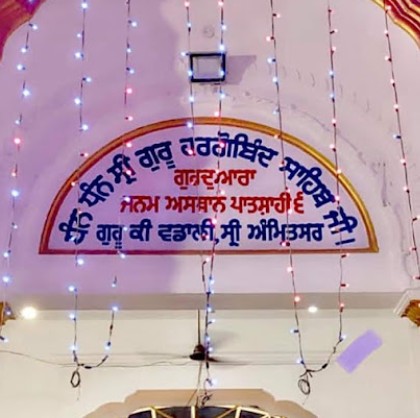
From a sociological perspective, the site operates seamlessly within the broader network of historical sanctuaries anchoring the Amritsar district. It stands in close proximity to Gurudwara Janam Asthan Guru Amar Das Ji, which marks his actual birth site within the same village, and links directly into the larger pilgrimage trail that includes Cheharta Sahib and the iconic Sri Harmandir Sahib (The Golden Temple), located just a short drive away.
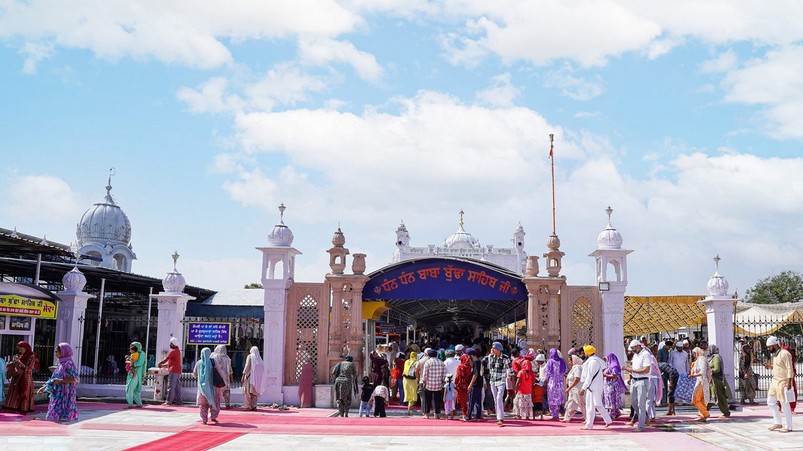
Every year, on the full moon day of the month of Bhadon (falling in September), the tranquil rural landscape of Basarke Gillan transforms during an annual fair and commemorative gathering. Thousands of devotees converge on these grounds, their voices echoing with sacred Gurbani, keeping the sixteenth-century history vibrantly alive in the collective consciousness of the twenty-first century.
Conclusion
Ultimately, for the historian and the pilgrim alike, Gurudwara Shri Sann Sahib stands as a striking testament to a foundational principle of the Sikh worldview: that true authority is never seized through inheritance or violence, but earned entirely through selfless service, deep patience, and radical humility.
The small chiseled opening in the wall remains a permanent architectural reminder that when standard institutional doors are firmly shut by conflict, a pathway will always be carved open by the power of genuine devotion.
Location & contact
Basarke Gillan Village, Near Chheharta, Amritsar District,
- Email: info@sgpc.net
- Map: Open in Google Maps
- Website: Visit website
- Associated Gurus: Guru Amar Das Ji
Gallery